
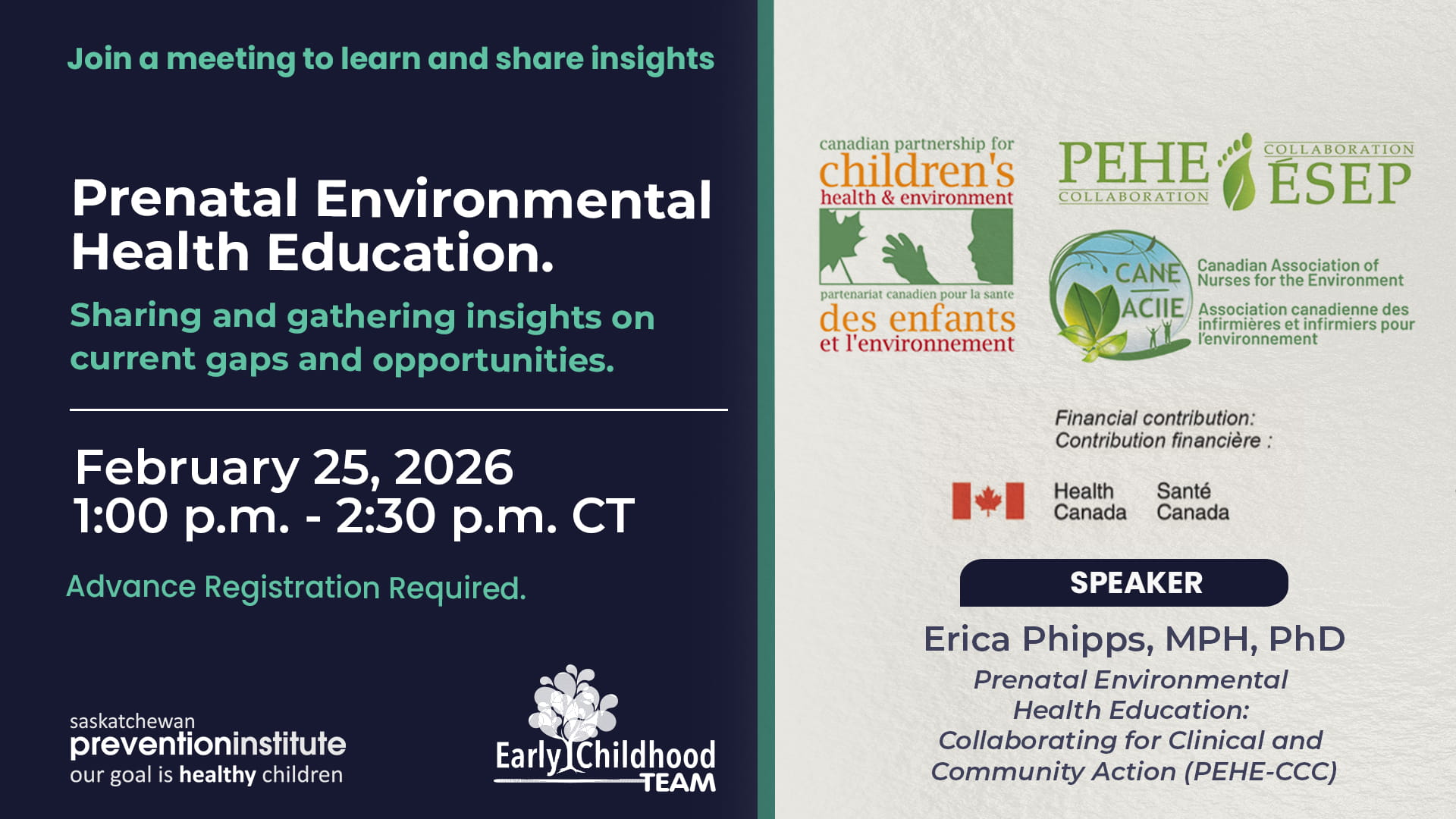
Environmental exposures (like chemicals in air, water, food, and consumer products) are increasingly recognized as an important factor in reproductive, fetal, and child health. Recent Canadian research shows that conversations about environmental exposures are not yet a routine part of prenatal care, pointing to important opportunities for greater education, dialogue, and community engagement.
This session is designed as a consultation, and we welcome people and organizations with a wide range of experiences and perspectives. We are particularly interested in learning from lived, community-based, and frontline experiences, including from communities that may be under-represented in decision-making or more affected by environmental risks. Participants will be invited to share insights on how communities and key partners can be more meaningfully involved in decisions about chemicals and environmental health.
To kick off the session, there will be a presentation on recent Canadian research from the Prenatal Environmental Health Education (PEHE) Collaboration (https://healthyenvironmentforkids.ca/wp-content/uploads/2025/11/PEHE-Research-Brief_EN.pdf), drawing on national surveys of women of reproductive age and prenatal care providers. The presentation will highlight current gaps and opportunities, with a focus on education and knowledge-sharing. The session will also offer practical ideas for supporting community conversations about environmental exposures and for helping individuals and communities navigate ways to reduce or manage environmental exposures during and beyond pregnancy.