Most Recent Resources
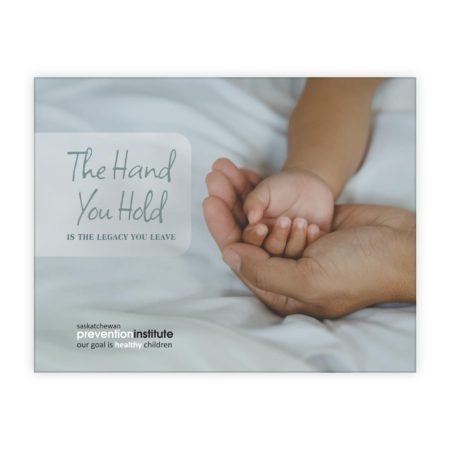
The Hand You Hold Is the Legacy You Leave
Booklet, 2025
The Hand You Hold Is the Legacy You Leave highlights an important message – the first years of life lay the foundation for lifelong health, relationships, and learning. For babies to thrive, they need the following from consistent caregivers: love, safety and security, and acceptance. The Hand You Hold is built around these needs, while also emphasizing the vital role of parent support. This resource offers practical actions for parents to meet each of these needs, paired with research insights that explain why these actions matter.
This booklet is strengths-based, parent-friendly, and adaptable across many settings. For example, it can be shared with parents and caregivers during home visits, in parenting or prenatal groups, and as discussion prompts in community settings. It is meant to spark meaningful conversations by inviting parents to reflect on “What is my baby telling me?”
Click here for a sample lesson plan to share this resource with parents and caregivers.
SKU: 5-520
Supporting Parents Webinar Series
Information Card, 2025
This information card provides a QR code link to the Supporting Parents Webinar Series, a collection of recorded webinars developed to support parents and caregivers in creating environments where children can thrive. It can be distributed to families as a convenient means of accessing learning materials that promote positive parenting practices and child well-being.
SKU: 5-517
Wonderful World of Parenting
Information Card, 2025
This information card offers supportive information for parents, acknowledging the many roles they take on in their parenting journey. It emphasizes the importance of self-care, seeking support, and recognizing the value of every contribution they make to their child’s life. This information card accompanies a video of the same title. To watch the video, visit: The Wonderful World of Parenting.
SKU: 1-200
Healthy Parenting Program
Information Card, 2025
This information card provides a QR code link to the Healthy Parenting Program – a user-friendly resource for parents and caregivers of children aged 0-5. This card can be shared with families to help them access practical information on topics such as nutrition, safety, child care, child development, and immunization.
SKU: 5-500
What healthy habits help your child balance their energy?
Information Card, 2022
This poster shares information about the different states of energy we experience throughout the day (e.g., low, balanced, intense, out-of-control) and provides examples of how a child can balance their energy. The provided activity asks parents and caregivers to review different behaviours to identify when their child is in different states.
SKU: 5-915

What healthy habits support healthy relationships?
Information Card, 2022
This postcard gives examples of how to build connections with children to nurture a healthy relationship. The provided activity asks parents and caregivers to list ways they want to respond to their children when they are experiencing certain feelings.
SKU: 5-913
Why is physical activity important for children?
Information Card, 2022
This postcard describes physical activity and shares how physical activity helps children. The provided activity asks parents and caregivers to brainstorm active play ideas for children.
SKU: 5-911
What is mindful eating?
Information Card, 2021
This postcard defines mindful eating and shares why it is important. Questions are provided to help parents and caregivers help their children practice mindful eating.
SKU: 5-909
Why is it important to eat together as a family?
Information Card, 2021
This postcard shares information about why it is important to eat together as a family and provides examples of family habits while eating.
SKU: 5-907
What are whole foods and processed foods?
Information Card, 2021
This postcard defines whole foods and processed foods and provides space to list alternatives to processed foods.
SKU: 5-905
The Hand You Hold Is the Legacy You Leave
Booklet, 2025
The Hand You Hold Is the Legacy You Leave highlights an important message – the first years of life lay the foundation for lifelong health, relationships, and learning. For babies to thrive, they need the following from consistent caregivers: love, safety and security, and acceptance. The Hand You Hold is built around these needs, while also emphasizing the vital role of parent support. This resource offers practical actions for parents to meet each of these needs, paired with research insights that explain why these actions matter.
This booklet is strengths-based, parent-friendly, and adaptable across many settings. For example, it can be shared with parents and caregivers during home visits, in parenting or prenatal groups, and as discussion prompts in community settings. It is meant to spark meaningful conversations by inviting parents to reflect on “What is my baby telling me?”
Click here for a sample lesson plan to share this resource with parents and caregivers.
SKU: 5-520
Saskatoon Support for a Growing Family
Booklet, Revised 2024
This booklet is a collection of FREE programs that parents and their children can access in Saskatoon, but it is not a complete list of services in the community.
SKU: 2-900

Parenting Matters Bookmark
Bookmark, Revised 2023
This bookmark provides ideas to support child development. Ideal for service providers to give as a take-home keepsake to parents and caregivers.
SKU: 5-800
Nobody’s Perfect Bookmark
Bookmark, 2010
This bookmark provides information about the Nobody’s Perfect Parenting Program. Ideal for program facilitators as a take-home keepsake for participants.
SKU: 5-001

Breastfeeding
Brochure, 2024
This brochure describes the benefits of breastfeeding, as well as information about expressing milk by hand, helping baby successfully latch to breastfeed, and tips for increasing milk supply.
This resource was created in partnership with the Northern Healthy Communities Partnership Healthy Eating Team. For more information, visit www.nhcp.ca/healthy-eating-team.
SKU: 5-513
Making Homemade Baby Food
Brochure, 2024
This brochure shares information about how to make, season, store, thaw, reheat, and serve homemade baby food.
This resource was created in partnership with the Northern Healthy Communities Partnership Healthy Eating Team. For more information, visit www.nhcp.ca/healthy-eating-team.
SKU: 5-512
Introducing Cow’s Milk to Baby: 6 Months and Older
Brochure, 2024
This brochure outlines when to introduce cow’s milk to babies and provides details about iron-deficiency anemia. Examples of iron-rich foods are provided.
This resource was created in partnership with the Northern Healthy Communities Partnership Healthy Eating Team. For more information, visit www.nhcp.ca/healthy-eating-team.
SKU: 5-511
Feeding Baby: 6 Months and Older
Brochure, 2024
This brochure provides details about feeding methods for babies 6 months and older. Information about how to prevent choking and modify foods to reduce choking risks for children 6 months to 2 years of age is provided.
This resource was created in partnership with the Northern Healthy Communities Partnership Healthy Eating Team. For more information, visit www.nhcp.ca/healthy-eating-team.
SKU: 5-510
Building a Healthy Relationship with Food: 6 Months and Older
Brochure, 2024
This brochure shares information about how to help children build a healthy relationship with food, starting when they are babies, and provides details about the division of responsibility. The division of responsibility states that the parent or caregiver decides what, when, and where to offer food for children to eat; the child decides if and how much food they eat.
This resource was created in partnership with the Northern Healthy Communities Partnership Healthy Eating Team. For more information, visit www.nhcp.ca/healthy-eating-team.
SKU: 5-509
Sleep Skills
Brochure, Revised 2023
Good sleep among infants and young children is important for their physical, mental, and emotional well-being. This brochure, designed for use with parents and caregivers, explains what can affect your child’s sleep, how parents and caregivers can help their child go to sleep, and sleep guidelines for children 0-6 years old.
SKU: 5-802

Brain Development and Young Children
Fact Sheet, 2010
This fact sheet provides an overview of early childhood brain development and stresses the influences that experience and the environment have on optimal development. Early childhood is a time when there is rapid growth and development of the brain. At this time, parents and caregivers have an opportunity to impact brain development. This is also a time when the brain is the most vulnerable.
SKU: 8-702

Healthy Habits Facilitator Guide
Guide and Manual, 2022
This resource provides strategies and activities to help frontline staff use the Healthy Habits resources with parents and caregivers. Activities are provided that help teach healthy habits to children. These activities can be used both within programs and within the home environment.
SKU: 5-916
Healthy Minds Begin at Home: From Infant to Individual
Guide and Manual, Reviewed 2024
This guide was developed for use with the “Healthy Minds Begin at Home: from Infant to Individual” toolkit. It is designed to help service providers begin or continue to work in the area of early childhood mental health. Included in the guide is information on early childhood mental health topics, suggested activities that professionals or caregivers can do with children, tip sheets for caregivers, and a list of resources. The “Healthy Minds Begin at Home: from Infant to Individual” toolkit was developed for Community Action Program for Children projects.
SKU: 5-812
Connections for Life: Attachment Resource Kit
Guide and Manual, 2007
This kit provides educational resources and tools for those who work with families. The kit provides evidence-based information on what attachment means, why it is important, what influences it, and what we can do to help promote healthy, secure attachment relationships.
The tools for supporting families are the “Attachment Activities”. These are simple, enjoyable activities that parents and other caregivers can do with children to help promote the development of healthy, secure attachment relationships. There are seven activities that can be done with a child of any age; a list of activities that can be done before the baby is born; and a list of parenting myths and what we know now to facilitate discussion. The “Attachment Activities” include: “Group Guidelines” that provide suggestions for how to introduce the activities to parent groups in a strength-based way, using adult education techniques; and “Handouts” for parents with brief descriptions of the activities. Each “Attachment Activity” is independent of the others, so you can introduce one, some, or all of the activities, depending on what works best for you.
All of the materials are available in both English and French.
Note – The information in this kit should not be used to diagnose children or provide therapy. Only trained professionals should provide diagnosis or therapy.
SKU: 6-000
Des liens pour la vie: Trousse de ressources pour l’attachement
Guide and Manual, 2007
Cette trousse contient des documents éducatifs, dont un DVD et un guide, ainsi que des outils à l’intention de ceux et de celles qui travaillent auprès des familles. Ces documents, mis au point à partir de données fondées sur des résultats en matière d’attachement, donnent une définition de l’attachement, traitent de son importance dans le développement de l’enfant, des facteurs qui l’influencent, et de ce que nous pouvons faire pour favoriser un attachement sécurisant.
Les outils pour développer l’attachement s’appellent “Activités pour développer l’attachement”. Il s’agit d’activités simples et agréables que les parents, ou les personnes responsables de l’enfant, peuvent faire avec l’enfant pour favoriser le développement d’un attachement sécurisant. Il y a sept activités à faire avec un enfant, quel que soit son âge. Il y a aussi plusieurs activités à faire avant la naissance du bébé et une liste de mythes et réalités pour faciliter la discussion avec les parents. La section sur les “activités pour développer l’attachement” comprend : les “directives pour l’animation de groupes de discussion”, lesquelles comprennent des suggestions sur la façon de présenter une activité à un groupe de parents en faisant appel à leurs qualités personnelles et à leurs points forts, et en utilisant des techniques d’enseignement pour adultes. Chaque activité comprend également un prospectus qui donne une brève description de l’activité aux parents. Les activités pour développer l’attachement sont indépendantes les unes des autres; vous pouvez en utiliser une ou plusieurs, selon ce qui est le plus approprié pour vous.
SKU: 6-001
Supporting Parents Webinar Series
Information Card, 2025
This information card provides a QR code link to the Supporting Parents Webinar Series, a collection of recorded webinars developed to support parents and caregivers in creating environments where children can thrive. It can be distributed to families as a convenient means of accessing learning materials that promote positive parenting practices and child well-being.
SKU: 5-517Wonderful World of Parenting
Information Card, 2025
This information card offers supportive information for parents, acknowledging the many roles they take on in their parenting journey. It emphasizes the importance of self-care, seeking support, and recognizing the value of every contribution they make to their child’s life. This information card accompanies a video of the same title. To watch the video, visit: The Wonderful World of Parenting.
SKU: 1-200Healthy Parenting Program
Information Card, 2025
This information card provides a QR code link to the Healthy Parenting Program – a user-friendly resource for parents and caregivers of children aged 0-5. This card can be shared with families to help them access practical information on topics such as nutrition, safety, child care, child development, and immunization.
SKU: 5-500What healthy habits help your child balance their energy?
Information Card, 2022
This poster shares information about the different states of energy we experience throughout the day (e.g., low, balanced, intense, out-of-control) and provides examples of how a child can balance their energy. The provided activity asks parents and caregivers to review different behaviours to identify when their child is in different states.
SKU: 5-915What healthy habits support healthy relationships?
Information Card, 2022
This postcard gives examples of how to build connections with children to nurture a healthy relationship. The provided activity asks parents and caregivers to list ways they want to respond to their children when they are experiencing certain feelings.
SKU: 5-913Why is physical activity important for children?
Information Card, 2022
This postcard describes physical activity and shares how physical activity helps children. The provided activity asks parents and caregivers to brainstorm active play ideas for children.
SKU: 5-911What is mindful eating?
Information Card, 2021
This postcard defines mindful eating and shares why it is important. Questions are provided to help parents and caregivers help their children practice mindful eating.
SKU: 5-909Why is it important to eat together as a family?
Information Card, 2021
This postcard shares information about why it is important to eat together as a family and provides examples of family habits while eating.
SKU: 5-907What are whole foods and processed foods?
Information Card, 2021
This postcard defines whole foods and processed foods and provides space to list alternatives to processed foods.
SKU: 5-905
What is your child’s favourite healthy food?
Information Card, 2021
This postcard highlights what healthy eating means and why it is important for children to eat healthy foods. It also provides space to list examples of healthy foods.
SKU: 5-903
What healthy habits do you want your child to have?
Information Card, Reviewed 2025
This postcard defines “healthy” and “habit” and asks the question, “Which healthy habits is your child learning from you?” Examples of healthy habits are listed. A provided activity encourages parents and caregivers to select one new healthy habit that they wish to role model for their children.
SKU: 5-901
Attachment
Information Card, Revised 2024
Written in plain language, this information card provides basic information about attachment … the connection that a baby forms with his caregivers that helps him to feel loved, secure, and safe.
SKU: 8-801
My Curious Brain Info Card
Information Card, 2022
The My Curious Brain Resource Room is an interactive virtual tool to help children and adults learn what happens in the brain and body when stress is experienced. This postcard provides the QR code and link to access the resource.
SKU: 5-508
Nobody’s Perfect Information Card
Information Card, 2010
This information card provides information about the Nobody’s Perfect Parenting Program. Ideal for program facilitators as a recruitment tool for potential participants.
SKU: 5-002

What healthy habits help your child balance their energy?
Poster, 2022
This poster shares information about the different states of energy we experience throughout the day (e.g., low, balanced, intense, out-of-control) and provides examples of how a child can balance their energy.
SKU: 5-914
What healthy habits support healthy relationships?
Poster, 2022
This poster gives examples of how to build connections with children to nurture a healthy relationship.
SKU: 5-912
Why is physical activity important for children?
Poster, 2022
This poster describes physical activity and shares how physical activity helps children.
SKU: 5-910
What is mindful eating?
Poster, 2021
This poster defines mindful eating and shares why it is important.
SKU: 5-908
Why is it important to eat together as a family?
Poster, 2021
This poster shares information about why it is important to eat together as a family.
SKU: 5-906
What are whole foods and processed foods?
Poster, 2021
This poster defines whole foods and processed foods.
SKU: 5-904
What is your child’s favourite healthy food?
Poster, 2021
This poster highlights what healthy eating means and why it is important for children to eat healthy foods.
SKU: 5-902
What healthy habits do you want your child to have?
Poster, Reviewed 2025
This poster defines “healthy” and “habit”. It also provides examples of healthy habits that parents and caregivers can model for their children.
SKU: 5-900
My Curious Brain Poster
Poster, 2022
The My Curious Brain Resource Room is an interactive virtual tool to help children and adults learn what happens in the brain and body when stress is experienced. This poster provides the QR code and link to access the resource.
SKU: 5-507
National Child Day Poster
Poster, 2020
This poster was developed by the Community Action Program for Children (CAPC) project to raise awareness on the United Nations Convention on the Rights of the Child (1989) and to celebrate National Child’s Day on November 20 of each year. The poster highlights children’s rights: right to education, right to play, right to healthy food, right to parents who love them and protect them from harm, right to health, and right to rest and relaxation.
By ratifying the United Nations Convention on the Rights of the Child in 1991, Canada made a commitment to ensure that children’s rights are upheld. Help us celebrate National Child’s Day on November 20 and everyday throughout the year!
SKU: 5-801
Healthy Parenting Poster
Poster, Revised 2023
These posters advertise the Healthy Parenting resource. The Healthy Parenting online resource is a literacy-friendly, interactive, web-based resource that covers topics relevant to parents of children under 6 years old, e.g., eating healthy, safety, child care, and child development. This resource can be accessed using a computer, tablet, or cell phone.
SKU: 5-501
Cherish Me for I am a Child
Poster, 2011
This brightly coloured wall hanging with the poem “Cherish Me for I am a Child” talks about the importance of a child growing up feeling safe, secure, and happy and in order for a child to do this he needs to be protected, cared for, and loved by the adults in his life. This can be used as a wall hanging for anyone to have in their home or office.
SKU: 5-504
Nobody’s Perfect
Poster, 2010
This poster provides information about the Nobody’s Perfect Parenting Program. Ideal for program facilitators to use as a recruitment tool for potential participants.
SKU: 5-004

Healthy Steps for Teen Parents, 2nd Edition, Volume 3: Postpartum
Video, 2010
This video presents information about postpartum care, newborns, and an array of teen parenting challenges and joys. New teen parents candidly share personal stories about the realities of healing physically after birth, breastfeeding, and choosing child care.
Content includes:
- Physical Recovery & Postpartum Emotions – healing process, signs of infection, nutrition, rest, exercise, baby blues, signs of postpartum depression
- Baby Care & Behaviours – well-baby visits, feeding, sleeping, crying, bathing, diapering, when to call the doctor, SIDS, second-hand smoke, abusive head trauma (shaken baby syndrome), newborn senses
- Relationships & Parenting – establishing paternity, co-parenting, birth control, positive relationships, living situations, friend and family support, finishing school, child care options
SKU: 7-V-723
Healthy Steps for Teen Parents, 2nd Edition, Volume 1: Pregnancy
Video, 2010
Hosted by an empathetic and positive young woman, viewers get the straight story as they follow six teens who share their personal pregnancy experiences. Watch how teens cope with their changing life and take the necessary steps to ensure a healthy pregnancy, birth, and baby.
Content includes:
- Prenatal Care & Nutrition – telling someone you’re pregnant, prenatal visits, nutrition, weight gain, warning signs
- Protecting Your Baby – avoiding harmful substances
- Physical & Emotional Changes – exercise, dental health, sleep, premature labour signs, emotional changes, relationship abuse
- Getting Support – friends and family, staying in school, alternative education options
SKU: 7-V-721
- Connection Builds Resilience: Trauma-Informed Care for Young Children
- Engaging and Supporting Families through Good Times and Tough Times
- How Early Attachment Relationships Impact Brain Development and What We Can Do
- Supporting Children with Big Emotions & Challenging Behaviours
- Supporting Indigenous Children in the Early Years
- The Home Safety Workshop for Professionals who Support Families
Most Recent Resources
The Hand You Hold Is the Legacy You Leave
Booklet, 2025
The Hand You Hold Is the Legacy You Leave highlights an important message – the first years of life lay the foundation for lifelong health, relationships, and learning. For babies to thrive, they need the following from consistent caregivers: love, safety and security, and acceptance. The Hand You Hold is built around these needs, while also emphasizing the vital role of parent support. This resource offers practical actions for parents to meet each of these needs, paired with research insights that explain why these actions matter.
This booklet is strengths-based, parent-friendly, and adaptable across many settings. For example, it can be shared with parents and caregivers during home visits, in parenting or prenatal groups, and as discussion prompts in community settings. It is meant to spark meaningful conversations by inviting parents to reflect on “What is my baby telling me?”
Click here for a sample lesson plan to share this resource with parents and caregivers.
SKU: 5-520Supporting Parents Webinar Series
Information Card, 2025
This information card provides a QR code link to the Supporting Parents Webinar Series, a collection of recorded webinars developed to support parents and caregivers in creating environments where children can thrive. It can be distributed to families as a convenient means of accessing learning materials that promote positive parenting practices and child well-being.
SKU: 5-517
Wonderful World of Parenting
Information Card, 2025
This information card offers supportive information for parents, acknowledging the many roles they take on in their parenting journey. It emphasizes the importance of self-care, seeking support, and recognizing the value of every contribution they make to their child’s life. This information card accompanies a video of the same title. To watch the video, visit: The Wonderful World of Parenting.
SKU: 1-200Healthy Parenting Program
Information Card, 2025
This information card provides a QR code link to the Healthy Parenting Program – a user-friendly resource for parents and caregivers of children aged 0-5. This card can be shared with families to help them access practical information on topics such as nutrition, safety, child care, child development, and immunization.
SKU: 5-500
What healthy habits help your child balance their energy?
Information Card, 2022
This poster shares information about the different states of energy we experience throughout the day (e.g., low, balanced, intense, out-of-control) and provides examples of how a child can balance their energy. The provided activity asks parents and caregivers to review different behaviours to identify when their child is in different states.
SKU: 5-915What healthy habits support healthy relationships?
Information Card, 2022
This postcard gives examples of how to build connections with children to nurture a healthy relationship. The provided activity asks parents and caregivers to list ways they want to respond to their children when they are experiencing certain feelings.
SKU: 5-913
Why is physical activity important for children?
Information Card, 2022
This postcard describes physical activity and shares how physical activity helps children. The provided activity asks parents and caregivers to brainstorm active play ideas for children.
SKU: 5-911What is mindful eating?
Information Card, 2021
This postcard defines mindful eating and shares why it is important. Questions are provided to help parents and caregivers help their children practice mindful eating.
SKU: 5-909
Why is it important to eat together as a family?
Information Card, 2021
This postcard shares information about why it is important to eat together as a family and provides examples of family habits while eating.
SKU: 5-907What are whole foods and processed foods?
Information Card, 2021
This postcard defines whole foods and processed foods and provides space to list alternatives to processed foods.
SKU: 5-905
Booklets
The Hand You Hold Is the Legacy You Leave
Booklet, 2025
The Hand You Hold Is the Legacy You Leave highlights an important message – the first years of life lay the foundation for lifelong health, relationships, and learning. For babies to thrive, they need the following from consistent caregivers: love, safety and security, and acceptance. The Hand You Hold is built around these needs, while also emphasizing the vital role of parent support. This resource offers practical actions for parents to meet each of these needs, paired with research insights that explain why these actions matter.
This booklet is strengths-based, parent-friendly, and adaptable across many settings. For example, it can be shared with parents and caregivers during home visits, in parenting or prenatal groups, and as discussion prompts in community settings. It is meant to spark meaningful conversations by inviting parents to reflect on “What is my baby telling me?”
Click here for a sample lesson plan to share this resource with parents and caregivers.
SKU: 5-520
Bookmarks
Parenting Matters Bookmark
Bookmark, Revised 2023
This bookmark provides ideas to support child development. Ideal for service providers to give as a take-home keepsake to parents and caregivers.
SKU: 5-800Nobody’s Perfect Bookmark
Bookmark, 2010
This bookmark provides information about the Nobody’s Perfect Parenting Program. Ideal for program facilitators as a take-home keepsake for participants.
SKU: 5-001
Brochures
Breastfeeding
Brochure, 2024
This brochure describes the benefits of breastfeeding, as well as information about expressing milk by hand, helping baby successfully latch to breastfeed, and tips for increasing milk supply.
This resource was created in partnership with the Northern Healthy Communities Partnership Healthy Eating Team. For more information, visit www.nhcp.ca/healthy-eating-team.
SKU: 5-513Making Homemade Baby Food
Brochure, 2024
This brochure shares information about how to make, season, store, thaw, reheat, and serve homemade baby food.
This resource was created in partnership with the Northern Healthy Communities Partnership Healthy Eating Team. For more information, visit www.nhcp.ca/healthy-eating-team.
SKU: 5-512Introducing Cow’s Milk to Baby: 6 Months and Older
Brochure, 2024
This brochure outlines when to introduce cow’s milk to babies and provides details about iron-deficiency anemia. Examples of iron-rich foods are provided.
This resource was created in partnership with the Northern Healthy Communities Partnership Healthy Eating Team. For more information, visit www.nhcp.ca/healthy-eating-team.
SKU: 5-511Feeding Baby: 6 Months and Older
Brochure, 2024
This brochure provides details about feeding methods for babies 6 months and older. Information about how to prevent choking and modify foods to reduce choking risks for children 6 months to 2 years of age is provided.
This resource was created in partnership with the Northern Healthy Communities Partnership Healthy Eating Team. For more information, visit www.nhcp.ca/healthy-eating-team.
SKU: 5-510Building a Healthy Relationship with Food: 6 Months and Older
Brochure, 2024
This brochure shares information about how to help children build a healthy relationship with food, starting when they are babies, and provides details about the division of responsibility. The division of responsibility states that the parent or caregiver decides what, when, and where to offer food for children to eat; the child decides if and how much food they eat.
This resource was created in partnership with the Northern Healthy Communities Partnership Healthy Eating Team. For more information, visit www.nhcp.ca/healthy-eating-team.
SKU: 5-509Sleep Skills
Brochure, Revised 2023
Good sleep among infants and young children is important for their physical, mental, and emotional well-being. This brochure, designed for use with parents and caregivers, explains what can affect your child’s sleep, how parents and caregivers can help their child go to sleep, and sleep guidelines for children 0-6 years old.
SKU: 5-802
Fact Sheets
Brain Development and Young Children
Fact Sheet, 2010
This fact sheet provides an overview of early childhood brain development and stresses the influences that experience and the environment have on optimal development. Early childhood is a time when there is rapid growth and development of the brain. At this time, parents and caregivers have an opportunity to impact brain development. This is also a time when the brain is the most vulnerable.
SKU: 8-702
Guides and Manuals
Healthy Habits Facilitator Guide
Guide and Manual, 2022
This resource provides strategies and activities to help frontline staff use the Healthy Habits resources with parents and caregivers. Activities are provided that help teach healthy habits to children. These activities can be used both within programs and within the home environment.
SKU: 5-916Healthy Minds Begin at Home: From Infant to Individual
Guide and Manual, Reviewed 2024
This guide was developed for use with the “Healthy Minds Begin at Home: from Infant to Individual” toolkit. It is designed to help service providers begin or continue to work in the area of early childhood mental health. Included in the guide is information on early childhood mental health topics, suggested activities that professionals or caregivers can do with children, tip sheets for caregivers, and a list of resources. The “Healthy Minds Begin at Home: from Infant to Individual” toolkit was developed for Community Action Program for Children projects.
SKU: 5-812Connections for Life: Attachment Resource Kit
Guide and Manual, 2007
This kit provides educational resources and tools for those who work with families. The kit provides evidence-based information on what attachment means, why it is important, what influences it, and what we can do to help promote healthy, secure attachment relationships.
The tools for supporting families are the “Attachment Activities”. These are simple, enjoyable activities that parents and other caregivers can do with children to help promote the development of healthy, secure attachment relationships. There are seven activities that can be done with a child of any age; a list of activities that can be done before the baby is born; and a list of parenting myths and what we know now to facilitate discussion. The “Attachment Activities” include: “Group Guidelines” that provide suggestions for how to introduce the activities to parent groups in a strength-based way, using adult education techniques; and “Handouts” for parents with brief descriptions of the activities. Each “Attachment Activity” is independent of the others, so you can introduce one, some, or all of the activities, depending on what works best for you.
All of the materials are available in both English and French.
Note – The information in this kit should not be used to diagnose children or provide therapy. Only trained professionals should provide diagnosis or therapy.
SKU: 6-000Des liens pour la vie: Trousse de ressources pour l’attachement
Guide and Manual, 2007
Cette trousse contient des documents éducatifs, dont un DVD et un guide, ainsi que des outils à l’intention de ceux et de celles qui travaillent auprès des familles. Ces documents, mis au point à partir de données fondées sur des résultats en matière d’attachement, donnent une définition de l’attachement, traitent de son importance dans le développement de l’enfant, des facteurs qui l’influencent, et de ce que nous pouvons faire pour favoriser un attachement sécurisant.
Les outils pour développer l’attachement s’appellent “Activités pour développer l’attachement”. Il s’agit d’activités simples et agréables que les parents, ou les personnes responsables de l’enfant, peuvent faire avec l’enfant pour favoriser le développement d’un attachement sécurisant. Il y a sept activités à faire avec un enfant, quel que soit son âge. Il y a aussi plusieurs activités à faire avant la naissance du bébé et une liste de mythes et réalités pour faciliter la discussion avec les parents. La section sur les “activités pour développer l’attachement” comprend : les “directives pour l’animation de groupes de discussion”, lesquelles comprennent des suggestions sur la façon de présenter une activité à un groupe de parents en faisant appel à leurs qualités personnelles et à leurs points forts, et en utilisant des techniques d’enseignement pour adultes. Chaque activité comprend également un prospectus qui donne une brève description de l’activité aux parents. Les activités pour développer l’attachement sont indépendantes les unes des autres; vous pouvez en utiliser une ou plusieurs, selon ce qui est le plus approprié pour vous.
SKU: 6-001
Information Cards
Supporting Parents Webinar Series
Information Card, 2025
This information card provides a QR code link to the Supporting Parents Webinar Series, a collection of recorded webinars developed to support parents and caregivers in creating environments where children can thrive. It can be distributed to families as a convenient means of accessing learning materials that promote positive parenting practices and child well-being.
SKU: 5-517Wonderful World of Parenting
Information Card, 2025
This information card offers supportive information for parents, acknowledging the many roles they take on in their parenting journey. It emphasizes the importance of self-care, seeking support, and recognizing the value of every contribution they make to their child’s life. This information card accompanies a video of the same title. To watch the video, visit: The Wonderful World of Parenting.
SKU: 1-200Healthy Parenting Program
Information Card, 2025
This information card provides a QR code link to the Healthy Parenting Program – a user-friendly resource for parents and caregivers of children aged 0-5. This card can be shared with families to help them access practical information on topics such as nutrition, safety, child care, child development, and immunization.
SKU: 5-500What healthy habits help your child balance their energy?
Information Card, 2022
This poster shares information about the different states of energy we experience throughout the day (e.g., low, balanced, intense, out-of-control) and provides examples of how a child can balance their energy. The provided activity asks parents and caregivers to review different behaviours to identify when their child is in different states.
SKU: 5-915What healthy habits support healthy relationships?
Information Card, 2022
This postcard gives examples of how to build connections with children to nurture a healthy relationship. The provided activity asks parents and caregivers to list ways they want to respond to their children when they are experiencing certain feelings.
SKU: 5-913Why is physical activity important for children?
Information Card, 2022
This postcard describes physical activity and shares how physical activity helps children. The provided activity asks parents and caregivers to brainstorm active play ideas for children.
SKU: 5-911What is mindful eating?
Information Card, 2021
This postcard defines mindful eating and shares why it is important. Questions are provided to help parents and caregivers help their children practice mindful eating.
SKU: 5-909Why is it important to eat together as a family?
Information Card, 2021
This postcard shares information about why it is important to eat together as a family and provides examples of family habits while eating.
SKU: 5-907What are whole foods and processed foods?
Information Card, 2021
This postcard defines whole foods and processed foods and provides space to list alternatives to processed foods.
SKU: 5-905What is your child’s favourite healthy food?
Information Card, 2021
This postcard highlights what healthy eating means and why it is important for children to eat healthy foods. It also provides space to list examples of healthy foods.
SKU: 5-903What healthy habits do you want your child to have?
Information Card, Reviewed 2025
This postcard defines “healthy” and “habit” and asks the question, “Which healthy habits is your child learning from you?” Examples of healthy habits are listed. A provided activity encourages parents and caregivers to select one new healthy habit that they wish to role model for their children.
SKU: 5-901Attachment
Information Card, Revised 2024
Written in plain language, this information card provides basic information about attachment … the connection that a baby forms with his caregivers that helps him to feel loved, secure, and safe.
SKU: 8-801My Curious Brain Info Card
Information Card, 2022
The My Curious Brain Resource Room is an interactive virtual tool to help children and adults learn what happens in the brain and body when stress is experienced. This postcard provides the QR code and link to access the resource.
SKU: 5-508Nobody’s Perfect Information Card
Information Card, 2010
This information card provides information about the Nobody’s Perfect Parenting Program. Ideal for program facilitators as a recruitment tool for potential participants.
SKU: 5-002
Links
Posters
What healthy habits help your child balance their energy?
Poster, 2022
This poster shares information about the different states of energy we experience throughout the day (e.g., low, balanced, intense, out-of-control) and provides examples of how a child can balance their energy.
SKU: 5-914What healthy habits support healthy relationships?
Poster, 2022
This poster gives examples of how to build connections with children to nurture a healthy relationship.
SKU: 5-912Why is physical activity important for children?
Poster, 2022
This poster describes physical activity and shares how physical activity helps children.
SKU: 5-910What is mindful eating?
Poster, 2021
This poster defines mindful eating and shares why it is important.
SKU: 5-908Why is it important to eat together as a family?
Poster, 2021
This poster shares information about why it is important to eat together as a family.
SKU: 5-906What are whole foods and processed foods?
Poster, 2021
This poster defines whole foods and processed foods.
SKU: 5-904What is your child’s favourite healthy food?
Poster, 2021
This poster highlights what healthy eating means and why it is important for children to eat healthy foods.
SKU: 5-902What healthy habits do you want your child to have?
Poster, Reviewed 2025
This poster defines “healthy” and “habit”. It also provides examples of healthy habits that parents and caregivers can model for their children.
SKU: 5-900My Curious Brain Poster
Poster, 2022
The My Curious Brain Resource Room is an interactive virtual tool to help children and adults learn what happens in the brain and body when stress is experienced. This poster provides the QR code and link to access the resource.
SKU: 5-507National Child Day Poster
Poster, 2020
This poster was developed by the Community Action Program for Children (CAPC) project to raise awareness on the United Nations Convention on the Rights of the Child (1989) and to celebrate National Child’s Day on November 20 of each year. The poster highlights children’s rights: right to education, right to play, right to healthy food, right to parents who love them and protect them from harm, right to health, and right to rest and relaxation.
By ratifying the United Nations Convention on the Rights of the Child in 1991, Canada made a commitment to ensure that children’s rights are upheld. Help us celebrate National Child’s Day on November 20 and everyday throughout the year!
SKU: 5-801Healthy Parenting Poster
Poster, Revised 2023
These posters advertise the Healthy Parenting resource. The Healthy Parenting online resource is a literacy-friendly, interactive, web-based resource that covers topics relevant to parents of children under 6 years old, e.g., eating healthy, safety, child care, and child development. This resource can be accessed using a computer, tablet, or cell phone.
SKU: 5-501Cherish Me for I am a Child
Poster, 2011
This brightly coloured wall hanging with the poem “Cherish Me for I am a Child” talks about the importance of a child growing up feeling safe, secure, and happy and in order for a child to do this he needs to be protected, cared for, and loved by the adults in his life. This can be used as a wall hanging for anyone to have in their home or office.
SKU: 5-504Nobody’s Perfect
Poster, 2010
This poster provides information about the Nobody’s Perfect Parenting Program. Ideal for program facilitators to use as a recruitment tool for potential participants.
SKU: 5-004
Videos
Healthy Steps for Teen Parents, 2nd Edition, Volume 3: Postpartum
Video, 2010
This video presents information about postpartum care, newborns, and an array of teen parenting challenges and joys. New teen parents candidly share personal stories about the realities of healing physically after birth, breastfeeding, and choosing child care.
Content includes:
- Physical Recovery & Postpartum Emotions – healing process, signs of infection, nutrition, rest, exercise, baby blues, signs of postpartum depression
- Baby Care & Behaviours – well-baby visits, feeding, sleeping, crying, bathing, diapering, when to call the doctor, SIDS, second-hand smoke, abusive head trauma (shaken baby syndrome), newborn senses
- Relationships & Parenting – establishing paternity, co-parenting, birth control, positive relationships, living situations, friend and family support, finishing school, child care options
SKU: 7-V-723Healthy Steps for Teen Parents, 2nd Edition, Volume 1: Pregnancy
Video, 2010
Hosted by an empathetic and positive young woman, viewers get the straight story as they follow six teens who share their personal pregnancy experiences. Watch how teens cope with their changing life and take the necessary steps to ensure a healthy pregnancy, birth, and baby.
Content includes:
- Prenatal Care & Nutrition – telling someone you’re pregnant, prenatal visits, nutrition, weight gain, warning signs
- Protecting Your Baby – avoiding harmful substances
- Physical & Emotional Changes – exercise, dental health, sleep, premature labour signs, emotional changes, relationship abuse
- Getting Support – friends and family, staying in school, alternative education options
SKU: 7-V-721
Webinars
- The Home Safety Workshop for Professionals who Support Families
- Supporting Indigenous Children in the Early Years
- Supporting Children with Big Emotions & Challenging Behaviours
- How Early Attachment Relationships Impact Brain Development and What We Can Do
- Engaging and Supporting Families through Good Times and Tough Times
- Connection Builds Resilience: Trauma-Informed Care for Young Children