
Most Recent Resources
-
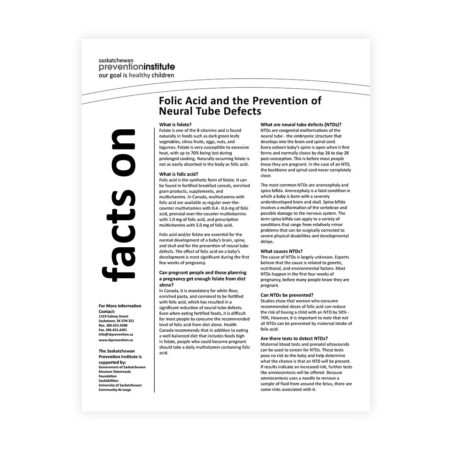
Folic Acid and the Prevention of Neural Tube Defects
Fact Sheet, Updated 2026
This fact sheet provides information on neural tube defects (NTDs) and folic acid. It includes information about what NTDs are, the importance of taking folic acid before and during pregnancy, classification of risk level, and appropriate folic acid dosage.
SKU: 2-301 -
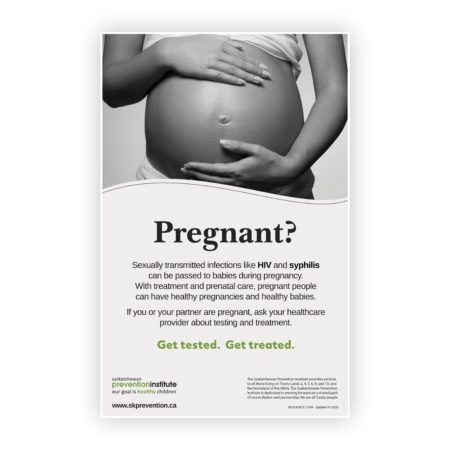
Pregnant? Get tested for HIV and Syphilis
Poster, 2026
HIV and syphilis can be passed from a pregnant person to their growing baby during pregnancy. This poster brings awareness to the importance of testing, treatment, and prenatal care for the health of pregnant people and their babies.
SKU: 7-004 -
Perinatal Transmission of HIV: Prevention, Treatment, and Education
Report, Updated 2026
Saskatchewan continues to see high rates of new cases of human immunodeficiency virus (HIV) infection in comparison to the rest of Canada. A large number of these new cases are being identified in women of childbearing age.
Recognizing the importance of understanding HIV in the context of pregnancy, the Saskatchewan Prevention Institute conducted a review of the literature in this area. The review includes findings and recommendations on perinatal transmission, transmission prevention, barriers to prevention, and health promotion around these topics.
SKU: 7-501 -

Sexually Transmitted and Blood-Borne Infections (STBBIs): What You Need to Know
Brochure, Revised 2026
Designed for youth, this brochure provides evidence-based information on sexually transmitted and blood-borne infections (STBBIs). It covers what STBBIs are, how they are spread, chances of getting an STBBI, ways to reduce risk, when to get tested, and stigma related to STBBIs.
SKU: 7-002 -

Prenatal Supplements
Infographic, 2025
Developed in collaboration with the Perinatal Nutrients of Concern Resource Development Working Group, this infographic poster highlights key nutrients to look for in a prenatal supplement, including folic acid, vitamin D, and iron. It includes tips for managing common challenges with taking supplements, such as nausea or difficulty swallowing.
SKU: 2-810
-

Common Postpartum Complications
Fact Sheet, 2025
The postpartum period, or “fourth trimester”, is a critical time for new parents to recover and adjust after childbirth. This fact sheet highlights common postpartum complications that can affect both physical and mental health. It outlines symptoms to watch for, provides helpful tips for managing discomfort, and emphasizes the importance of seeking medical attention for severe or persistent issues. Resources and support options are also included to help ensure a healthy transition into parenthood.
SKU: 2-202 -

Pregnancy and Alcohol: What doctors would like you to know
Information Card, Reviewed 2025
This information card provides simple medical advice to support healthy pregnancies and prevent prenatal alcohol exposure.
SKU: 3-152 -

Essential Foods for a Healthy Pregnancy
Brochure, 2024
This brochure, designed for use by and with pregnant people, provides information about important nutrients before, during, and after pregnancy. It includes examples of foods containing these important nutrients, as well as healthy drink options, tips to help with nausea, and eating well for less.
SKU: 2-314 -

Messages for Parents: Two to Five Years
Information Card, Revised 2024
Parents are the first and primary sexual health educators of children. This resource provides information to help parents and caregivers promote their child’s healthy sexual development. Early introduction of sexual health topics increases the confidence and comfort of both caregivers and the child to talk about sexual health in later years. As children grow, it is important for caregivers to reinforce health messages and expand on sexual health topics.
Messages for Parents are also available for other age groups:
SKU: 7-205 -

Intimate Partner Violence (IPV) During Pregnancy: A Literature Review
Report, 2024
Intimate partner violence during pregnancy is one of the biggest health risks in the prenatal period. It is associated with significant physical and psychological consequences that can be longstanding for pregnant people and fetuses. This literature review details prevalence rates, risk factors for perpetration and victimization, adverse pregnancy outcomes for both the mother and fetus, and economic impacts associated with intimate partner violence during pregnancy. Intervention strategies are also outlined.
For a related literature review focused on the impacts intimate partner violence exposure on children, please visit www.skprevention.ca/resource-catalogue/child-development/childhood-exposure-to-intimate-partner-violence-a-literature-review/.
SKU: 2-462
-

Healthy Weight Gain During Pregnancy
Booklet, Revised 2021
Healthy weight gain is important during pregnancy for the health of the woman and her growing baby. This booklet includes information on the benefits of gaining the recommended amount of weight during pregnancy, how to determine the amount of weight to gain during pregnancy, and recommendations for how to gain a healthy amount of weight. This booklet was developed in consultation with Saskatchewan dietitians, nurses, and other healthcare providers, as well as First Nations women.
Recent updates include the latest Canada Food Guide recommendations, the importance of certain nutrients in pregnancy, and how to track weight gain during pregnancy using the My Saskatchewan Pregnancy app.
SKU: 2-459
-
Sexually Transmitted and Blood-Borne Infections (STBBIs): What You Need to Know
Brochure, Revised 2026
Designed for youth, this brochure provides evidence-based information on sexually transmitted and blood-borne infections (STBBIs). It covers what STBBIs are, how they are spread, chances of getting an STBBI, ways to reduce risk, when to get tested, and stigma related to STBBIs.
SKU: 7-002 -
Essential Foods for a Healthy Pregnancy
Brochure, 2024
This brochure, designed for use by and with pregnant people, provides information about important nutrients before, during, and after pregnancy. It includes examples of foods containing these important nutrients, as well as healthy drink options, tips to help with nausea, and eating well for less.
SKU: 2-314 -

What Have You Heard About Maternal Mental Health (Pamphlet)
Pamphlet, 2023
This pamphlet provides information about maternal/perinatal mental health, self-care tips for parents, and a list of organizations that provide information and support related to mental health before, during, and/or after pregnancy.
SKU: 2-110 -

Before You Become Pregnant
Brochure, Revised 2022
This brochure talks about the important information a woman should know when planning a pregnancy. It promotes a healthy lifestyle prior to conception in order to ensure the healthiest baby possible.
SKU: 2-309 -

Gestational Diabetes – What You Need to Know
Brochure, 2022
Gestational diabetes, also known as gestational diabetes mellitus (GDM), is a type of diabetes that begins in pregnancy. This brochure provides information on the risk factors for developing GDM, its impact on the mother and the baby, screening, management, and prevention of GDM, as well as supports available to people with GDM in Saskatchewan.
SKU: 2-502 -

HIV: Healthy Pregnancies and Healthy Babies
Booklet, 2018
This booklet is designed for people living with HIV who are planning a pregnancy or are already pregnant. Topics include basic HIV and HIV treatment information, how to stay healthy before and during pregnancy, unique issues that may face women living with HIV, and where to go for more information and support. The booklet is an update to the previous HIV and pregnancy-related pamphlets provided by the Saskatchewan Prevention Institute.
SKU: 7-005
-
Folic Acid and the Prevention of Neural Tube Defects
Fact Sheet, Updated 2026
This fact sheet provides information on neural tube defects (NTDs) and folic acid. It includes information about what NTDs are, the importance of taking folic acid before and during pregnancy, classification of risk level, and appropriate folic acid dosage.
SKU: 2-301 -
Common Postpartum Complications
Fact Sheet, 2025
The postpartum period, or “fourth trimester”, is a critical time for new parents to recover and adjust after childbirth. This fact sheet highlights common postpartum complications that can affect both physical and mental health. It outlines symptoms to watch for, provides helpful tips for managing discomfort, and emphasizes the importance of seeking medical attention for severe or persistent issues. Resources and support options are also included to help ensure a healthy transition into parenthood.
SKU: 2-202 -

HIV, Pregnancy, and Tobacco Use
Fact Sheet, Revised 2024
This fact sheet explains that for women living with HIV, smoking tobacco during pregnancy can increase the chances that HIV will be passed to the baby. Information about traditional tobacco use is included, along with resources to help pregnant women and those planning a pregnancy to quit or reduce their tobacco use.
SKU: 7-515 -

Late Preterm Infant (Near-Term)
Fact Sheet, 2023
A late preterm infant is a baby that is born between 34-36 (almost 37) weeks of pregnancy. This fact sheet provides information about some health problems that might affect a late preterm infant, things that caregivers and parents should watch for, and some questions to be discussed before leaving the hospital.
SKU: 2-201 -

Maternal/Perinatal Mental Health
Fact Sheet, 2023
This information sheet provides descriptions of organizations and how to contact them if a pregnant person needs assistance with their mental health before, during, and/or after pregnancy.
SKU: 2-808 -

Should I get the COVID-19 Vaccine if I am Pregnant or Breastfeeding?
Fact Sheet, 2021
This fact sheet provides evidence-based information on COVID-19 illness and vaccination in pregnant and breastfeeding people to help them make informed decisions about getting vaccinated.
A list of associated references can be accessed at: COVID-19 Vaccine in Pregnancy and Breastfeeding References.
SKU: 2-313 -

Common Non-prescription Medications in Pregnancy
Fact Sheet, Revised 2021
Non-prescription medications, sometimes referred to as over-the-counter or OTC medications, are those that can be purchased without having a doctor’s prescription. This fact sheet provides information on common OTC medications such as antacids, antihistamines, laxatives, cough and cold medications, herbal products, and many more that are used in pregnancy.
SKU: 2-251 -

Gestational Diabetes Fact Sheet
Fact Sheet, 2020
Gestational diabetes, also known as gestational diabetes mellitus (GDM), is a sub-type of diabetes that is first identified during pregnancy. This fact sheet provides information on risk factors for developing GDM, its impact on maternal and child health, screening and diagnosis, as well as recommended management and primary prevention strategies.
SKU: 2-442 -

Routine Blood Tests in Pregnancy
Fact Sheet, 2013
As part of prenatal care, routine blood tests are recommended for all women. If these tests identify an infection or another condition, treatment can reduce the risk of harm to the pregnant woman and her baby. This fact sheet provides information on routine blood tests conducted.
SKU: 2-427 -

Maternal Mental Health
Fact Sheet, 2013
These fact sheets are intended as an information resource for healthcare providers or other individuals who would like further information on maternal depression. It is more detailed than the Information Card. On the back of the fact sheet is the Edinburgh Postpartum Depression Scale (EPDS), a depression screen that can be done with a woman or can be provided to a woman to complete on her own. The fact sheet can be referred to when discussing maternal depression with women and their families, or used to share information with your colleagues.
* For an updated version of the Maternal Mental Health Edinburgh Postnatal Depression Scale (EPDS) Screening and Care Guide available through the Saskatchewan Ministry of Health, please visit https://www.ehealthsask.ca/services/resources/Resources/EPDS-screening-2019.pdfSKU: 2-102
-

HIV and Pregnancy – A Guide to Care
Guide and Manual, Revised 2020
This guide covers such topics such as HIV/AIDS in Saskatchewan, modes of transmission of HIV, HIV testing during pregnancy, prenatal algorithm, HIV treatment and drug management, after-care for babies of HIV positive women, barriers to HIV transmission prevention and prenatal care, and motivational approaches.
For updated information about HIV/AIDS for health professionals, visit: https://www.canada.ca/en/public-health/services/diseases/hiv-aids/health-professionals.html.
For updated HIV order sets for Saskatchewan, including maternal and infant order sets, clinical forms, and discharge checklists, visit: https://www.saskhealthauthority.ca/intranet/health-provider-resources/clinical-resources/z-list-clinical-resources/maternalchildrens-health-resources/hiv-maternal-and-newborn-clinical-resources.
For updated information about infant feeding recommendations in Canada, including criteria for people living with HIV who want to breastfeed, visit: https://pubmed.ncbi.nlm.nih.gov/37008587/.
SKU: 7-008 -

Edinburgh Postpartum Depression Scale (EPDS) Screening and Care Guide
Guide and Manual, 2012
The EPDS Screening and Care Guide provides healthcare providers with score interpretation and care guide to use when screening pregnant and postpartum women for depression and anxiety using the Edinburgh Postpartum Depression Scale (EPDS). It also includes guidelines for medical management when maternal mental health is of concern, contact information for Saskatchewan Healthline and Saskatchewan Drug Information Services, and a space for relevant local contact information. On the reverse side of the form there is a brief description of maternal depression including common symptoms, guidelines for screening, and the EPDS questions.
* For an updated version of the Maternal Mental Health Edinburgh Postnatal Depression Scale (EPDS) Screening and Care Guide available through the Saskatchewan Ministry of Health, please visit https://www.ehealthsask.ca/services/resources/Resources/EPDS-screening-2019.pdfSKU: 2-104
-

Maternal Mental Health Screening (Information Card)
Information Card, 2023
This information card provides a link to the updated EPDS (Edinburgh Postnatal Depression Scale) screening tool and care guide, used in Saskatchewan since 2019. A scannable QR code is also included.
SKU: 2-109 -

We Need to Be Safe
Information Card, Revised 2023
This information card for the general public provides information on the impacts of intimate partner violence during pregnancy and available resources and supports.
SKU: 2-434 -

What Have You Heard About Cannabis and Pregnancy?
Information Card, 2022
This information card is aimed at people who are pregnant or trying to get pregnant. It provides evidence-based information about the potential effects of cannabis use when trying to get pregnant, during pregnancy, and when breastfeeding. The information card highlights how cannabis use could affect fertility (the ability to get pregnant) and a developing baby’s growth.
SKU: 2-107 -

Maternal Mental Health
Information Card, 2013
The Maternal Mental Health Information Card provides information for women and their families and friends who want to know more about maternal depression. It includes information on symptoms of depression and who to contact for help. The card also includes ways a woman can take care of herself and suggestions for family and friends to help support her if she is suffering from depression. Contacts for help are also provided. The card is ideal for waiting rooms or as a handout to those who would benefit from information on maternal depression.
SKU: 2-101
-
Pregnant? Get tested for HIV and Syphilis
Poster, 2026
HIV and syphilis can be passed from a pregnant person to their growing baby during pregnancy. This poster brings awareness to the importance of testing, treatment, and prenatal care for the health of pregnant people and their babies.
SKU: 7-004 -
Prenatal Supplements
Infographic, 2025
Developed in collaboration with the Perinatal Nutrients of Concern Resource Development Working Group, this infographic poster highlights key nutrients to look for in a prenatal supplement, including folic acid, vitamin D, and iron. It includes tips for managing common challenges with taking supplements, such as nausea or difficulty swallowing.
SKU: 2-810 -

HIV, Pregnancy, and Tobacco Use
Poster, 2023
This poster explains that for women living with HIV, smoking tobacco during pregnancy can increase the chances that HIV will be passed to the baby. Supports are listed to help pregnant women and those planning a pregnancy to quit or reduce their tobacco use.
SKU: 7-517 -

Maternal Mental Health (Poster)
Poster, 2023
This poster is intended to raise awareness about maternal mental health. It includes information about symptoms of depression and who to contact for help.
SKU: 2-103 -

My Saskatchewan Pregnancy App Poster
Poster, 2023
To provide evidence-based information to pregnant women in Saskatchewan, the Prevention Institute has created a smart phone app, My Saskatchewan Pregnancy. This poster provides a QR code to download this app.
Download the poster without the QR code here. here.SKU: 2-500 -

Cannabis and Pregnancy Poster
Poster, 2019
Cannabis can be harmful. This poster highlights that cannabis can harm developing fetuses during pregnancy, and infants through breastfeeding. This poster was created in partnership with the Cannabinoid Research Institute of Saskatchewan.
SKU: 2-461 -

Fetal Development
Poster, 2008
These 8.5 x 11 inch posters, developed by Childbirth Graphics, assist healthcare professionals in discussing alcohol use with their patients. Although these posters do not focus on FASD, they can be used to help patients understand that alcohol is one of many factors which can impact the development of the fetus.
Audience: Healthcare Professionals and their PatientsPlease note: This resource is a pad of 50 fact sheets. An order quantity of 1 equals 50 fact sheets.SKU: 3-143
-
Perinatal Transmission of HIV: Prevention, Treatment, and Education
Report, Updated 2026
Saskatchewan continues to see high rates of new cases of human immunodeficiency virus (HIV) infection in comparison to the rest of Canada. A large number of these new cases are being identified in women of childbearing age.
Recognizing the importance of understanding HIV in the context of pregnancy, the Saskatchewan Prevention Institute conducted a review of the literature in this area. The review includes findings and recommendations on perinatal transmission, transmission prevention, barriers to prevention, and health promotion around these topics.
SKU: 7-501 -
Intimate Partner Violence (IPV) During Pregnancy: A Literature Review
Report, 2024
Intimate partner violence during pregnancy is one of the biggest health risks in the prenatal period. It is associated with significant physical and psychological consequences that can be longstanding for pregnant people and fetuses. This literature review details prevalence rates, risk factors for perpetration and victimization, adverse pregnancy outcomes for both the mother and fetus, and economic impacts associated with intimate partner violence during pregnancy. Intervention strategies are also outlined.
For a related literature review focused on the impacts intimate partner violence exposure on children, please visit www.skprevention.ca/resource-catalogue/child-development/childhood-exposure-to-intimate-partner-violence-a-literature-review/.
SKU: 2-462 -

Gestational Diabetes Risks Prevention and Treatments
Literature Review, 2020
Gestational diabetes, also known as gestational diabetes mellitus (GDM), is a sub-type of diabetes that is first identified during pregnancy. It consists of abnormal glucose tolerance or higher than normal blood glucose levels, that may or may not diminish following the birth of an infant. Over the past decades, GDM rates have continued to increase in Canada. This review provides information on the risk factors for developing GDM, its impact on maternal and offspring health, the approach to screening and diagnosis, recommended management strategies (both pharmacological and non-pharmacological), as well as primary prevention strategies.
SKU: 2-448 -

GPC Evidence Summary
Report, 2016
Group prenatal care is a model of group where eight to twelve women of similar gestational age meet as a group with their healthcare provider for 90-120 minutes of regularly scheduled appointments, starting in their second trimester and continuing throughout their pregnancy. During these appointments, each woman has a brief individual physical assessment with the healthcare provider and then participates in a group discussion led by a healthcare provider. All prenatal care is provided in this group setting, combining the usual physical assessment with peer support and increased time for education about healthy pregnancy. This report examines current research on group prenatal care to assess if it is a good model of care for Saskatchewan and if there is an improvement in birth outcomes and breastfeeding rates associated with using this model of care compared to individual prenatal care. Birth outcomes examined in this report are gestational age at birth, preterm birth, and low birth weight.
SKU: 2-904 -

Group Prenatal Care Lit Review
Report, 2016
Group prenatal care is a model of group where eight to twelve women of similar gestational age meet as a group with their healthcare provider for 90-120 minutes of regularly scheduled appointments, starting in their second trimester and continuing throughout their pregnancy. During these appointments, each woman has a brief individual physical assessment with the healthcare provider and then participates in a group discussion led by a healthcare provider. All prenatal care is provided in this group setting, combining the usual physical assessment with peer support and increased time for education about healthy pregnancy. This report examines current research on group prenatal care to assess if it is a good model of care for Saskatchewan and if there is an improvement in birth outcomes and breastfeeding rates associated with using this model of care compared to individual prenatal care. Birth outcomes examined in this report are gestational age at birth, preterm birth, and low birth weight.
SKU: 2-903 -

Prenatal eHealth Tools Report
Report, 2016
Expectant parents today have access to a wealth of information on pregnancy and childbirth, and much of that information is accessed electronically. Knowledgeable healthcare providers who understand the strengths and limitations of these new technologies are in an excellent position to offer expert guidance to women using these technology-based prenatal health tools. This report seeks to educate interested stakeholders about eHealth, what it entails, the potential benefits and challenges, and recommended options for using eHealth to provide quality prenatal information to residents of Saskatchewan.
SKU: 2-901 -

Prenatal eHealth Tools
Report, 2016
Expectant parents today have access to a wealth of information on pregnancy and childbirth, and much of that information is accessed electronically. Knowledgeable healthcare providers who understand the strengths and limitations of these new technologies are in an excellent position to offer expert guidance to women using these technology-based prenatal health tools. This summary seeks to educate interested stakeholders about eHealth, what it entails, the potential benefits and challenges, and recommended options for using eHealth to provide quality prenatal information to residents of Saskatchewan.
SKU: 2-902 -

Infant Mortality in Saskatchewan: Evidence to Inform Public Health Practice
Report, 2009
This document was prepared to describe the relationship between modifiable risk factors and infant mortality. It is meant to provide guidance, strategies, and support to help expand or develop programs that may contribute to the reduction of infant mortality in Saskatchewan. It includes a review of the literature regarding prevalent risk factors associated with infant mortality, as well as identifying promising practices related to those modifiable risk factors.
SKU: 2-457 -

Sexually Transmitted Infections (STIs) Executive Summary
Report, 2011
This executive summary is for the report “Sexually Transmitted Infections and Their Effects on Fertility, Pregnancy, and the Newborn: An Environmental Scan of Available Resources and a Preliminary Needs Assessment for Saskatchewan Health Care Providers”.
Download the Sexually Transmitted Infections (STIs) – ReportSKU: 7-503 -

Sexually Transmitted Infections (STIs)
Report, 2010
This report presents the results of an environmental scan of available education resources focused on the effects of STIs, and their impact on fertility, pregnancy, and the newborn. Included is a preliminary assessment of the needs of health and allied health professionals in Saskatchewan for resources in this area.
SKU: 7-502
-

Hope for the Future: Having a Healthy Pregnancy While Living with HIV
Video, 2013
This DVD shares information about HIV, pregnancy, and parenting, with the goal of showing that healthy pregnancies and healthy babies are possible for pregnant women living with HIV in Saskatchewan. The knowledge and experiences of people living with HIV and those who work in this area are shared. The DVD was created as a resource for health and allied health professionals and for people living with HIV in Saskatchewan.
SKU: 7-000
Most Recent Resources
-
Folic Acid and the Prevention of Neural Tube Defects
Fact Sheet, Updated 2026
This fact sheet provides information on neural tube defects (NTDs) and folic acid. It includes information about what NTDs are, the importance of taking folic acid before and during pregnancy, classification of risk level, and appropriate folic acid dosage.
SKU: 2-301 -
Pregnant? Get tested for HIV and Syphilis
Poster, 2026
HIV and syphilis can be passed from a pregnant person to their growing baby during pregnancy. This poster brings awareness to the importance of testing, treatment, and prenatal care for the health of pregnant people and their babies.
SKU: 7-004
-
Perinatal Transmission of HIV: Prevention, Treatment, and Education
Report, Updated 2026
Saskatchewan continues to see high rates of new cases of human immunodeficiency virus (HIV) infection in comparison to the rest of Canada. A large number of these new cases are being identified in women of childbearing age.
Recognizing the importance of understanding HIV in the context of pregnancy, the Saskatchewan Prevention Institute conducted a review of the literature in this area. The review includes findings and recommendations on perinatal transmission, transmission prevention, barriers to prevention, and health promotion around these topics.
SKU: 7-501 -
Sexually Transmitted and Blood-Borne Infections (STBBIs): What You Need to Know
Brochure, Revised 2026
Designed for youth, this brochure provides evidence-based information on sexually transmitted and blood-borne infections (STBBIs). It covers what STBBIs are, how they are spread, chances of getting an STBBI, ways to reduce risk, when to get tested, and stigma related to STBBIs.
SKU: 7-002
-
Prenatal Supplements
Infographic, 2025
Developed in collaboration with the Perinatal Nutrients of Concern Resource Development Working Group, this infographic poster highlights key nutrients to look for in a prenatal supplement, including folic acid, vitamin D, and iron. It includes tips for managing common challenges with taking supplements, such as nausea or difficulty swallowing.
SKU: 2-810 -
Common Postpartum Complications
Fact Sheet, 2025
The postpartum period, or “fourth trimester”, is a critical time for new parents to recover and adjust after childbirth. This fact sheet highlights common postpartum complications that can affect both physical and mental health. It outlines symptoms to watch for, provides helpful tips for managing discomfort, and emphasizes the importance of seeking medical attention for severe or persistent issues. Resources and support options are also included to help ensure a healthy transition into parenthood.
SKU: 2-202
-
Pregnancy and Alcohol: What doctors would like you to know
Information Card, Reviewed 2025
This information card provides simple medical advice to support healthy pregnancies and prevent prenatal alcohol exposure.
SKU: 3-152 -
Essential Foods for a Healthy Pregnancy
Brochure, 2024
This brochure, designed for use by and with pregnant people, provides information about important nutrients before, during, and after pregnancy. It includes examples of foods containing these important nutrients, as well as healthy drink options, tips to help with nausea, and eating well for less.
SKU: 2-314
-
Messages for Parents: Two to Five Years
Information Card, Revised 2024
Parents are the first and primary sexual health educators of children. This resource provides information to help parents and caregivers promote their child’s healthy sexual development. Early introduction of sexual health topics increases the confidence and comfort of both caregivers and the child to talk about sexual health in later years. As children grow, it is important for caregivers to reinforce health messages and expand on sexual health topics.
Messages for Parents are also available for other age groups:
SKU: 7-205 -
Intimate Partner Violence (IPV) During Pregnancy: A Literature Review
Report, 2024
Intimate partner violence during pregnancy is one of the biggest health risks in the prenatal period. It is associated with significant physical and psychological consequences that can be longstanding for pregnant people and fetuses. This literature review details prevalence rates, risk factors for perpetration and victimization, adverse pregnancy outcomes for both the mother and fetus, and economic impacts associated with intimate partner violence during pregnancy. Intervention strategies are also outlined.
For a related literature review focused on the impacts intimate partner violence exposure on children, please visit www.skprevention.ca/resource-catalogue/child-development/childhood-exposure-to-intimate-partner-violence-a-literature-review/.
SKU: 2-462
Booklets
-
Healthy Weight Gain During Pregnancy
Booklet, Revised 2021
Healthy weight gain is important during pregnancy for the health of the woman and her growing baby. This booklet includes information on the benefits of gaining the recommended amount of weight during pregnancy, how to determine the amount of weight to gain during pregnancy, and recommendations for how to gain a healthy amount of weight. This booklet was developed in consultation with Saskatchewan dietitians, nurses, and other healthcare providers, as well as First Nations women.
Recent updates include the latest Canada Food Guide recommendations, the importance of certain nutrients in pregnancy, and how to track weight gain during pregnancy using the My Saskatchewan Pregnancy app.
SKU: 2-459
Brochures
-
Sexually Transmitted and Blood-Borne Infections (STBBIs): What You Need to Know
Brochure, Revised 2026
Designed for youth, this brochure provides evidence-based information on sexually transmitted and blood-borne infections (STBBIs). It covers what STBBIs are, how they are spread, chances of getting an STBBI, ways to reduce risk, when to get tested, and stigma related to STBBIs.
SKU: 7-002 -
Essential Foods for a Healthy Pregnancy
Brochure, 2024
This brochure, designed for use by and with pregnant people, provides information about important nutrients before, during, and after pregnancy. It includes examples of foods containing these important nutrients, as well as healthy drink options, tips to help with nausea, and eating well for less.
SKU: 2-314 -
What Have You Heard About Maternal Mental Health (Pamphlet)
Pamphlet, 2023
This pamphlet provides information about maternal/perinatal mental health, self-care tips for parents, and a list of organizations that provide information and support related to mental health before, during, and/or after pregnancy.
SKU: 2-110 -
Before You Become Pregnant
Brochure, Revised 2022
This brochure talks about the important information a woman should know when planning a pregnancy. It promotes a healthy lifestyle prior to conception in order to ensure the healthiest baby possible.
SKU: 2-309 -
Gestational Diabetes – What You Need to Know
Brochure, 2022
Gestational diabetes, also known as gestational diabetes mellitus (GDM), is a type of diabetes that begins in pregnancy. This brochure provides information on the risk factors for developing GDM, its impact on the mother and the baby, screening, management, and prevention of GDM, as well as supports available to people with GDM in Saskatchewan.
SKU: 2-502 -
HIV: Healthy Pregnancies and Healthy Babies
Booklet, 2018
This booklet is designed for people living with HIV who are planning a pregnancy or are already pregnant. Topics include basic HIV and HIV treatment information, how to stay healthy before and during pregnancy, unique issues that may face women living with HIV, and where to go for more information and support. The booklet is an update to the previous HIV and pregnancy-related pamphlets provided by the Saskatchewan Prevention Institute.
SKU: 7-005
Fact Sheets
-
Folic Acid and the Prevention of Neural Tube Defects
Fact Sheet, Updated 2026
This fact sheet provides information on neural tube defects (NTDs) and folic acid. It includes information about what NTDs are, the importance of taking folic acid before and during pregnancy, classification of risk level, and appropriate folic acid dosage.
SKU: 2-301 -
Common Postpartum Complications
Fact Sheet, 2025
The postpartum period, or “fourth trimester”, is a critical time for new parents to recover and adjust after childbirth. This fact sheet highlights common postpartum complications that can affect both physical and mental health. It outlines symptoms to watch for, provides helpful tips for managing discomfort, and emphasizes the importance of seeking medical attention for severe or persistent issues. Resources and support options are also included to help ensure a healthy transition into parenthood.
SKU: 2-202 -
HIV, Pregnancy, and Tobacco Use
Fact Sheet, Revised 2024
This fact sheet explains that for women living with HIV, smoking tobacco during pregnancy can increase the chances that HIV will be passed to the baby. Information about traditional tobacco use is included, along with resources to help pregnant women and those planning a pregnancy to quit or reduce their tobacco use.
SKU: 7-515 -
Late Preterm Infant (Near-Term)
Fact Sheet, 2023
A late preterm infant is a baby that is born between 34-36 (almost 37) weeks of pregnancy. This fact sheet provides information about some health problems that might affect a late preterm infant, things that caregivers and parents should watch for, and some questions to be discussed before leaving the hospital.
SKU: 2-201 -
Maternal/Perinatal Mental Health
Fact Sheet, 2023
This information sheet provides descriptions of organizations and how to contact them if a pregnant person needs assistance with their mental health before, during, and/or after pregnancy.
SKU: 2-808 -
Should I get the COVID-19 Vaccine if I am Pregnant or Breastfeeding?
Fact Sheet, 2021
This fact sheet provides evidence-based information on COVID-19 illness and vaccination in pregnant and breastfeeding people to help them make informed decisions about getting vaccinated.
A list of associated references can be accessed at: COVID-19 Vaccine in Pregnancy and Breastfeeding References.
SKU: 2-313 -
Common Non-prescription Medications in Pregnancy
Fact Sheet, Revised 2021
Non-prescription medications, sometimes referred to as over-the-counter or OTC medications, are those that can be purchased without having a doctor’s prescription. This fact sheet provides information on common OTC medications such as antacids, antihistamines, laxatives, cough and cold medications, herbal products, and many more that are used in pregnancy.
SKU: 2-251 -
Gestational Diabetes Fact Sheet
Fact Sheet, 2020
Gestational diabetes, also known as gestational diabetes mellitus (GDM), is a sub-type of diabetes that is first identified during pregnancy. This fact sheet provides information on risk factors for developing GDM, its impact on maternal and child health, screening and diagnosis, as well as recommended management and primary prevention strategies.
SKU: 2-442 -
Routine Blood Tests in Pregnancy
Fact Sheet, 2013
As part of prenatal care, routine blood tests are recommended for all women. If these tests identify an infection or another condition, treatment can reduce the risk of harm to the pregnant woman and her baby. This fact sheet provides information on routine blood tests conducted.
SKU: 2-427 -
Maternal Mental Health
Fact Sheet, 2013
These fact sheets are intended as an information resource for healthcare providers or other individuals who would like further information on maternal depression. It is more detailed than the Information Card. On the back of the fact sheet is the Edinburgh Postpartum Depression Scale (EPDS), a depression screen that can be done with a woman or can be provided to a woman to complete on her own. The fact sheet can be referred to when discussing maternal depression with women and their families, or used to share information with your colleagues.
* For an updated version of the Maternal Mental Health Edinburgh Postnatal Depression Scale (EPDS) Screening and Care Guide available through the Saskatchewan Ministry of Health, please visit https://www.ehealthsask.ca/services/resources/Resources/EPDS-screening-2019.pdfSKU: 2-102
Guides and Manuals
-
HIV and Pregnancy – A Guide to Care
Guide and Manual, Revised 2020
This guide covers such topics such as HIV/AIDS in Saskatchewan, modes of transmission of HIV, HIV testing during pregnancy, prenatal algorithm, HIV treatment and drug management, after-care for babies of HIV positive women, barriers to HIV transmission prevention and prenatal care, and motivational approaches.
For updated information about HIV/AIDS for health professionals, visit: https://www.canada.ca/en/public-health/services/diseases/hiv-aids/health-professionals.html.
For updated HIV order sets for Saskatchewan, including maternal and infant order sets, clinical forms, and discharge checklists, visit: https://www.saskhealthauthority.ca/intranet/health-provider-resources/clinical-resources/z-list-clinical-resources/maternalchildrens-health-resources/hiv-maternal-and-newborn-clinical-resources.
For updated information about infant feeding recommendations in Canada, including criteria for people living with HIV who want to breastfeed, visit: https://pubmed.ncbi.nlm.nih.gov/37008587/.
SKU: 7-008 -
Edinburgh Postpartum Depression Scale (EPDS) Screening and Care Guide
Guide and Manual, 2012
The EPDS Screening and Care Guide provides healthcare providers with score interpretation and care guide to use when screening pregnant and postpartum women for depression and anxiety using the Edinburgh Postpartum Depression Scale (EPDS). It also includes guidelines for medical management when maternal mental health is of concern, contact information for Saskatchewan Healthline and Saskatchewan Drug Information Services, and a space for relevant local contact information. On the reverse side of the form there is a brief description of maternal depression including common symptoms, guidelines for screening, and the EPDS questions.
* For an updated version of the Maternal Mental Health Edinburgh Postnatal Depression Scale (EPDS) Screening and Care Guide available through the Saskatchewan Ministry of Health, please visit https://www.ehealthsask.ca/services/resources/Resources/EPDS-screening-2019.pdfSKU: 2-104
Information Cards
-
Maternal Mental Health Screening (Information Card)
Information Card, 2023
This information card provides a link to the updated EPDS (Edinburgh Postnatal Depression Scale) screening tool and care guide, used in Saskatchewan since 2019. A scannable QR code is also included.
SKU: 2-109 -
We Need to Be Safe
Information Card, Revised 2023
This information card for the general public provides information on the impacts of intimate partner violence during pregnancy and available resources and supports.
SKU: 2-434 -
What Have You Heard About Cannabis and Pregnancy?
Information Card, 2022
This information card is aimed at people who are pregnant or trying to get pregnant. It provides evidence-based information about the potential effects of cannabis use when trying to get pregnant, during pregnancy, and when breastfeeding. The information card highlights how cannabis use could affect fertility (the ability to get pregnant) and a developing baby’s growth.
SKU: 2-107 -
My Saskatchewan Pregnancy App Poster
Poster, 2023
To provide evidence-based information to pregnant women in Saskatchewan, the Prevention Institute has created a smart phone app, My Saskatchewan Pregnancy. This poster provides a QR code to download this app.
Download the poster without the QR code here. here.SKU: 2-500 -
Maternal Mental Health
Information Card, 2013
The Maternal Mental Health Information Card provides information for women and their families and friends who want to know more about maternal depression. It includes information on symptoms of depression and who to contact for help. The card also includes ways a woman can take care of herself and suggestions for family and friends to help support her if she is suffering from depression. Contacts for help are also provided. The card is ideal for waiting rooms or as a handout to those who would benefit from information on maternal depression.
SKU: 2-101
Links
Posters
-
Pregnant? Get tested for HIV and Syphilis
Poster, 2026
HIV and syphilis can be passed from a pregnant person to their growing baby during pregnancy. This poster brings awareness to the importance of testing, treatment, and prenatal care for the health of pregnant people and their babies.
SKU: 7-004 -
Prenatal Supplements
Infographic, 2025
Developed in collaboration with the Perinatal Nutrients of Concern Resource Development Working Group, this infographic poster highlights key nutrients to look for in a prenatal supplement, including folic acid, vitamin D, and iron. It includes tips for managing common challenges with taking supplements, such as nausea or difficulty swallowing.
SKU: 2-810 -
HIV, Pregnancy, and Tobacco Use
Poster, 2023
This poster explains that for women living with HIV, smoking tobacco during pregnancy can increase the chances that HIV will be passed to the baby. Supports are listed to help pregnant women and those planning a pregnancy to quit or reduce their tobacco use.
SKU: 7-517 -
Maternal Mental Health (Poster)
Poster, 2023
This poster is intended to raise awareness about maternal mental health. It includes information about symptoms of depression and who to contact for help.
SKU: 2-103 -
Cannabis and Pregnancy Poster
Poster, 2019
Cannabis can be harmful. This poster highlights that cannabis can harm developing fetuses during pregnancy, and infants through breastfeeding. This poster was created in partnership with the Cannabinoid Research Institute of Saskatchewan.
SKU: 2-461 -
Fetal Development
Poster, 2008
These 8.5 x 11 inch posters, developed by Childbirth Graphics, assist healthcare professionals in discussing alcohol use with their patients. Although these posters do not focus on FASD, they can be used to help patients understand that alcohol is one of many factors which can impact the development of the fetus.
Audience: Healthcare Professionals and their PatientsPlease note: This resource is a pad of 50 fact sheets. An order quantity of 1 equals 50 fact sheets.SKU: 3-143
Reports
-
Perinatal Transmission of HIV: Prevention, Treatment, and Education
Report, Updated 2026
Saskatchewan continues to see high rates of new cases of human immunodeficiency virus (HIV) infection in comparison to the rest of Canada. A large number of these new cases are being identified in women of childbearing age.
Recognizing the importance of understanding HIV in the context of pregnancy, the Saskatchewan Prevention Institute conducted a review of the literature in this area. The review includes findings and recommendations on perinatal transmission, transmission prevention, barriers to prevention, and health promotion around these topics.
SKU: 7-501 -
Intimate Partner Violence (IPV) During Pregnancy: A Literature Review
Report, 2024
Intimate partner violence during pregnancy is one of the biggest health risks in the prenatal period. It is associated with significant physical and psychological consequences that can be longstanding for pregnant people and fetuses. This literature review details prevalence rates, risk factors for perpetration and victimization, adverse pregnancy outcomes for both the mother and fetus, and economic impacts associated with intimate partner violence during pregnancy. Intervention strategies are also outlined.
For a related literature review focused on the impacts intimate partner violence exposure on children, please visit www.skprevention.ca/resource-catalogue/child-development/childhood-exposure-to-intimate-partner-violence-a-literature-review/.
SKU: 2-462 -
Gestational Diabetes Risks Prevention and Treatments
Literature Review, 2020
Gestational diabetes, also known as gestational diabetes mellitus (GDM), is a sub-type of diabetes that is first identified during pregnancy. It consists of abnormal glucose tolerance or higher than normal blood glucose levels, that may or may not diminish following the birth of an infant. Over the past decades, GDM rates have continued to increase in Canada. This review provides information on the risk factors for developing GDM, its impact on maternal and offspring health, the approach to screening and diagnosis, recommended management strategies (both pharmacological and non-pharmacological), as well as primary prevention strategies.
SKU: 2-448 -
GPC Evidence Summary
Report, 2016
Group prenatal care is a model of group where eight to twelve women of similar gestational age meet as a group with their healthcare provider for 90-120 minutes of regularly scheduled appointments, starting in their second trimester and continuing throughout their pregnancy. During these appointments, each woman has a brief individual physical assessment with the healthcare provider and then participates in a group discussion led by a healthcare provider. All prenatal care is provided in this group setting, combining the usual physical assessment with peer support and increased time for education about healthy pregnancy. This report examines current research on group prenatal care to assess if it is a good model of care for Saskatchewan and if there is an improvement in birth outcomes and breastfeeding rates associated with using this model of care compared to individual prenatal care. Birth outcomes examined in this report are gestational age at birth, preterm birth, and low birth weight.
SKU: 2-904 -
Group Prenatal Care Lit Review
Report, 2016
Group prenatal care is a model of group where eight to twelve women of similar gestational age meet as a group with their healthcare provider for 90-120 minutes of regularly scheduled appointments, starting in their second trimester and continuing throughout their pregnancy. During these appointments, each woman has a brief individual physical assessment with the healthcare provider and then participates in a group discussion led by a healthcare provider. All prenatal care is provided in this group setting, combining the usual physical assessment with peer support and increased time for education about healthy pregnancy. This report examines current research on group prenatal care to assess if it is a good model of care for Saskatchewan and if there is an improvement in birth outcomes and breastfeeding rates associated with using this model of care compared to individual prenatal care. Birth outcomes examined in this report are gestational age at birth, preterm birth, and low birth weight.
SKU: 2-903 -
Prenatal eHealth Tools Report
Report, 2016
Expectant parents today have access to a wealth of information on pregnancy and childbirth, and much of that information is accessed electronically. Knowledgeable healthcare providers who understand the strengths and limitations of these new technologies are in an excellent position to offer expert guidance to women using these technology-based prenatal health tools. This report seeks to educate interested stakeholders about eHealth, what it entails, the potential benefits and challenges, and recommended options for using eHealth to provide quality prenatal information to residents of Saskatchewan.
SKU: 2-901 -
Prenatal eHealth Tools
Report, 2016
Expectant parents today have access to a wealth of information on pregnancy and childbirth, and much of that information is accessed electronically. Knowledgeable healthcare providers who understand the strengths and limitations of these new technologies are in an excellent position to offer expert guidance to women using these technology-based prenatal health tools. This summary seeks to educate interested stakeholders about eHealth, what it entails, the potential benefits and challenges, and recommended options for using eHealth to provide quality prenatal information to residents of Saskatchewan.
SKU: 2-902 -
Infant Mortality in Saskatchewan: Evidence to Inform Public Health Practice
Report, 2009
This document was prepared to describe the relationship between modifiable risk factors and infant mortality. It is meant to provide guidance, strategies, and support to help expand or develop programs that may contribute to the reduction of infant mortality in Saskatchewan. It includes a review of the literature regarding prevalent risk factors associated with infant mortality, as well as identifying promising practices related to those modifiable risk factors.
SKU: 2-457 -
Sexually Transmitted Infections (STIs) Executive Summary
Report, 2011
This executive summary is for the report “Sexually Transmitted Infections and Their Effects on Fertility, Pregnancy, and the Newborn: An Environmental Scan of Available Resources and a Preliminary Needs Assessment for Saskatchewan Health Care Providers”.
Download the Sexually Transmitted Infections (STIs) – ReportSKU: 7-503 -
Sexually Transmitted Infections (STIs)
Report, 2010
This report presents the results of an environmental scan of available education resources focused on the effects of STIs, and their impact on fertility, pregnancy, and the newborn. Included is a preliminary assessment of the needs of health and allied health professionals in Saskatchewan for resources in this area.
SKU: 7-502
Videos
-
Hope for the Future: Having a Healthy Pregnancy While Living with HIV
Video, 2013
This DVD shares information about HIV, pregnancy, and parenting, with the goal of showing that healthy pregnancies and healthy babies are possible for pregnant women living with HIV in Saskatchewan. The knowledge and experiences of people living with HIV and those who work in this area are shared. The DVD was created as a resource for health and allied health professionals and for people living with HIV in Saskatchewan.
SKU: 7-000