
Late Preterm Infant (Near-Term)
Attributes to meet: PDF: Download File, Fact Sheets
Download File: condition met
Fact Sheet, 2023
A late preterm infant is a baby that is born between 34-36 (almost 37) weeks of pregnancy. This fact sheet provides information about some health problems that might affect a late preterm infant, things that caregivers and parents should watch for, and some questions to be discussed before leaving the hospital.
Related products
-
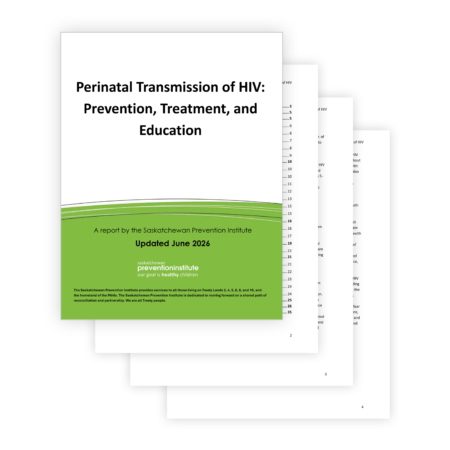
Perinatal Transmission of HIV: Prevention, Treatment, and Education
Report, Updated 2026
Saskatchewan continues to see high rates of new cases of human immunodeficiency virus (HIV) infection in comparison to the rest of Canada. A large number of these new cases are being identified in women of childbearing age.
Recognizing the importance of understanding HIV in the context of pregnancy, the Saskatchewan Prevention Institute conducted a review of the literature in this area. The review includes findings and recommendations on perinatal transmission, transmission prevention, barriers to prevention, and health promotion around these topics.
SKU: 7-501 -

Infant Mortality in Saskatchewan: Evidence to Inform Public Health Practice
Report, 2009
This document was prepared to describe the relationship between modifiable risk factors and infant mortality. It is meant to provide guidance, strategies, and support to help expand or develop programs that may contribute to the reduction of infant mortality in Saskatchewan. It includes a review of the literature regarding prevalent risk factors associated with infant mortality, as well as identifying promising practices related to those modifiable risk factors.
SKU: 2-457 -

Sleep Skills
Brochure, Revised 2023
Good sleep among infants and young children is important for their physical, mental, and emotional well-being. This brochure, designed for use with parents and caregivers, explains what can affect your child’s sleep, how parents and caregivers can help their child go to sleep, and sleep guidelines for children 0-6 years old.
SKU: 5-802 -

HIV: Healthy Pregnancies and Healthy Babies
Booklet, 2018
This booklet is designed for people living with HIV who are planning a pregnancy or are already pregnant. Topics include basic HIV and HIV treatment information, how to stay healthy before and during pregnancy, unique issues that may face women living with HIV, and where to go for more information and support. The booklet is an update to the previous HIV and pregnancy-related pamphlets provided by the Saskatchewan Prevention Institute.
SKU: 7-005