

Walking School Bus: A Guide for Parents and Teachers
Attributes to meet: PDF: Download File, Guides and Manuals
Download File: condition met
Guide and Manual, 2010
A Walking School Bus (WSB) is a group of children (passengers) and adults (drivers and conductors) who walk to and from school along a designated, safe route. The “bus” picks up students and drops them off in the reverse order in the afternoon. This guide identifies the benefits, such as safety, environmental, and health of a WSB. It also goes through the process needed to set up a Walking School Bus.
Related products
-

Preventing Injuries
Fact Sheet, 2010
Injuries are the leading cause of death for Saskatchewan children. This fact sheet defines the differences between injuries and “accidents,” outlines the causes of injuries, and identifies the different types of strategies that can be used to prevent injuries.
SKU: 4-003 -

Bicycle Safety
Fact Sheet, Revised 2022
This fact sheet outlines general bicycle and helmet safety tips as well as important rules of the road. This resource is ideal for cyclists of all ages to prevent injuries while biking.
SKU: 4-202 -

How to Prevent Poisoning
Fact Sheet, Revised 2024
This fact sheet contains information on how to prevent childhood poisoning and a checklist for caregivers to keep their home safe by identifying potential poisons.
SKU: 4-400 -
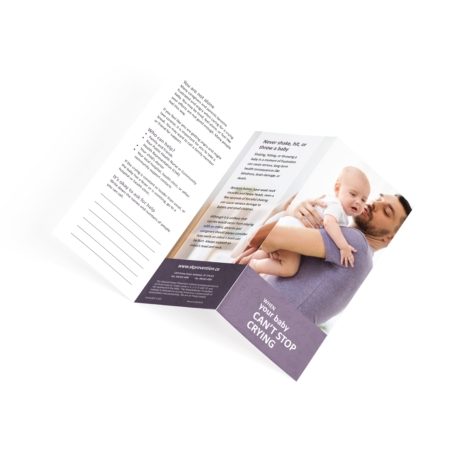
When Your Baby Can’t Stop Crying
Brochure, Revised 2025
Although infant crying is normal, it can be very frustrating for parents and caregivers. This brochure identifies strategies for dealing with a crying infant, as well as strategies for handling caregivers’ frustration.
For information aimed at health professionals and service providers, see Abusive Head Trauma (Shaken Baby Syndrome) (resource 4-900).
SKU: 4-902