
Prenatal Supplements
Attributes to meet: PDF: Infographics, Order
Download File & Order: condition met
Infographic, 2025
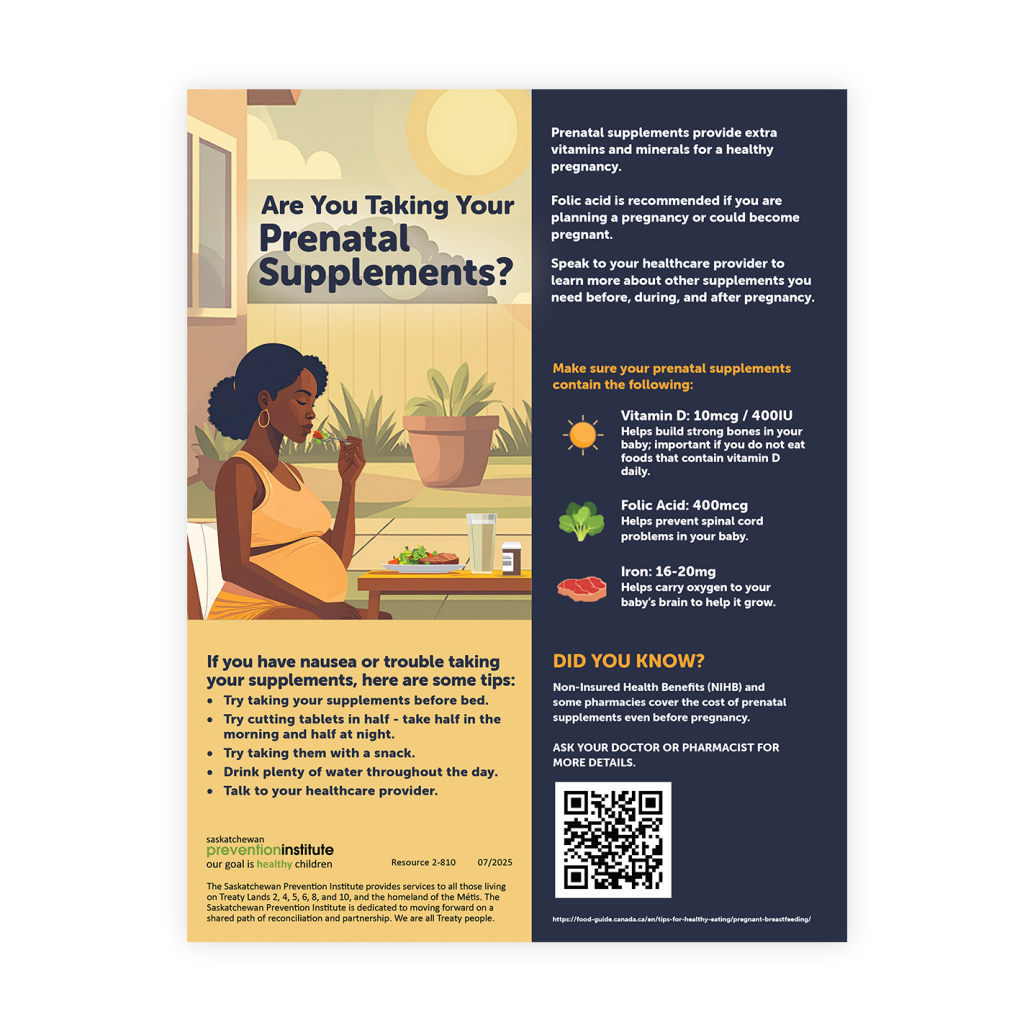
Developed in collaboration with the Perinatal Nutrients of Concern Resource Development Working Group, this infographic poster highlights key nutrients to look for in a prenatal supplement, including folic acid, vitamin D, and iron. It includes tips for managing common challenges with taking supplements, such as nausea or difficulty swallowing.
Related products
-

Routine Blood Tests in Pregnancy
Fact Sheet, 2013
As part of prenatal care, routine blood tests are recommended for all women. If these tests identify an infection or another condition, treatment can reduce the risk of harm to the pregnant woman and her baby. This fact sheet provides information on routine blood tests conducted.
SKU: 2-427 -

We Need to Be Safe
Information Card, Revised 2023
This information card for the general public provides information on the impacts of intimate partner violence during pregnancy and available resources and supports.
SKU: 2-434 -

Common Non-prescription Medications in Pregnancy
Fact Sheet, Revised 2021
Non-prescription medications, sometimes referred to as over-the-counter or OTC medications, are those that can be purchased without having a doctor’s prescription. This fact sheet provides information on common OTC medications such as antacids, antihistamines, laxatives, cough and cold medications, herbal products, and many more that are used in pregnancy.
SKU: 2-251 -

Infant Mortality in Saskatchewan: Evidence to Inform Public Health Practice
Report, 2009
This document was prepared to describe the relationship between modifiable risk factors and infant mortality. It is meant to provide guidance, strategies, and support to help expand or develop programs that may contribute to the reduction of infant mortality in Saskatchewan. It includes a review of the literature regarding prevalent risk factors associated with infant mortality, as well as identifying promising practices related to those modifiable risk factors.
SKU: 2-457