

Child and Youth Injury in Saskatchewan 2004-2013
Attributes to meet: PDF: Download File, Reports
Download File: condition met
Report, 2017
Child and Youth Injury in Saskatchewan 2004-2013 serves as an update to the Child and Youth Injury in Saskatchewan 1995-1999 report completed by the Saskatchewan Prevention Institute in 2002. The current report examines injury-related deaths and hospitalizations of Saskatchewan children and youth less than 20 years of age during the 10 year period of 2004 to 2013. Injury-related deaths and hospitalizations are examined overall, followed by a more detailed analysis of the ten most common causes of injury-related hospitalizations, including both intentional and unintentional injuries. The ten most common causes discussed in this report are falls, sports, intentional self-harm, assault, poisoning, motor vehicle occupant, cycling, all-terrain vehicle, and fire and burns.
Related products
-

Holiday Safety
Fact Sheet, Revised 2019
This fact sheet provides safety tips to help ensure an injury-free holiday season and includes a colouring page.
SKU: 4-019 -
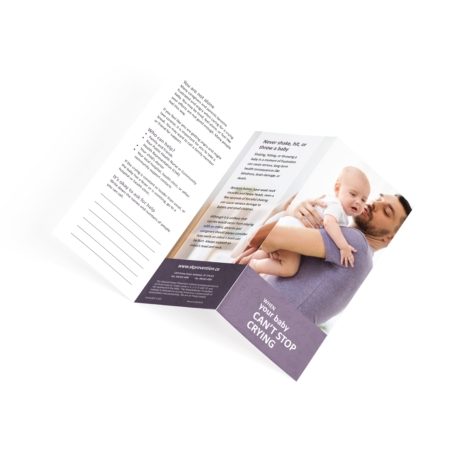
When Your Baby Can’t Stop Crying
Brochure, Revised 2025
Although infant crying is normal, it can be very frustrating for parents and caregivers. This brochure identifies strategies for dealing with a crying infant, as well as strategies for handling caregivers’ frustration.
For information aimed at health professionals and service providers, see Traumatic Head Injury Due to Child Maltreatment (resource 4-900).
SKU: 4-902 -

How to Choose a Bicycle Helmet for a Child
Fact Sheet, Revised 2022
This fact sheet provides information to caregivers about bicycle helmet safety standards, the types of helmets, and how to adjust a helmet for proper fit.
NOTE: Remember to always refer to the bicycle helmet manufacturer’s instructions for information about the size, use, and expiry date (if specified) of the helmet.
SKU: 4-201 -

Walking School Bus: A Guide for Parents and Teachers
Guide and Manual, 2010
A Walking School Bus (WSB) is a group of children (passengers) and adults (drivers and conductors) who walk to and from school along a designated, safe route. The “bus” picks up students and drops them off in the reverse order in the afternoon. This guide identifies the benefits, such as safety, environmental, and health of a WSB. It also goes through the process needed to set up a Walking School Bus.
SKU: 4-305