
Digital Media and Adolescent Sexual Health
Attributes to meet: PDF: Download File, Reports
Download File: condition met
Report, 2016
Research suggests that adolescents aged 8 to 18 years spend an average of 6 to 11 hours per day with some form of media. Research also suggests that the Internet is among the most popular sources of information that adolescents use to learn about sexual and reproductive health. Other important sources are friends and family, schools, and health professionals. Adolescents are actively searching for accurate, helpful, in-depth information about sex and sexual health that they can trust. This evidence summary highlights the benefits and potential challenges to using digital media to learn about sexual health and provides recommendations for using digital media for sexual health interventions. A short list of useful online sexual health websites is also included.
Related products
-

Messages for Parents: Birth to Two Years
Information Card, Revised 2024
Parents are the first and primary sexual health educators of children. This resource provides information to help parents and caregivers promote their child’s healthy sexual development. Early introduction of sexual health topics increases the confidence and comfort of both caregivers and the child to talk about sexual health in later years. As children grow, it is important for caregivers to reinforce health messages and expand on sexual health topics.
Messages for Parents are also available for other age groups:
SKU: 7-204 -
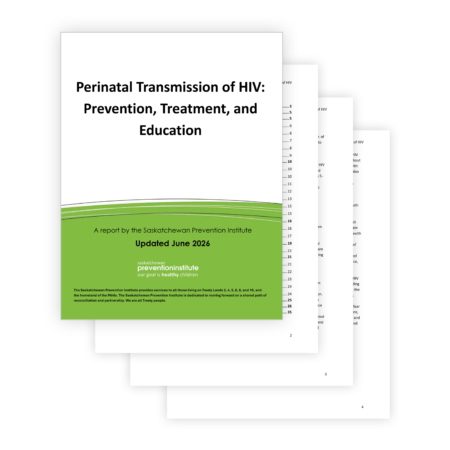
Perinatal Transmission of HIV: Prevention, Treatment, and Education
Report, Updated 2026
Saskatchewan continues to see high rates of new cases of human immunodeficiency virus (HIV) infection in comparison to the rest of Canada. A large number of these new cases are being identified in women of childbearing age.
Recognizing the importance of understanding HIV in the context of pregnancy, the Saskatchewan Prevention Institute conducted a review of the literature in this area. The review includes findings and recommendations on perinatal transmission, transmission prevention, barriers to prevention, and health promotion around these topics.
SKU: 7-501 -

HIV and Pregnancy – (Dene Translation)
Poster, 2019
This poster states that women living with HIV can have healthy pregnancies and healthy babies. This poster was translated to Dene by the Saskatchewan Indigenous Cultural Centre.
SKU: 7-102 -

HIV and Pregnancy
Poster, 2022
HIV can be passed from a pregnant person to their growing baby during pregnancy. This poster brings awareness to the importance of HIV testing, treatment, and prenatal care for the health of pregnant people and their babies.
SKU: 7-004