
Digital Media and Adolescent Sexual Health
Attributes to meet: PDF: Download File, Reports
Download File: condition met
Report, 2016
Research suggests that adolescents aged 8 to 18 years spend an average of 6 to 11 hours per day with some form of media. Research also suggests that the Internet is among the most popular sources of information that adolescents use to learn about sexual and reproductive health. Other important sources are friends and family, schools, and health professionals. Adolescents are actively searching for accurate, helpful, in-depth information about sex and sexual health that they can trust. This evidence summary highlights the benefits and potential challenges to using digital media to learn about sexual health and provides recommendations for using digital media for sexual health interventions. A short list of useful online sexual health websites is also included.
Related products
-

HIV and Pregnancy – (Plains Cree Translation)
Poster, 2019
This poster states that women living with HIV can have healthy pregnancies and healthy babies. This poster was translated to Plains Cree by the Saskatchewan Indigenous Cultural Centre.
SKU: 7-101 -

HIV, Pregnancy, and Tobacco Use
Fact Sheet, Revised 2024
This fact sheet explains that for women living with HIV, smoking tobacco during pregnancy can increase the chances that HIV will be passed to the baby. Information about traditional tobacco use is included, along with resources to help pregnant women and those planning a pregnancy to quit or reduce their tobacco use.
SKU: 7-515 -

Sexually Transmitted and Blood-Borne Infections (STBBIs): What You Need to Know
Brochure, Revised 2026
Designed for youth, this brochure provides evidence-based information on sexually transmitted and blood-borne infections (STBBIs). It covers what STBBIs are, how they are spread, chances of getting an STBBI, ways to reduce risk, when to get tested, and stigma related to STBBIs.
SKU: 7-002 -
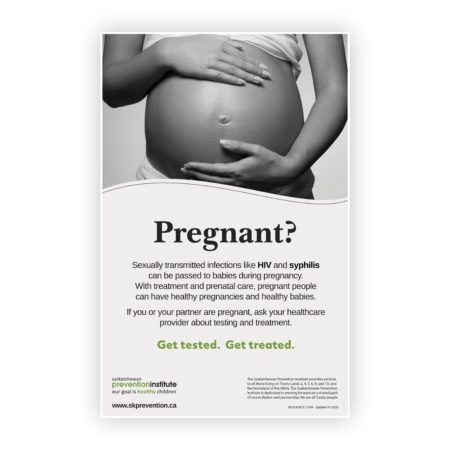
Pregnant? Get tested for HIV and Syphilis
Poster, 2026
HIV and syphilis can be passed from a pregnant person to their growing baby during pregnancy. This poster brings awareness to the importance of testing, treatment, and prenatal care for the health of pregnant people and their babies.
SKU: 7-004