

Childhood Exposure to Intimate Partner Violence: A Literature Review
Attributes to meet: PDF: Download File, Guides and Manuals
Download File: condition met
Report, 2024
Childhood exposure to intimate partner violence (IPV) can have both short- and long-term negative impacts on the health and well-being of children that can persist across generations. This literature review details prevalence, child perspectives, effects of exposure, and intergenerational transmission of violence. Information about protective factors and intervention strategies is also provided.
For a related literature review focused on intimate partner violence during pregnancy, please visit www.skprevention.ca/resource-catalogue/pregnancy/intimate-partner-violence-ipv-during-pregnancy-a-literature-review/.
Related products
-

Helping Young Children Develop Resiliency and Cope with Stress
Information Card, Revised 2025
Stress is inevitable. Every child and adult will experience stress at some time in their lives. Written in plain language, this information card provides practical information for caregivers to help their young children develop resiliency – coping skills to handle stressful events.
SKU: 8-601 -

Infant Mortality in Saskatchewan: Evidence to Inform Public Health Practice
Report, 2009
This document was prepared to describe the relationship between modifiable risk factors and infant mortality. It is meant to provide guidance, strategies, and support to help expand or develop programs that may contribute to the reduction of infant mortality in Saskatchewan. It includes a review of the literature regarding prevalent risk factors associated with infant mortality, as well as identifying promising practices related to those modifiable risk factors.
SKU: 2-457 -

We Need to Be Safe
Information Card, Revised 2023
This information card for the general public provides information on the impacts of intimate partner violence during pregnancy and available resources and supports.
SKU: 2-434 -
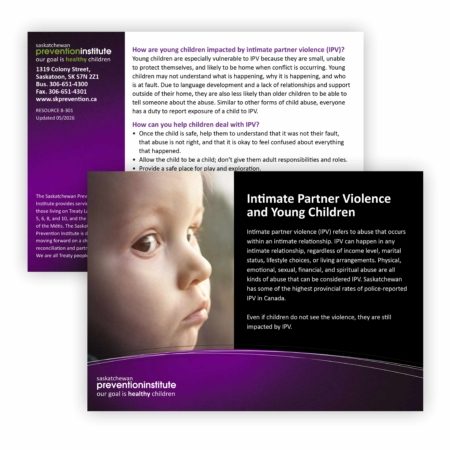
Intimate Partner Violence and Young Children
Information Card, Updated 2026
Written in plain language, this information card provides basic information about the impact of witnessing intimate partner violence during early childhood. Caregivers are given practical tips for helping children who have had this experience.
SKU: 8-301