
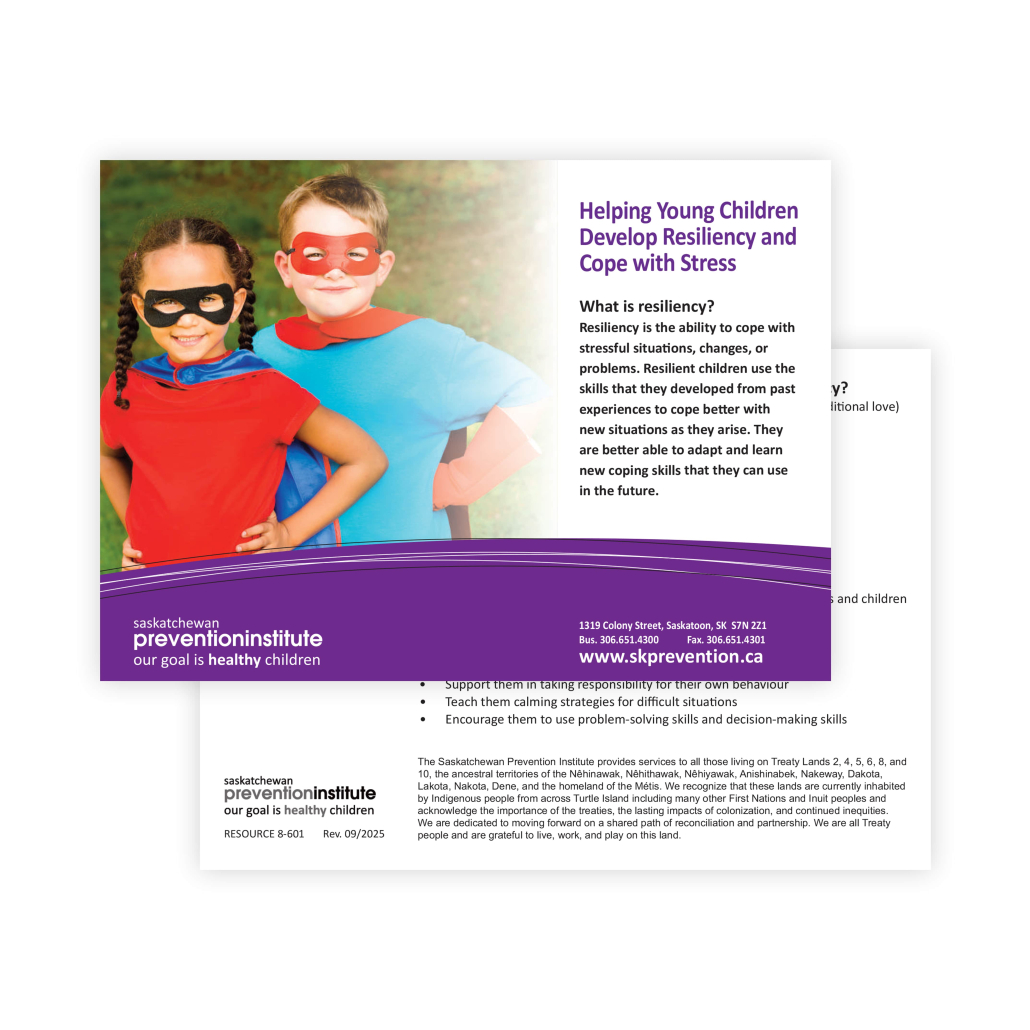
Helping Young Children Develop Resiliency and Cope with Stress
Attributes to meet: PDF: Information Cards, Order
Download File & Order: condition met
Information Card, Revised 2025
Stress is inevitable. Every child and adult will experience stress at some time in their lives. Written in plain language, this information card provides practical information for caregivers to help their young children develop resiliency – coping skills to handle stressful events.
Related products
-

Maternal Mental Health Screen
Form, 2017
The “Maternal Mental Health Screen” is a form that can be used to keep a record of a completed Edinburgh Postnatal Depression Scale (EPDS) screen for depression and anxiety, and associated information, in a woman’s medical chart. The form includes the EPDS that can be completed by the woman, as well as a place to record information including the date screen completed, woman’s HSN, name, weeks gestation/postpartum, depression and anxiety scores, and whether the woman was referred and to whom.
* For an updated version of the Maternal Mental Health Edinburgh Postnatal Depression Scale (EPDS) Screening and Care Guide available through the Saskatchewan Ministry of Health, please visit https://www.ehealthsask.ca/services/resources/Resources/EPDS-screening-2019.pdfSKU: 2-105 -

What Have You Heard About Maternal Mental Health (Pamphlet)
Pamphlet, 2023
This pamphlet provides information about maternal/perinatal mental health, self-care tips for parents, and a list of organizations that provide information and support related to mental health before, during, and/or after pregnancy.
SKU: 2-110 -

Mental Wellness Card
Information Card, Revised 2025
This card provides contact information for services providing free, anonymous mental health supports to youth.
SKU: 3-011 -

Maternal Mental Health
Fact Sheet, 2013
These fact sheets are intended as an information resource for healthcare providers or other individuals who would like further information on maternal depression. It is more detailed than the Information Card. On the back of the fact sheet is the Edinburgh Postpartum Depression Scale (EPDS), a depression screen that can be done with a woman or can be provided to a woman to complete on her own. The fact sheet can be referred to when discussing maternal depression with women and their families, or used to share information with your colleagues.
* For an updated version of the Maternal Mental Health Edinburgh Postnatal Depression Scale (EPDS) Screening and Care Guide available through the Saskatchewan Ministry of Health, please visit https://www.ehealthsask.ca/services/resources/Resources/EPDS-screening-2019.pdfSKU: 2-102