
Safe Sleep Evidence Summary
Attributes to meet: PDF: Download File, Reports
Download File: condition met
Report, 2017
This evidence summary summarizes evidence based guidelines on safe sleep and is intended for use by policy makers, healthcare providers, and service providers.
Related products
-

Protect Your Baby’s Head Shape: Preventing Flat Spots on Your Baby’s Head
Brochure, Revised 2023
This brochure provides parents and caregivers with information on positional plagiocephaly, or “flat head”. Information includes how to prevent flat spots and what to do if a flat spot is found on baby’s head.
SKU: 4-101 -

Neonatal Abstinence Syndrome Literature Review
Report, 2020
Neonatal abstinence syndrome (NAS) is a condition whereby some infants exposed to particular substances in utero experience a variety of postnatal withdrawal symptoms shortly after birth. Increased rates of NAS have been reported in Canada over the past decade. This review provides information about the development and effects of NAS, modes of assessment, treatment options (both pharmacological and non-pharmacological), care guidelines for parents and caregivers, and primary prevention strategies.
SKU: 2-905 -
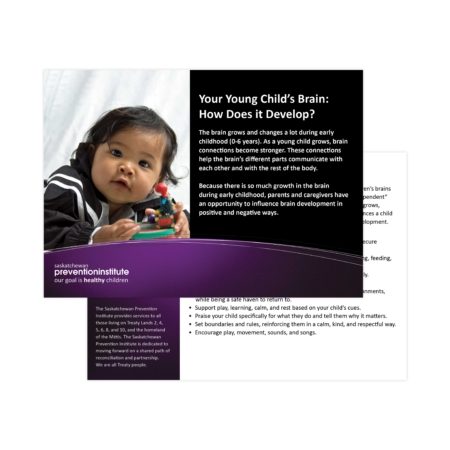
Your Young Child’s Brain: How Does It Develop?
Information Card, Updated 2026
Written in plain language, this information card provides basic information about the importance of brain development during the early years. Practical tips to increase opportunities for children’s healthy development are included.
SKU: 8-701 -
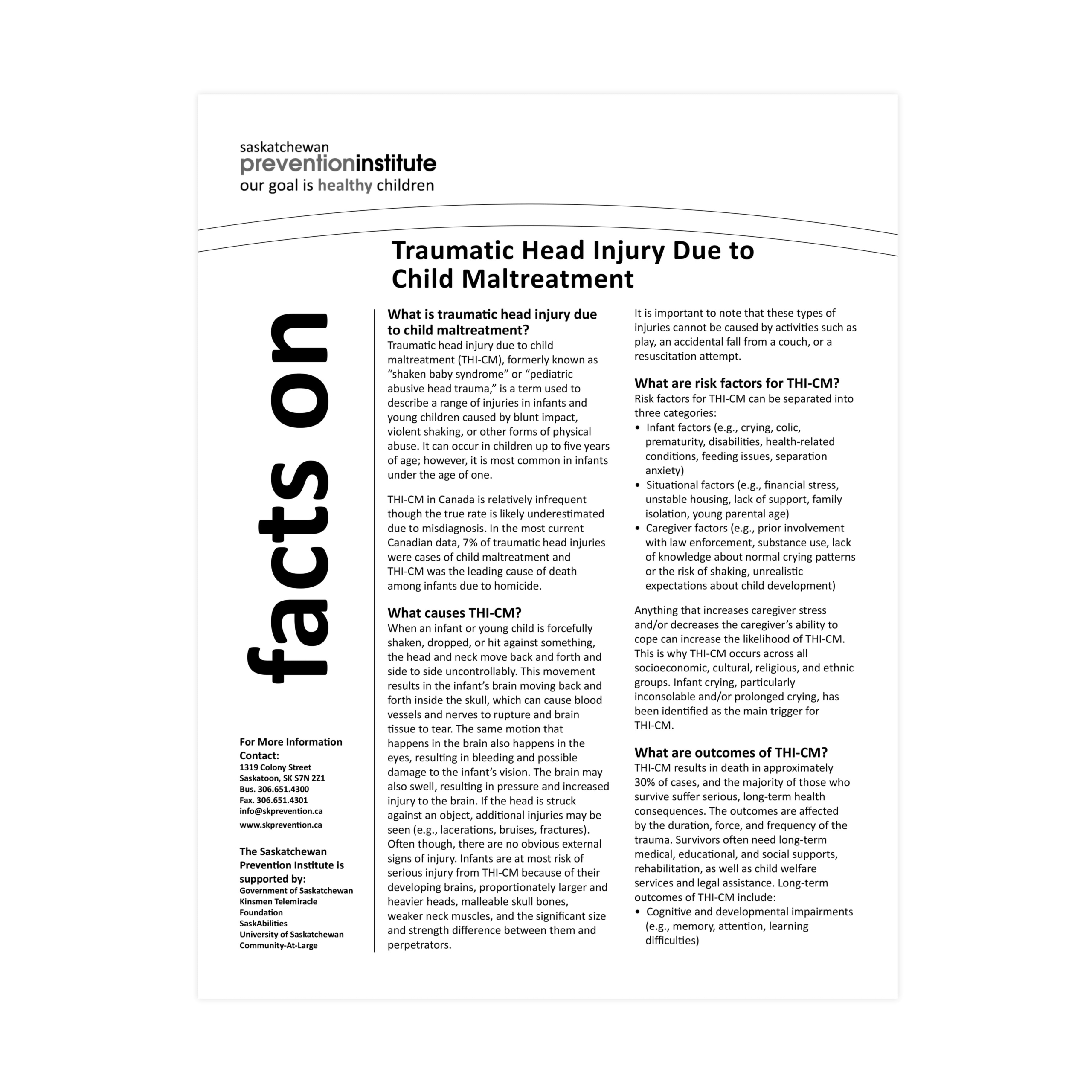
Traumatic Head Injury Due to Child Maltreatment
Fact Sheet, Updated 2026
Explains what traumatic head injury due to child maltreatment is, including how and why it happens, the long-term effects, and how it can be prevented. Aimed at health professionals and service providers who work with families. For information aimed at caregivers, see When Your Baby Can’t Stop Crying (resource 4-902).
SKU: 4-900