
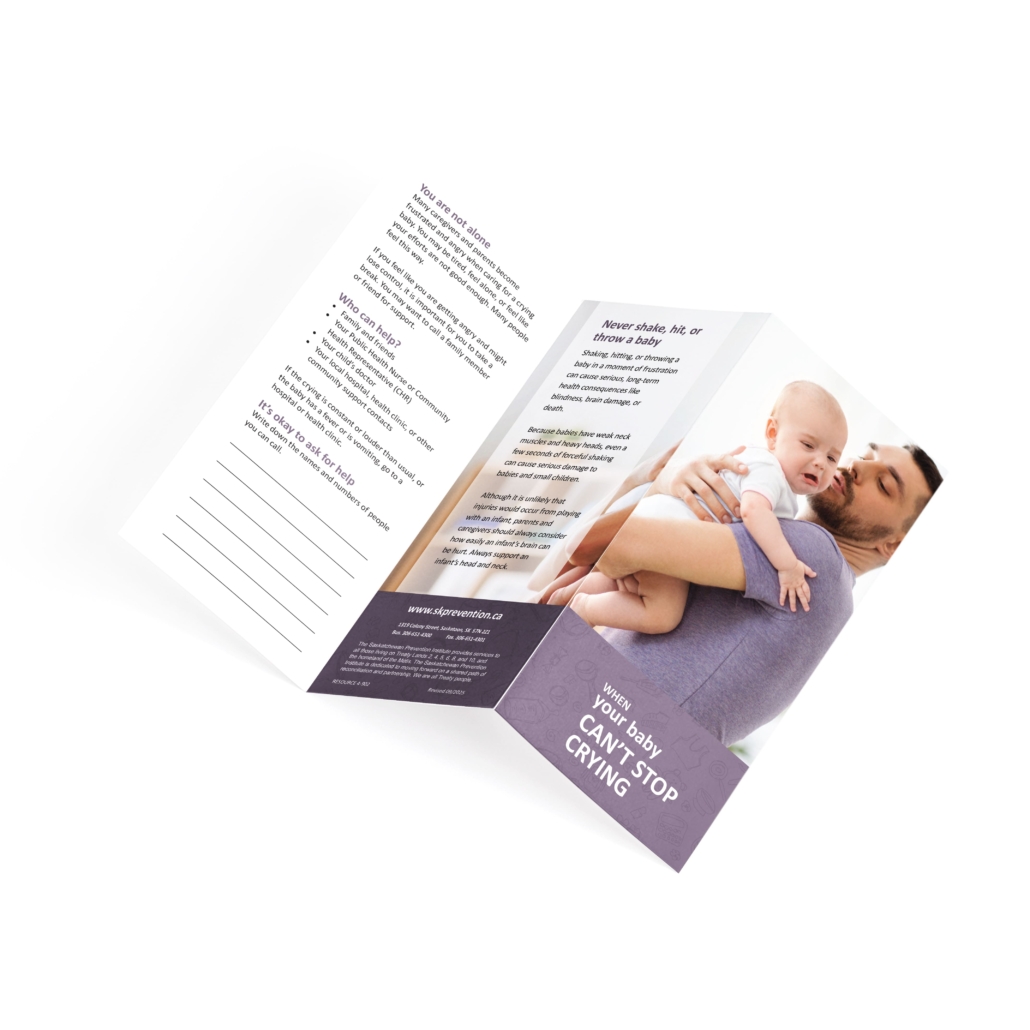
When Your Baby Can’t Stop Crying
Attributes to meet: PDF: Brochures, Order
Download File & Order: condition met
Brochure, Revised 2025
Although infant crying is normal, it can be very frustrating for parents and caregivers. This brochure identifies strategies for dealing with a crying infant, as well as strategies for handling caregivers’ frustration.
For information aimed at health professionals and service providers, see Traumatic Head Injury Due to Child Maltreatment (resource 4-900).
Related products
-
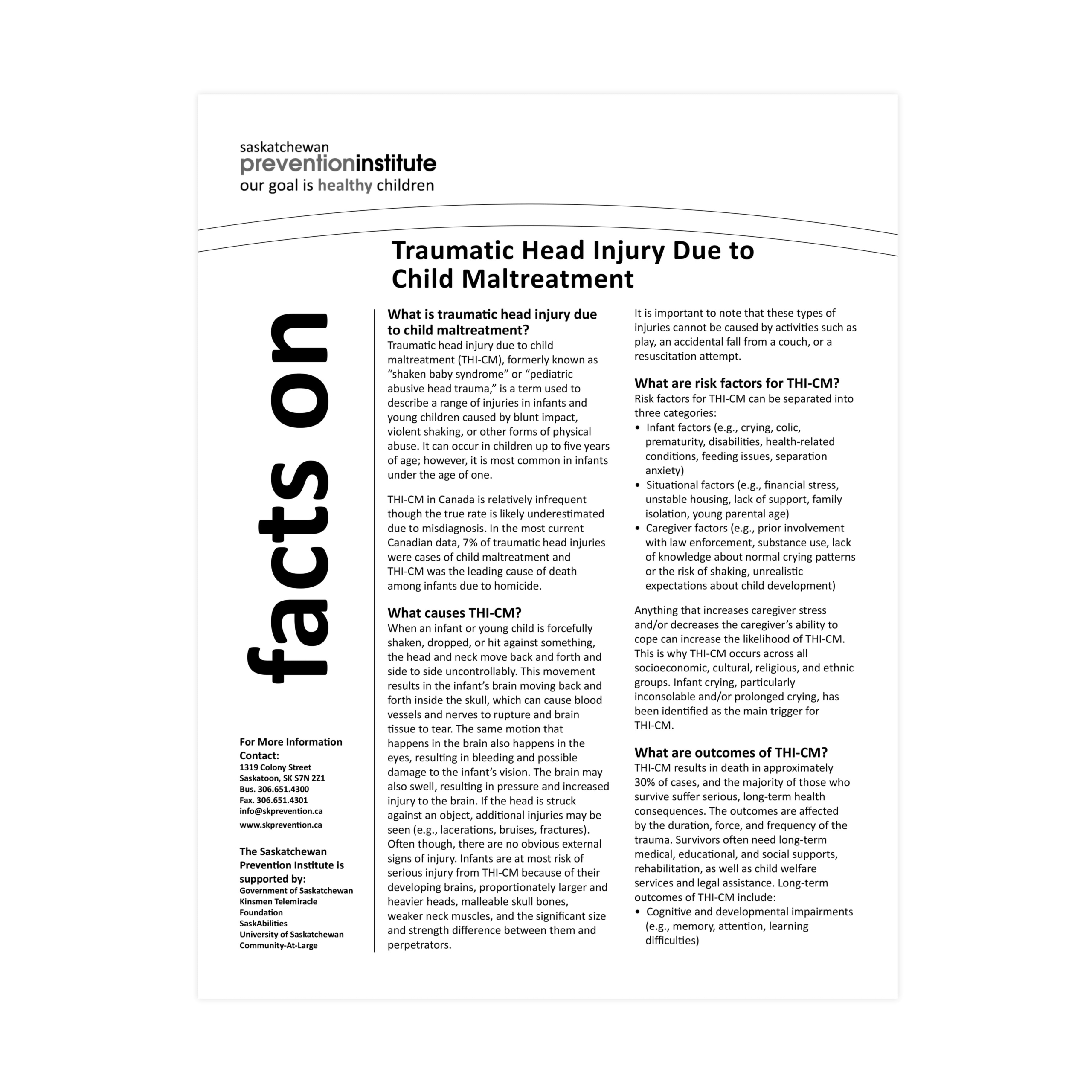
Traumatic Head Injury Due to Child Maltreatment
Fact Sheet, Updated 2026
Explains what traumatic head injury due to child maltreatment is, including how and why it happens, the long-term effects, and how it can be prevented. Aimed at health professionals and service providers who work with families. For information aimed at caregivers, see When Your Baby Can’t Stop Crying (resource 4-902).
SKU: 4-900 -

Pediatric Type 2 Diabetes in Saskatchewan
Report, 2020
Pediatric type 2 diabetes (T2D) is a rising issue in Canada. Research shows an increasing prevalence of T2D in communities around the world, including in Canada. In Canada, some of the highest incidence rates are found in the First Nations pediatric population in the Prairie provinces. The Saskatchewan Prevention Institute partnered with Dr. Mark Inman (Pediatric Endocrinologist, Saskatchewan Health Authority) to bring together current evidence and data relevant to Saskatchewan and increase the understanding of the strengths, gaps, and needs related to pediatric T2D within Saskatchewan.
The partnership resulted in the development of this background report, based on a literature review, needs assessment survey, and environmental scan, which will inform future work regarding pediatric T2D in Saskatchewan. The report will be used first to inform the development of relevant resources for education and training for healthcare providers, and second, to develop appropriate education for patients and families, within the Saskatchewan context.
SKU: 2-001 -

ABCs for Safe Sleep
Informational Door Hanger, 2020
This resource outlines safe sleeping tips for babies to help reduce the risk of Sudden Infant Death Syndrome (SIDS). It is intended to be used as a door hanger within a baby’s sleep environment.
SKU: 2-409 -

Safe Sleep Evidence Summary
Report, 2017
This evidence summary summarizes evidence based guidelines on safe sleep and is intended for use by policy makers, healthcare providers, and service providers.
SKU: 2-438