
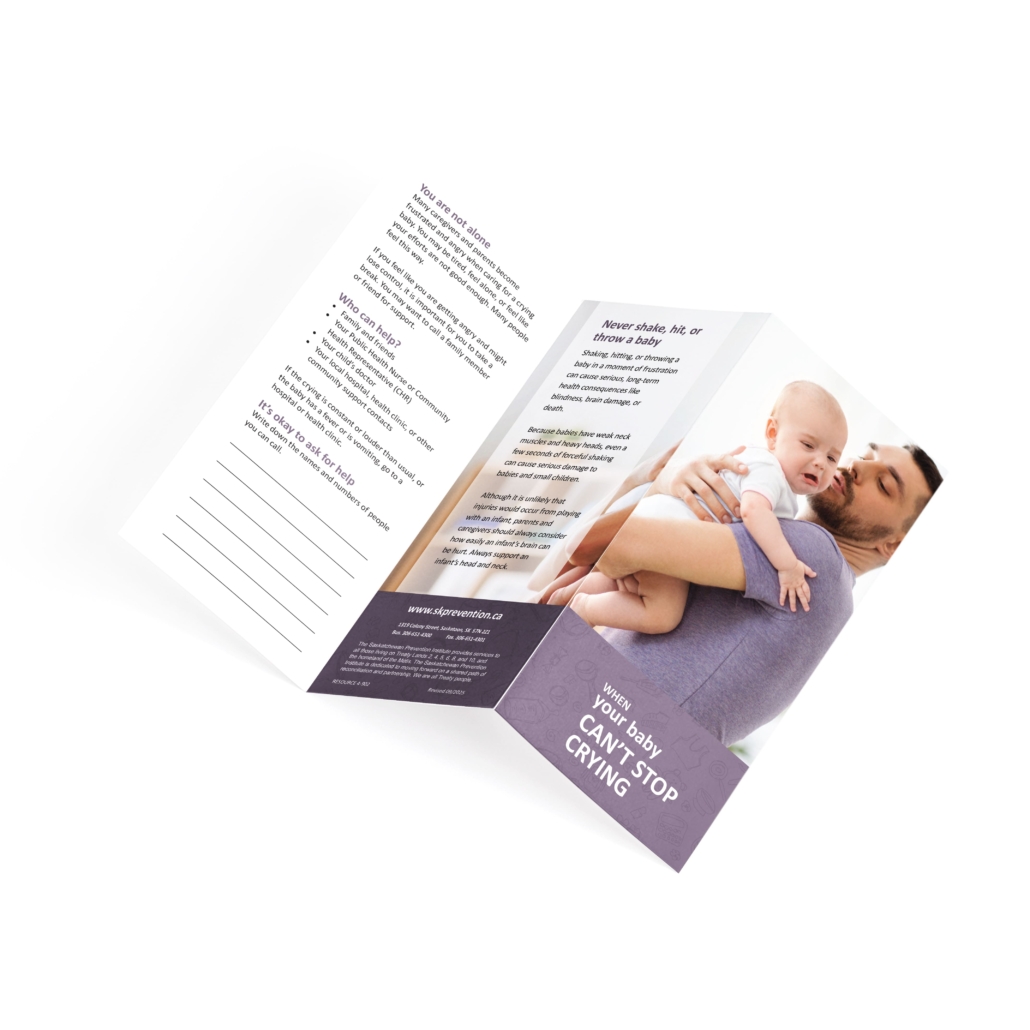
When Your Baby Can’t Stop Crying
Attributes to meet: PDF: Brochures, Order
Download File & Order: condition met
Brochure, Revised 2025
Although infant crying is normal, it can be very frustrating for parents and caregivers. This brochure identifies strategies for dealing with a crying infant, as well as strategies for handling caregivers’ frustration.
For information aimed at health professionals and service providers, see Abusive Head Trauma (Shaken Baby Syndrome) (resource 4-900).
Related products
-

Neonatal Abstinence Syndrome
Fact Sheet, 2020
Neonatal abstinence syndrome (NAS) is a condition whereby infants who are exposed to particular substances in the womb experience a variety of withdrawal symptoms shortly after they are born. This fact sheet shares information about the signs and symptoms of NAS, treatment, at-home care recommendations, and potential long-term outcomes.
SKU: 2-906 -

How to Choose a Bicycle Helmet for a Child
Fact Sheet, Revised 2022
This fact sheet provides information to caregivers about bicycle helmet safety standards, the types of helmets, and how to adjust a helmet for proper fit.
NOTE: Remember to always refer to the bicycle helmet manufacturer’s instructions for information about the size, use, and expiry date (if specified) of the helmet.
SKU: 4-201 -

Bicycle Safety
Fact Sheet, Revised 2022
This fact sheet outlines general bicycle and helmet safety tips as well as important rules of the road. This resource is ideal for cyclists of all ages to prevent injuries while biking.
SKU: 4-202 -

Neonatal Abstinence Syndrome Literature Review
Report, 2020
Neonatal abstinence syndrome (NAS) is a condition whereby some infants exposed to particular substances in utero experience a variety of postnatal withdrawal symptoms shortly after birth. Increased rates of NAS have been reported in Canada over the past decade. This review provides information about the development and effects of NAS, modes of assessment, treatment options (both pharmacological and non-pharmacological), care guidelines for parents and caregivers, and primary prevention strategies.
SKU: 2-905