

Child Pedestrian Safety
Attributes to meet: PDF: Download File, Fact Sheets
Download File: condition met
Fact Sheet, Revised 2025
This fact sheet provides information about how child development impacts the skills and abilities needed for safe pedestrian crossings. It also provides tips for talking to children about pedestrian safety and step-by-step instructions on how to cross a street safely.
Related products
-
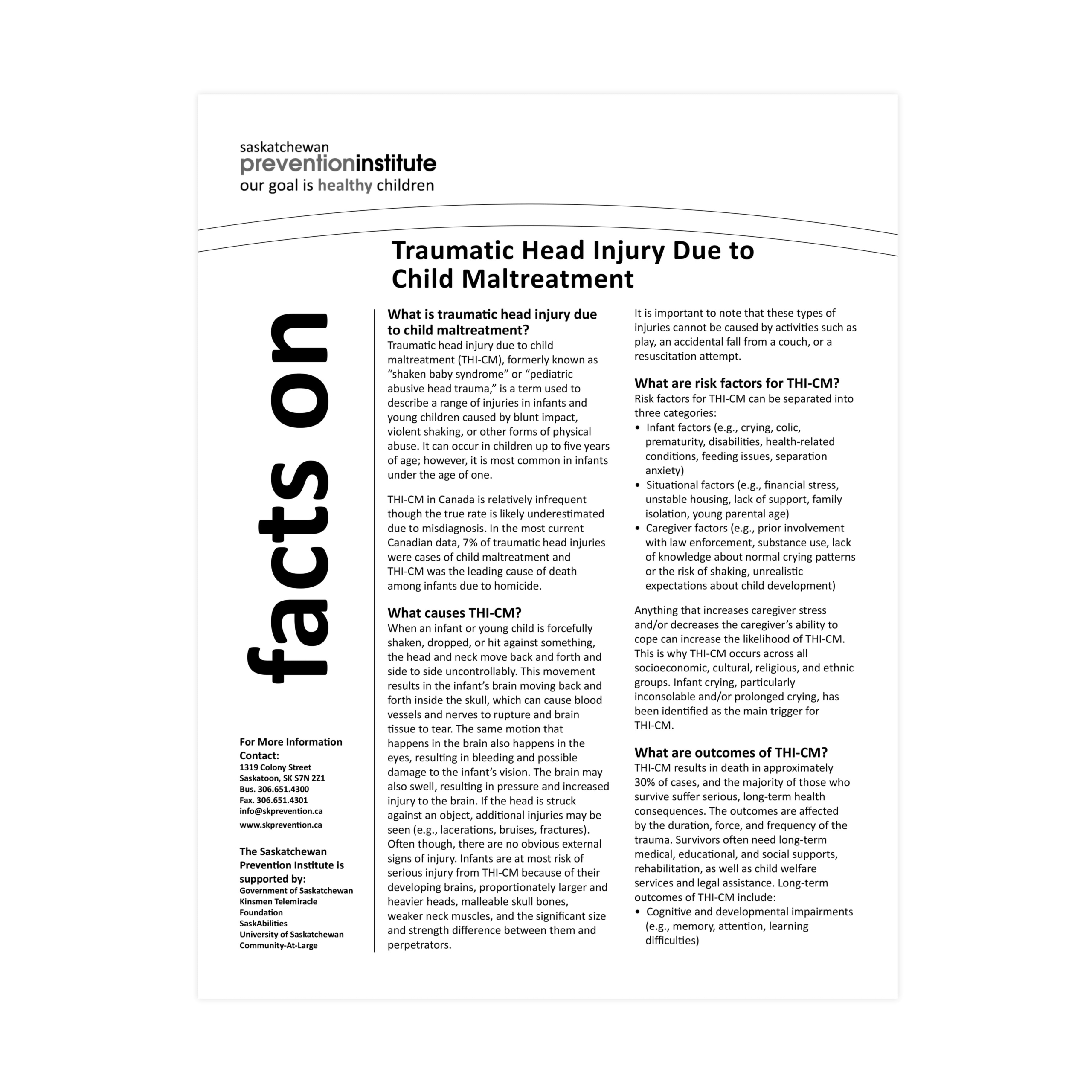
Traumatic Head Injury Due to Child Maltreatment
Fact Sheet, Updated 2026
Explains what traumatic head injury due to child maltreatment is, including how and why it happens, the long-term effects, and how it can be prevented. Aimed at health professionals and service providers who work with families. For information aimed at caregivers, see When Your Baby Can’t Stop Crying (resource 4-902).
SKU: 4-900 -

Gotta Brain Getta Helmet
Booklet, Revised 2024
This booklet provides safety information about helmet use for a variety of activities.
As part of the Gotta Brain Getta Helmet booklet, view this video featuring Savannah Smith, a motocross rider from Saskatchewan. Savannah shares information about her experiences, the importance of wearing a properly fitted helmet, and how to choose a helmet.
SKU: 4-220 -

Playground Safety
Fact Sheet, Revised 2024
This fact sheet outlines the steps parents and caregivers can take to protect children from playground-related injuries. It includes a checklist to assist with monitoring local playgrounds to ensure they are safe and well-maintained.
SKU: 4-800 -

Child and Youth Injury in Saskatchewan 1995-1999
Report, 2002
This report focuses on the most significant causes of injury-related hospitalizations and deaths for Saskatchewan children and youth. The most significant causes discussed in this report are falls, motor vehicle traffic, self-injury, drowning and choking, fire and flame, poison, motor vehicle pedestrian, sports, and assaults.
SKU: 4-006