

Safe Sleep for Your Baby: Lower the Risk of SIDS
Attributes to meet: PDF: Brochures, Order
Download File & Order: condition met
Brochure, Revised 2019
This brochure outlines safe sleeping habits for babies to help reduce the risk of Sudden Infant Death Syndrome (SIDS). It also provides information on breastfeeding and the importance of supervised “tummy time”.
Related products
-
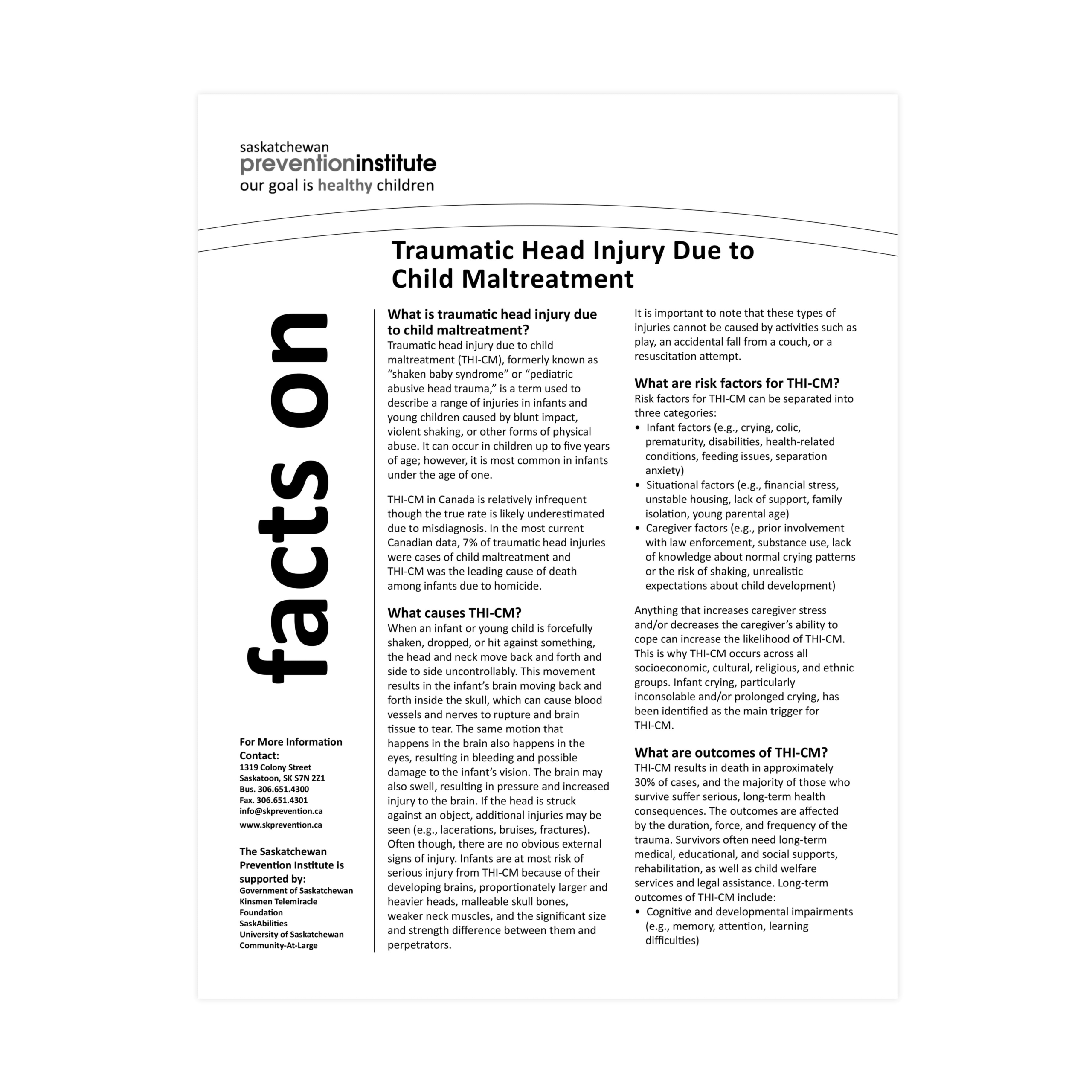
Traumatic Head Injury Due to Child Maltreatment
Fact Sheet, Updated 2026
Explains what traumatic head injury due to child maltreatment is, including how and why it happens, the long-term effects, and how it can be prevented. Aimed at health professionals and service providers who work with families. For information aimed at caregivers, see When Your Baby Can’t Stop Crying (resource 4-902).
SKU: 4-900 -

Child Death Review in Canada: A National Scan
Report, 2016
This report provides information about current child death review processes that exist in each of the provinces and territories in Canada, based on interviews with key informants in each region. Particular attention is paid to those provinces with a coordinated, multi-disciplinary, provincial child death review process. Recommendations and advice for others initiating a child death review process are also included.
SKU: 2-460 -

Promising Practices in the Mitigation of the Impacts of Adverse Childhood Experiences (ACES) in Children Ages 0 to 6
Report, 2022
Adverse childhood experiences (ACEs) are childhood events that cause harm or distress and, as a result, disrupt the child’s health and development. The purpose of this report is to define ACEs and their impact on development, health, and well-being; describe how ACEs are identified in children ages 0 to 6; and investigate evidence-based practices being used with children ages 0 to 6 and parent/caregiver-child dyads to mitigate (make less severe or harmful) the impacts of ACEs in childhood and beyond.
“In November 2022 an Executive Summary was added to the report”.
SKU: 9-000 -
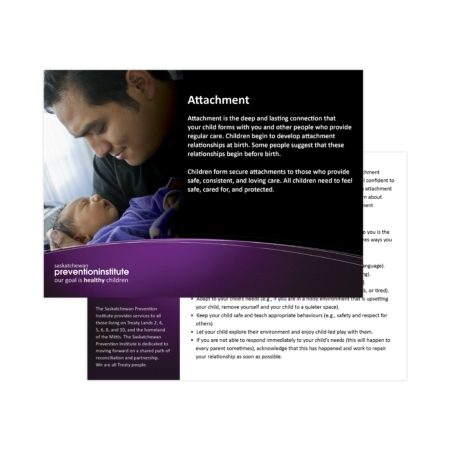
Attachment
Information Card, Updated 2026
Written in plain language, this information card provides basic information about attachment … the connection that a baby forms with his caregivers that helps him to feel loved, secure, and safe.
SKU: 8-801