
Should I get the COVID-19 Vaccine if I am Pregnant or Breastfeeding?
Attributes to meet: PDF: Download File, Fact Sheets
Download File: condition met
Fact Sheet, 2021
This fact sheet provides evidence-based information on COVID-19 illness and vaccination in pregnant and breastfeeding people to help them make informed decisions about getting vaccinated.
A list of associated references can be accessed at: COVID-19 Vaccine in Pregnancy and Breastfeeding References.
Related products
-
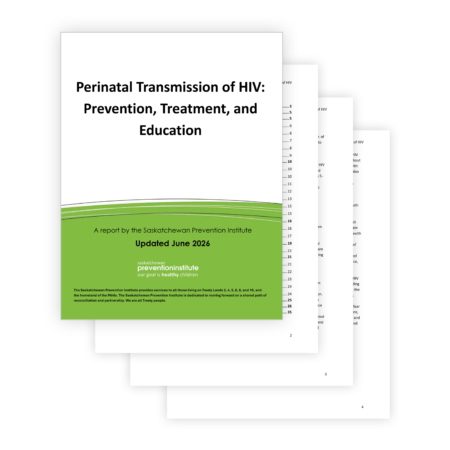
Perinatal Transmission of HIV: Prevention, Treatment, and Education
Report, Updated 2026
Saskatchewan continues to see high rates of new cases of human immunodeficiency virus (HIV) infection in comparison to the rest of Canada. A large number of these new cases are being identified in women of childbearing age.
Recognizing the importance of understanding HIV in the context of pregnancy, the Saskatchewan Prevention Institute conducted a review of the literature in this area. The review includes findings and recommendations on perinatal transmission, transmission prevention, barriers to prevention, and health promotion around these topics.
SKU: 7-501 -

HIV, Pregnancy, and Tobacco Use
Fact Sheet, Revised 2024
This fact sheet explains that for women living with HIV, smoking tobacco during pregnancy can increase the chances that HIV will be passed to the baby. Information about traditional tobacco use is included, along with resources to help pregnant women and those planning a pregnancy to quit or reduce their tobacco use.
SKU: 7-515 -

Prenatal eHealth Tools
Report, 2016
Expectant parents today have access to a wealth of information on pregnancy and childbirth, and much of that information is accessed electronically. Knowledgeable healthcare providers who understand the strengths and limitations of these new technologies are in an excellent position to offer expert guidance to women using these technology-based prenatal health tools. This summary seeks to educate interested stakeholders about eHealth, what it entails, the potential benefits and challenges, and recommended options for using eHealth to provide quality prenatal information to residents of Saskatchewan.
SKU: 2-902 -
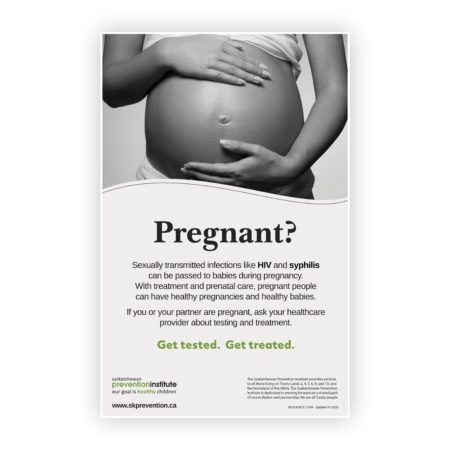
Pregnant? Get tested for HIV and Syphilis
Poster, 2026
HIV and syphilis can be passed from a pregnant person to their growing baby during pregnancy. This poster brings awareness to the importance of testing, treatment, and prenatal care for the health of pregnant people and their babies.
SKU: 7-004