To help all children thrive through primary prevention
and the promotion of well-being.

To help all children thrive through primary prevention and the promotion of well-being.

The Saskatchewan Prevention Institute is a non-profit organization, founded in 1980. Our focus is to reduce the occurrence of disabling conditions in children using primary prevention methods. We raise awareness by providing training, information, and resources based on current best evidence.

The Saskatchewan Prevention Institute believes that children of all abilities have the right to the best physical, social, and emotional health possible.

Upcoming Learning Opportunities

Topics We Focus On

Provide Your Feedback for a Chance to Win a $50 Gift CardYour input will help us improve the campaign and better support healthy pregnancies and prevent FASD across Saskatchewan.Click here
A Fun Way for Children to Learn about Their BrainLearn More

LEARN MORE

Working collaboratively to enhance early
childhood well-being so children have
healthy relationships and opportunities
to develop and thrive to their full potential.

Vision:

My Saskatchewan
Pregnancy

This app provides evidence-based information for
pregnant women in Saskatchewan, including daily
health tips, monthy summaries of baby’s growth, a
“to do” list for each trimester, and more.

Click here for more information

To help enable individuals to make healthy choices and informed decisions
regarding their personal reproductive health, the Prevention Institute has
created a smart phone app, Keep it Safe Saskatchewan (KIS-SK), focused
on contraceptives and STIs.

Provide Your Feedback for a
Chance to Win a $50 Gift Card
Your input will help us improve
the campaign and better support
healthy pregnancies and prevent
FASD across Saskatchewan.
Click here
A Fun Way for Children to
Learn about Their Brain
Learn More

LEARN MORE

Working collaboratively to
enhance early childhood well-
being so children have healthy
relationships and opportunities
to develop and thrive to their
full potential.

Vision:

My Saskatchewan
Pregnancy

This app provides evidence-based
information for pregnant women in
Saskatchewan, including daily
health tips, monthy summaries of baby’s
growth, a “to do” list for each trimester,
and more.

Click here for more information

To help enable individuals to make healthy choices
and informed decisions regarding their personal
reproductive health, the Prevention Institute has
created a smart phone app, Keep it Safe
Saskatchewan (KIS-SK), focused on contraceptives
and STIs.

Most Recent Resources

  • 7-002: Sexually Transmitted and Blood-Borne Infections (STBBIs): What You Need to Know

    Sexually Transmitted and Blood-Borne Infections (STBBIs): What You Need to Know

    Brochure, Revised 2026


    Designed for youth, this brochure provides evidence-based information on sexually transmitted and blood-borne infections (STBBIs). It covers what STBBIs are, how they are spread, chances of getting an STBBI, ways to reduce risk, when to get tested, and stigma related to STBBIs.

    or
    SKU: 7-002
  • 7-017: Sexually Transmitted and Blood-Borne Infections (STBBIs): What You Need to Know

    Sexually Transmitted and Blood-Borne Infections (STBBIs): What You Need to Know

    Booklet, Revised 2026


    Saskatchewan has high rates of sexually transmitted and blood-borne infections (STBBIs). If left untreated, STBBIs can cause serious health issues for individuals and unborn babies. This youth-focused booklet provides evidence-based information on what STBBIs are, how they are spread, what testing looks like, and which infections can be treated or cured. It also includes information on symptoms, prevention, and impacts on fertility and pregnancy to support informed sexual health decisions.

    or
    SKU: 7-017
  • 4-901: Traumatic Head Injury Due to Child Maltreatment (THI-CM): A Literature Review

    Traumatic Head Injury Due to Child Maltreatment (THI-CM): A Literature Review

    Report, 2026


    This report provides health professionals and service providers with current, evidence-based information on Traumatic Head Injury due to Child Maltreatment (THI-CM). It covers multiple aspects of THI-CM, including mechanisms of injury, risk factors, diagnosis, long-term outcomes, and strategies for prevention.


    SKU: 4-901
  • 7-539: Environmental Scan of Available Online Indigenous Sexual and Reproductive Health Resources

    Environmental Scan of Available Online Indigenous Sexual and Reproductive Health Resources

    Report, Updated 2026


    Sexual and reproductive health are important for overall health and well-being. Indigenous communities in Canada continue to experience sexual and reproductive health disparities due to limited health care access, poor quality of care, discrimination within the healthcare system, and ongoing impacts of colonization. In an effort to reduce these disparities and improve sexual and reproductive health outcomes, communities and organizations are creating resources, services, and programs that better meet the needs of Indigenous people. This report highlights available sexual and reproductive health resources and services in Canada created by or in partnership with Indigenous people.


    SKU: 7-539
  • 7-547: Congenital Syphilis Literature Review

    Congenital Syphilis Literature Review

    Report, 2026


    Recognizing the importance of understanding syphilis in the context of pregnancy, the Saskatchewan Prevention Institute conducted a review of the literature in this area. The review covers findings and recommendations on congenital syphilis transmission, prevention, treatment, and aftercare, as well as information about short- and long-term outcomes of congenital syphilis.


    SKU: 7-547
  • 5-520: The Hand You Hold Is the Legacy You Leave

    The Hand You Hold Is the Legacy You Leave

    Booklet, 2025


    The Hand You Hold Is the Legacy You Leave highlights an important message – the first years of life lay the foundation for lifelong health, relationships, and learning. For babies to thrive, they need the following from consistent caregivers: love, safety and security, and acceptance. The Hand You Hold is built around these needs, while also emphasizing the vital role of parent support. This resource offers practical actions for parents to meet each of these needs, paired with research insights that explain why these actions matter.

    This booklet is strengths-based, parent-friendly, and adaptable across many settings. For example, it can be shared with parents and caregivers during home visits, in parenting or prenatal groups, and as discussion prompts in community settings. It is meant to spark meaningful conversations by inviting parents to reflect on “What is my baby telling me?”

    Click here for a sample lesson plan to share this resource with parents and caregivers.


    SKU: 5-520
  • 5-517: Supporting Parents Webinar Series

    Supporting Parents Webinar Series

    Information Card, 2025


    This information card provides a QR code link to the Supporting Parents Webinar Series, a collection of recorded webinars developed to support parents and caregivers in creating environments where children can thrive. It can be distributed to families as a convenient means of accessing learning materials that promote positive parenting practices and child well-being.

    or
    SKU: 5-517
  • 8-601: Helping Young Children Develop Resiliency and Cope with Stress

    Helping Young Children Develop Resiliency and Cope with Stress

    Information Card, Revised 2025


    Stress is inevitable. Every child and adult will experience stress at some time in their lives. Written in plain language, this information card provides practical information for caregivers to help their young children develop resiliency – coping skills to handle stressful events.

    or
    SKU: 8-601
  • 4-023: Home Safety Tips: Birth to 1 Year

    Home Safety Tips: Birth to 1 Year

    Booklet, Revised 2025


    All children depend on the adults around them to provide safe, healthy environments to learn, grow, and develop new skills. This booklet will support caregivers in preparing for each stage of child development, to better predict and prevent injuries to children from birth to 1 year of age.

    Safety tips are included on the following topics: safe sleep, coping with crying, burns, scalds, drowning, falls, choking, and car seats.

    or
    SKU: 4-023
  • 4-024: Home Safety Tips: 1 to 4 Years

    Home Safety Tips: 1 to 4 Years

    Booklet, Revised 2025


    All children depend on the adults around them to provide safe, healthy environments to learn, grow, and develop new skills. This booklet will support caregivers in preparing for each stage of child development, to better predict and prevent injuries to children from 1 to 4 years of age.

    Safety tips are organized by activity, and address the following topics: safe sleep, drowning, burns, scalds, choking, poisoning, bike and wheel safety, car seats, and pedestrian safety.

    or
    SKU: 4-024
  • 4-025: Home Safety Tips: 5 to 9 Years

    Home Safety Tips: 5 to 9 Years

    Booklet, Revised 2025


    All children depend on the adults around them to provide safe, healthy environments to learn, grow, and develop new skills. This booklet will support caregivers in preparing for each stage of child development, to better predict and prevent injuries to children from 5 to 9 years of age.

    Safety tips are included for at home and in the community and address the following topics: falls, playgrounds, trampolines, choking, poisoning, bike and wheel safety, pedestrian safety, drowning, and car seats.

    or
    SKU: 4-025
  • 2-810: Prenatal Supplements

    Prenatal Supplements

    Infographic, 2025


    Developed in collaboration with the Perinatal Nutrients of Concern Resource Development Working Group, this infographic poster highlights key nutrients to look for in a prenatal supplement, including folic acid, vitamin D, and iron. It includes tips for managing common challenges with taking supplements, such as nausea or difficulty swallowing.

    or
    SKU: 2-810
  • 4-902: When Your Baby Can’t Stop Crying

    When Your Baby Can’t Stop Crying

    Brochure, Revised 2025


    Although infant crying is normal, it can be very frustrating for parents and caregivers. This brochure identifies strategies for dealing with a crying infant, as well as strategies for handling caregivers’ frustration.

    For information aimed at health professionals and service providers, see Abusive Head Trauma (Shaken Baby Syndrome) (resource 4-900).

    or
    SKU: 4-902
  • 7-533: Understanding and Teaching About Consent

    Understanding and Teaching About Consent

    Fact Sheet, Updated 2025


    This resource provides definitions, explanations, and resources to help health professionals and educators teach youth about consent.


    SKU: 7-533
  • 4-021: Child Pedestrian Safety

    Child Pedestrian Safety

    Fact Sheet, Revised 2025


    This fact sheet provides information about how child development impacts the skills and abilities needed for safe pedestrian crossings. It also provides tips for talking to children about pedestrian safety and step-by-step instructions on how to cross a street safely.


    SKU: 4-021
  • 4-500: Drowning Prevention

    Drowning Prevention

    Fact Sheet, Revised 2025


    The fact sheet outlines water safety tips and drowning prevention strategies for children along with guidelines for lifejacket and personal floatation device (PFD) use. It outlines information for caregivers supervising children at home, in the yard, in a watercraft, and at the pool, lake, or beach.


    SKU: 4-500
  • 3-200: Youth Social Media Use and Mental Health and Well-Being: An Evidence Summary

    Youth Social Media Use and Mental Health and Well-Being: An Evidence Summary

    Report, 2025


    Social media use in youth has increased over the last decade, with most youth using social media regularly. There is a belief that the increase in social media use is responsible for the increase in mental health challenges in youth. However, the research suggests that the associations between social media use and mental health remain unclear, with mixed findings suggesting that the relationships are complex and interrelated. The purpose of this evidence summary is to summarize the evidence regarding potential impacts of social media use on youth mental health and well-being, and recommendations for protecting youth from potential related harms.


    SKU: 3-200
  • 3-318: Collaboration to Prevent Alcohol-Related Harms: A Literature Review of Three Approaches

    Collaboration to Prevent Alcohol-Related Harms: A Literature Review of Three Approaches

    Report, 2025


    Alcohol-related harms can occur from varying levels of use and these harms do not occur in a vacuum. They are intertwined with other risk factors and adverse circumstances which are relevant to many sectors. This literature review examines different collaborative initiatives and practices to prevent alcohol-related harm, with a primary focus on multi-sectoral collaboration that includes health care and service providers.


    SKU: 3-318
  • 3-317: Community-Led Strategies to Address Alcohol-Related Challenges and Associated Issues: Evidence Summary

    Community-Led Strategies to Address Alcohol-Related Challenges and Associated Issues: Evidence Summary

    Report, 2025


    Strategies to mitigate alcohol-related harms vary widely across Canada. Effective policies and programs must consider the unique challenges faced by rural and remote communities to promote meaningful impact. This evidence summary highlights the need for community-driven, culturally appropriate strategies tailored to the unique challenges faced by northern and remote communities in Saskatchewan.


    SKU: 3-317
  • 4-129: Winter Car Seat Safety

    Winter Car Seat Safety

    Fact Sheet, 2026


    This fact sheet shares key winter car seat safety tips, including how to keep children warm without affecting proper harness fit. It provides guidance for infant car seats, along with important reminders for booster seats and older children. It also explains the risks of bulky clothing and offers practical tips for cold-weather travel.

    Please note: This resource is a pad of 50 fact sheets. An order quantity of 1 equals 50 fact sheets.
    or
    SKU: 4-129
  • 7-546: Human Trafficking in Canada Environmental Scan

    Human Trafficking in Canada Environmental Scan

    Report, Updated 2026


    Human trafficking occurs across Canada with typically severe and long-lasting consequences for victims. This report shares information on current, evidence-based national and Saskatchewan-specific human trafficking resources (e.g., educational materials, trainings, prevention and intervention programs) and support services for victims and survivors.

    For more information about human trafficking in Canada, please see the completed literature review titled “Human Trafficking in Canada – A Literature Review”.


    SKU: 7-546
  • 7-017: Sexually Transmitted and Blood-Borne Infections (STBBIs): What You Need to Know

    Sexually Transmitted and Blood-Borne Infections (STBBIs): What You Need to Know

    Booklet, Revised 2026


    Saskatchewan has high rates of sexually transmitted and blood-borne infections (STBBIs). If left untreated, STBBIs can cause serious health issues for individuals and unborn babies. This youth-focused booklet provides evidence-based information on what STBBIs are, how they are spread, what testing looks like, and which infections can be treated or cured. It also includes information on symptoms, prevention, and impacts on fertility and pregnancy to support informed sexual health decisions.

    or
    SKU: 7-017
  • 4-901: Traumatic Head Injury Due to Child Maltreatment (THI-CM): A Literature Review

    Traumatic Head Injury Due to Child Maltreatment (THI-CM): A Literature Review

    Report, 2026


    This report provides health professionals and service providers with current, evidence-based information on Traumatic Head Injury due to Child Maltreatment (THI-CM). It covers multiple aspects of THI-CM, including mechanisms of injury, risk factors, diagnosis, long-term outcomes, and strategies for prevention.


    SKU: 4-901
  • 7-539: Environmental Scan of Available Online Indigenous Sexual and Reproductive Health Resources

    Environmental Scan of Available Online Indigenous Sexual and Reproductive Health Resources

    Report, Updated 2026


    Sexual and reproductive health are important for overall health and well-being. Indigenous communities in Canada continue to experience sexual and reproductive health disparities due to limited health care access, poor quality of care, discrimination within the healthcare system, and ongoing impacts of colonization. In an effort to reduce these disparities and improve sexual and reproductive health outcomes, communities and organizations are creating resources, services, and programs that better meet the needs of Indigenous people. This report highlights available sexual and reproductive health resources and services in Canada created by or in partnership with Indigenous people.


    SKU: 7-539
  • 7-547: Congenital Syphilis Literature Review

    Congenital Syphilis Literature Review

    Report, 2026


    Recognizing the importance of understanding syphilis in the context of pregnancy, the Saskatchewan Prevention Institute conducted a review of the literature in this area. The review covers findings and recommendations on congenital syphilis transmission, prevention, treatment, and aftercare, as well as information about short- and long-term outcomes of congenital syphilis.


    SKU: 7-547
  • 5-520: The Hand You Hold Is the Legacy You Leave

    The Hand You Hold Is the Legacy You Leave

    Booklet, 2025


    The Hand You Hold Is the Legacy You Leave highlights an important message – the first years of life lay the foundation for lifelong health, relationships, and learning. For babies to thrive, they need the following from consistent caregivers: love, safety and security, and acceptance. The Hand You Hold is built around these needs, while also emphasizing the vital role of parent support. This resource offers practical actions for parents to meet each of these needs, paired with research insights that explain why these actions matter.

    This booklet is strengths-based, parent-friendly, and adaptable across many settings. For example, it can be shared with parents and caregivers during home visits, in parenting or prenatal groups, and as discussion prompts in community settings. It is meant to spark meaningful conversations by inviting parents to reflect on “What is my baby telling me?”

    Click here for a sample lesson plan to share this resource with parents and caregivers.


    SKU: 5-520
  • 5-517: Supporting Parents Webinar Series

    Supporting Parents Webinar Series

    Information Card, 2025


    This information card provides a QR code link to the Supporting Parents Webinar Series, a collection of recorded webinars developed to support parents and caregivers in creating environments where children can thrive. It can be distributed to families as a convenient means of accessing learning materials that promote positive parenting practices and child well-being.

    or
    SKU: 5-517
  • 8-601: Helping Young Children Develop Resiliency and Cope with Stress

    Helping Young Children Develop Resiliency and Cope with Stress

    Information Card, Revised 2025


    Stress is inevitable. Every child and adult will experience stress at some time in their lives. Written in plain language, this information card provides practical information for caregivers to help their young children develop resiliency – coping skills to handle stressful events.

    or
    SKU: 8-601
  • 4-023: Home Safety Tips: Birth to 1 Year

    Home Safety Tips: Birth to 1 Year

    Booklet, Revised 2025


    All children depend on the adults around them to provide safe, healthy environments to learn, grow, and develop new skills. This booklet will support caregivers in preparing for each stage of child development, to better predict and prevent injuries to children from birth to 1 year of age.

    Safety tips are included on the following topics: safe sleep, coping with crying, burns, scalds, drowning, falls, choking, and car seats.

    or
    SKU: 4-023
  • 4-024: Home Safety Tips: 1 to 4 Years

    Home Safety Tips: 1 to 4 Years

    Booklet, Revised 2025


    All children depend on the adults around them to provide safe, healthy environments to learn, grow, and develop new skills. This booklet will support caregivers in preparing for each stage of child development, to better predict and prevent injuries to children from 1 to 4 years of age.

    Safety tips are organized by activity, and address the following topics: safe sleep, drowning, burns, scalds, choking, poisoning, bike and wheel safety, car seats, and pedestrian safety.

    or
    SKU: 4-024
  • 4-025: Home Safety Tips: 5 to 9 Years

    Home Safety Tips: 5 to 9 Years

    Booklet, Revised 2025


    All children depend on the adults around them to provide safe, healthy environments to learn, grow, and develop new skills. This booklet will support caregivers in preparing for each stage of child development, to better predict and prevent injuries to children from 5 to 9 years of age.

    Safety tips are included for at home and in the community and address the following topics: falls, playgrounds, trampolines, choking, poisoning, bike and wheel safety, pedestrian safety, drowning, and car seats.

    or
    SKU: 4-025
  • 2-810: Prenatal Supplements

    Prenatal Supplements

    Infographic, 2025


    Developed in collaboration with the Perinatal Nutrients of Concern Resource Development Working Group, this infographic poster highlights key nutrients to look for in a prenatal supplement, including folic acid, vitamin D, and iron. It includes tips for managing common challenges with taking supplements, such as nausea or difficulty swallowing.

    or
    SKU: 2-810
  • 4-902: When Your Baby Can’t Stop Crying

    When Your Baby Can’t Stop Crying

    Brochure, Revised 2025


    Although infant crying is normal, it can be very frustrating for parents and caregivers. This brochure identifies strategies for dealing with a crying infant, as well as strategies for handling caregivers’ frustration.

    For information aimed at health professionals and service providers, see Abusive Head Trauma (Shaken Baby Syndrome) (resource 4-900).

    or
    SKU: 4-902
  • 4-500: Drowning Prevention

    Drowning Prevention

    Fact Sheet, Revised 2025


    The fact sheet outlines water safety tips and drowning prevention strategies for children along with guidelines for lifejacket and personal floatation device (PFD) use. It outlines information for caregivers supervising children at home, in the yard, in a watercraft, and at the pool, lake, or beach.


    SKU: 4-500
  • 3-200: Youth Social Media Use and Mental Health and Well-Being: An Evidence Summary

    Youth Social Media Use and Mental Health and Well-Being: An Evidence Summary

    Report, 2025


    Social media use in youth has increased over the last decade, with most youth using social media regularly. There is a belief that the increase in social media use is responsible for the increase in mental health challenges in youth. However, the research suggests that the associations between social media use and mental health remain unclear, with mixed findings suggesting that the relationships are complex and interrelated. The purpose of this evidence summary is to summarize the evidence regarding potential impacts of social media use on youth mental health and well-being, and recommendations for protecting youth from potential related harms.


    SKU: 3-200

Our Funders and Partners in Prevention

Our Funders and Partners in Prevention

Scroll to top
Homepage - Saskatchewan Prevention Institute

To help all children thrive through primary prevention
and the promotion of well-being.

To help all children thrive through primary prevention and the promotion of well-being.

The Saskatchewan Prevention Institute is a non-profit organization, founded in 1980. Our focus is to reduce the occurrence of disabling conditions in children using primary prevention methods. We raise awareness by providing training, information, and resources based on current best evidence.

The Saskatchewan Prevention Institute believes that children of all abilities have the right to the best physical, social, and emotional health possible.

Upcoming Learning Opportunities

Topics We Focus On

Provide Your Feedback for a Chance to Win a $50 Gift CardYour input will help us improve the campaign and better support healthy pregnancies and prevent FASD across Saskatchewan.Click here
A Fun Way for Children to Learn about Their BrainLearn More

LEARN MORE

Working collaboratively to enhance early
childhood well-being so children have
healthy relationships and opportunities
to develop and thrive to their full potential.

Vision:

My Saskatchewan
Pregnancy

This app provides evidence-based information for
pregnant women in Saskatchewan, including daily
health tips, monthy summaries of baby’s growth, a
“to do” list for each trimester, and more.

Click here for more information

To help enable individuals to make healthy choices and informed decisions
regarding their personal reproductive health, the Prevention Institute has
created a smart phone app, Keep it Safe Saskatchewan (KIS-SK), focused
on contraceptives and STIs.

Provide Your Feedback for a
Chance to Win a $50 Gift Card
Your input will help us improve
the campaign and better support
healthy pregnancies and prevent
FASD across Saskatchewan.
Click here
A Fun Way for Children to
Learn about Their Brain
Learn More

LEARN MORE

Working collaboratively to
enhance early childhood well-
being so children have healthy
relationships and opportunities
to develop and thrive to their
full potential.

Vision:

My Saskatchewan
Pregnancy

This app provides evidence-based
information for pregnant women in
Saskatchewan, including daily
health tips, monthy summaries of baby’s
growth, a “to do” list for each trimester,
and more.

Click here for more information

To help enable individuals to make healthy choices
and informed decisions regarding their personal
reproductive health, the Prevention Institute has
created a smart phone app, Keep it Safe
Saskatchewan (KIS-SK), focused on contraceptives
and STIs.

Most Recent Resources

  • 7-002: Sexually Transmitted and Blood-Borne Infections (STBBIs): What You Need to Know

    Sexually Transmitted and Blood-Borne Infections (STBBIs): What You Need to Know

    Brochure, Revised 2026


    Designed for youth, this brochure provides evidence-based information on sexually transmitted and blood-borne infections (STBBIs). It covers what STBBIs are, how they are spread, chances of getting an STBBI, ways to reduce risk, when to get tested, and stigma related to STBBIs.

    or
    SKU: 7-002
  • 7-017: Sexually Transmitted and Blood-Borne Infections (STBBIs): What You Need to Know

    Sexually Transmitted and Blood-Borne Infections (STBBIs): What You Need to Know

    Booklet, Revised 2026


    Saskatchewan has high rates of sexually transmitted and blood-borne infections (STBBIs). If left untreated, STBBIs can cause serious health issues for individuals and unborn babies. This youth-focused booklet provides evidence-based information on what STBBIs are, how they are spread, what testing looks like, and which infections can be treated or cured. It also includes information on symptoms, prevention, and impacts on fertility and pregnancy to support informed sexual health decisions.

    or
    SKU: 7-017
  • 4-901: Traumatic Head Injury Due to Child Maltreatment (THI-CM): A Literature Review

    Traumatic Head Injury Due to Child Maltreatment (THI-CM): A Literature Review

    Report, 2026


    This report provides health professionals and service providers with current, evidence-based information on Traumatic Head Injury due to Child Maltreatment (THI-CM). It covers multiple aspects of THI-CM, including mechanisms of injury, risk factors, diagnosis, long-term outcomes, and strategies for prevention.


    SKU: 4-901
  • 7-539: Environmental Scan of Available Online Indigenous Sexual and Reproductive Health Resources

    Environmental Scan of Available Online Indigenous Sexual and Reproductive Health Resources

    Report, Updated 2026


    Sexual and reproductive health are important for overall health and well-being. Indigenous communities in Canada continue to experience sexual and reproductive health disparities due to limited health care access, poor quality of care, discrimination within the healthcare system, and ongoing impacts of colonization. In an effort to reduce these disparities and improve sexual and reproductive health outcomes, communities and organizations are creating resources, services, and programs that better meet the needs of Indigenous people. This report highlights available sexual and reproductive health resources and services in Canada created by or in partnership with Indigenous people.


    SKU: 7-539
  • 7-547: Congenital Syphilis Literature Review

    Congenital Syphilis Literature Review

    Report, 2026


    Recognizing the importance of understanding syphilis in the context of pregnancy, the Saskatchewan Prevention Institute conducted a review of the literature in this area. The review covers findings and recommendations on congenital syphilis transmission, prevention, treatment, and aftercare, as well as information about short- and long-term outcomes of congenital syphilis.


    SKU: 7-547
  • 5-520: The Hand You Hold Is the Legacy You Leave

    The Hand You Hold Is the Legacy You Leave

    Booklet, 2025


    The Hand You Hold Is the Legacy You Leave highlights an important message – the first years of life lay the foundation for lifelong health, relationships, and learning. For babies to thrive, they need the following from consistent caregivers: love, safety and security, and acceptance. The Hand You Hold is built around these needs, while also emphasizing the vital role of parent support. This resource offers practical actions for parents to meet each of these needs, paired with research insights that explain why these actions matter.

    This booklet is strengths-based, parent-friendly, and adaptable across many settings. For example, it can be shared with parents and caregivers during home visits, in parenting or prenatal groups, and as discussion prompts in community settings. It is meant to spark meaningful conversations by inviting parents to reflect on “What is my baby telling me?”

    Click here for a sample lesson plan to share this resource with parents and caregivers.


    SKU: 5-520
  • 5-517: Supporting Parents Webinar Series

    Supporting Parents Webinar Series

    Information Card, 2025


    This information card provides a QR code link to the Supporting Parents Webinar Series, a collection of recorded webinars developed to support parents and caregivers in creating environments where children can thrive. It can be distributed to families as a convenient means of accessing learning materials that promote positive parenting practices and child well-being.

    or
    SKU: 5-517
  • 8-601: Helping Young Children Develop Resiliency and Cope with Stress

    Helping Young Children Develop Resiliency and Cope with Stress

    Information Card, Revised 2025


    Stress is inevitable. Every child and adult will experience stress at some time in their lives. Written in plain language, this information card provides practical information for caregivers to help their young children develop resiliency – coping skills to handle stressful events.

    or
    SKU: 8-601
  • 4-023: Home Safety Tips: Birth to 1 Year

    Home Safety Tips: Birth to 1 Year

    Booklet, Revised 2025


    All children depend on the adults around them to provide safe, healthy environments to learn, grow, and develop new skills. This booklet will support caregivers in preparing for each stage of child development, to better predict and prevent injuries to children from birth to 1 year of age.

    Safety tips are included on the following topics: safe sleep, coping with crying, burns, scalds, drowning, falls, choking, and car seats.

    or
    SKU: 4-023
  • 4-024: Home Safety Tips: 1 to 4 Years

    Home Safety Tips: 1 to 4 Years

    Booklet, Revised 2025


    All children depend on the adults around them to provide safe, healthy environments to learn, grow, and develop new skills. This booklet will support caregivers in preparing for each stage of child development, to better predict and prevent injuries to children from 1 to 4 years of age.

    Safety tips are organized by activity, and address the following topics: safe sleep, drowning, burns, scalds, choking, poisoning, bike and wheel safety, car seats, and pedestrian safety.

    or
    SKU: 4-024
  • 4-025: Home Safety Tips: 5 to 9 Years

    Home Safety Tips: 5 to 9 Years

    Booklet, Revised 2025


    All children depend on the adults around them to provide safe, healthy environments to learn, grow, and develop new skills. This booklet will support caregivers in preparing for each stage of child development, to better predict and prevent injuries to children from 5 to 9 years of age.

    Safety tips are included for at home and in the community and address the following topics: falls, playgrounds, trampolines, choking, poisoning, bike and wheel safety, pedestrian safety, drowning, and car seats.

    or
    SKU: 4-025
  • 2-810: Prenatal Supplements

    Prenatal Supplements

    Infographic, 2025


    Developed in collaboration with the Perinatal Nutrients of Concern Resource Development Working Group, this infographic poster highlights key nutrients to look for in a prenatal supplement, including folic acid, vitamin D, and iron. It includes tips for managing common challenges with taking supplements, such as nausea or difficulty swallowing.

    or
    SKU: 2-810
  • 4-902: When Your Baby Can’t Stop Crying

    When Your Baby Can’t Stop Crying

    Brochure, Revised 2025


    Although infant crying is normal, it can be very frustrating for parents and caregivers. This brochure identifies strategies for dealing with a crying infant, as well as strategies for handling caregivers’ frustration.

    For information aimed at health professionals and service providers, see Abusive Head Trauma (Shaken Baby Syndrome) (resource 4-900).

    or
    SKU: 4-902
  • 7-533: Understanding and Teaching About Consent

    Understanding and Teaching About Consent

    Fact Sheet, Updated 2025


    This resource provides definitions, explanations, and resources to help health professionals and educators teach youth about consent.


    SKU: 7-533
  • 4-021: Child Pedestrian Safety

    Child Pedestrian Safety

    Fact Sheet, Revised 2025


    This fact sheet provides information about how child development impacts the skills and abilities needed for safe pedestrian crossings. It also provides tips for talking to children about pedestrian safety and step-by-step instructions on how to cross a street safely.


    SKU: 4-021
  • 4-500: Drowning Prevention

    Drowning Prevention

    Fact Sheet, Revised 2025


    The fact sheet outlines water safety tips and drowning prevention strategies for children along with guidelines for lifejacket and personal floatation device (PFD) use. It outlines information for caregivers supervising children at home, in the yard, in a watercraft, and at the pool, lake, or beach.


    SKU: 4-500
  • 3-200: Youth Social Media Use and Mental Health and Well-Being: An Evidence Summary

    Youth Social Media Use and Mental Health and Well-Being: An Evidence Summary

    Report, 2025


    Social media use in youth has increased over the last decade, with most youth using social media regularly. There is a belief that the increase in social media use is responsible for the increase in mental health challenges in youth. However, the research suggests that the associations between social media use and mental health remain unclear, with mixed findings suggesting that the relationships are complex and interrelated. The purpose of this evidence summary is to summarize the evidence regarding potential impacts of social media use on youth mental health and well-being, and recommendations for protecting youth from potential related harms.


    SKU: 3-200
  • 3-318: Collaboration to Prevent Alcohol-Related Harms: A Literature Review of Three Approaches

    Collaboration to Prevent Alcohol-Related Harms: A Literature Review of Three Approaches

    Report, 2025


    Alcohol-related harms can occur from varying levels of use and these harms do not occur in a vacuum. They are intertwined with other risk factors and adverse circumstances which are relevant to many sectors. This literature review examines different collaborative initiatives and practices to prevent alcohol-related harm, with a primary focus on multi-sectoral collaboration that includes health care and service providers.


    SKU: 3-318
  • 3-317: Community-Led Strategies to Address Alcohol-Related Challenges and Associated Issues: Evidence Summary

    Community-Led Strategies to Address Alcohol-Related Challenges and Associated Issues: Evidence Summary

    Report, 2025


    Strategies to mitigate alcohol-related harms vary widely across Canada. Effective policies and programs must consider the unique challenges faced by rural and remote communities to promote meaningful impact. This evidence summary highlights the need for community-driven, culturally appropriate strategies tailored to the unique challenges faced by northern and remote communities in Saskatchewan.


    SKU: 3-317
  • 4-129: Winter Car Seat Safety

    Winter Car Seat Safety

    Fact Sheet, 2026


    This fact sheet shares key winter car seat safety tips, including how to keep children warm without affecting proper harness fit. It provides guidance for infant car seats, along with important reminders for booster seats and older children. It also explains the risks of bulky clothing and offers practical tips for cold-weather travel.

    Please note: This resource is a pad of 50 fact sheets. An order quantity of 1 equals 50 fact sheets.
    or
    SKU: 4-129
  • 7-546: Human Trafficking in Canada Environmental Scan

    Human Trafficking in Canada Environmental Scan

    Report, Updated 2026


    Human trafficking occurs across Canada with typically severe and long-lasting consequences for victims. This report shares information on current, evidence-based national and Saskatchewan-specific human trafficking resources (e.g., educational materials, trainings, prevention and intervention programs) and support services for victims and survivors.

    For more information about human trafficking in Canada, please see the completed literature review titled “Human Trafficking in Canada – A Literature Review”.


    SKU: 7-546
  • 7-017: Sexually Transmitted and Blood-Borne Infections (STBBIs): What You Need to Know

    Sexually Transmitted and Blood-Borne Infections (STBBIs): What You Need to Know

    Booklet, Revised 2026


    Saskatchewan has high rates of sexually transmitted and blood-borne infections (STBBIs). If left untreated, STBBIs can cause serious health issues for individuals and unborn babies. This youth-focused booklet provides evidence-based information on what STBBIs are, how they are spread, what testing looks like, and which infections can be treated or cured. It also includes information on symptoms, prevention, and impacts on fertility and pregnancy to support informed sexual health decisions.

    or
    SKU: 7-017
  • 4-901: Traumatic Head Injury Due to Child Maltreatment (THI-CM): A Literature Review

    Traumatic Head Injury Due to Child Maltreatment (THI-CM): A Literature Review

    Report, 2026


    This report provides health professionals and service providers with current, evidence-based information on Traumatic Head Injury due to Child Maltreatment (THI-CM). It covers multiple aspects of THI-CM, including mechanisms of injury, risk factors, diagnosis, long-term outcomes, and strategies for prevention.


    SKU: 4-901
  • 7-539: Environmental Scan of Available Online Indigenous Sexual and Reproductive Health Resources

    Environmental Scan of Available Online Indigenous Sexual and Reproductive Health Resources

    Report, Updated 2026


    Sexual and reproductive health are important for overall health and well-being. Indigenous communities in Canada continue to experience sexual and reproductive health disparities due to limited health care access, poor quality of care, discrimination within the healthcare system, and ongoing impacts of colonization. In an effort to reduce these disparities and improve sexual and reproductive health outcomes, communities and organizations are creating resources, services, and programs that better meet the needs of Indigenous people. This report highlights available sexual and reproductive health resources and services in Canada created by or in partnership with Indigenous people.


    SKU: 7-539
  • 7-547: Congenital Syphilis Literature Review

    Congenital Syphilis Literature Review

    Report, 2026


    Recognizing the importance of understanding syphilis in the context of pregnancy, the Saskatchewan Prevention Institute conducted a review of the literature in this area. The review covers findings and recommendations on congenital syphilis transmission, prevention, treatment, and aftercare, as well as information about short- and long-term outcomes of congenital syphilis.



    SKU: 7-547
  • 5-520: The Hand You Hold Is the Legacy You Leave

    The Hand You Hold Is the Legacy You Leave

    Booklet, 2025


    The Hand You Hold Is the Legacy You Leave highlights an important message – the first years of life lay the foundation for lifelong health, relationships, and learning. For babies to thrive, they need the following from consistent caregivers: love, safety and security, and acceptance. The Hand You Hold is built around these needs, while also emphasizing the vital role of parent support. This resource offers practical actions for parents to meet each of these needs, paired with research insights that explain why these actions matter.

    This booklet is strengths-based, parent-friendly, and adaptable across many settings. For example, it can be shared with parents and caregivers during home visits, in parenting or prenatal groups, and as discussion prompts in community settings. It is meant to spark meaningful conversations by inviting parents to reflect on “What is my baby telling me?”

    Click here for a sample lesson plan to share this resource with parents and caregivers.


    SKU: 5-520
  • 5-517: Supporting Parents Webinar Series

    Supporting Parents Webinar Series

    Information Card, 2025


    This information card provides a QR code link to the Supporting Parents Webinar Series, a collection of recorded webinars developed to support parents and caregivers in creating environments where children can thrive. It can be distributed to families as a convenient means of accessing learning materials that promote positive parenting practices and child well-being.

    or
    SKU: 5-517
  • 8-601: Helping Young Children Develop Resiliency and Cope with Stress

    Helping Young Children Develop Resiliency and Cope with Stress

    Information Card, Revised 2025


    Stress is inevitable. Every child and adult will experience stress at some time in their lives. Written in plain language, this information card provides practical information for caregivers to help their young children develop resiliency – coping skills to handle stressful events.

    or
    SKU: 8-601
  • 4-023: Home Safety Tips: Birth to 1 Year

    Home Safety Tips: Birth to 1 Year

    Booklet, Revised 2025


    All children depend on the adults around them to provide safe, healthy environments to learn, grow, and develop new skills. This booklet will support caregivers in preparing for each stage of child development, to better predict and prevent injuries to children from birth to 1 year of age.

    Safety tips are included on the following topics: safe sleep, coping with crying, burns, scalds, drowning, falls, choking, and car seats.

    or
    SKU: 4-023
  • 4-024: Home Safety Tips: 1 to 4 Years

    Home Safety Tips: 1 to 4 Years

    Booklet, Revised 2025


    All children depend on the adults around them to provide safe, healthy environments to learn, grow, and develop new skills. This booklet will support caregivers in preparing for each stage of child development, to better predict and prevent injuries to children from 1 to 4 years of age.

    Safety tips are organized by activity, and address the following topics: safe sleep, drowning, burns, scalds, choking, poisoning, bike and wheel safety, car seats, and pedestrian safety.

    or
    SKU: 4-024
  • 4-025: Home Safety Tips: 5 to 9 Years

    Home Safety Tips: 5 to 9 Years

    Booklet, Revised 2025


    All children depend on the adults around them to provide safe, healthy environments to learn, grow, and develop new skills. This booklet will support caregivers in preparing for each stage of child development, to better predict and prevent injuries to children from 5 to 9 years of age.

    Safety tips are included for at home and in the community and address the following topics: falls, playgrounds, trampolines, choking, poisoning, bike and wheel safety, pedestrian safety, drowning, and car seats.

    or
    SKU: 4-025
  • 2-810: Prenatal Supplements

    Prenatal Supplements

    Infographic, 2025


    Developed in collaboration with the Perinatal Nutrients of Concern Resource Development Working Group, this infographic poster highlights key nutrients to look for in a prenatal supplement, including folic acid, vitamin D, and iron. It includes tips for managing common challenges with taking supplements, such as nausea or difficulty swallowing.
    or
    SKU: 2-810
  • 4-902: When Your Baby Can’t Stop Crying

    When Your Baby Can’t Stop Crying

    Brochure, Revised 2025


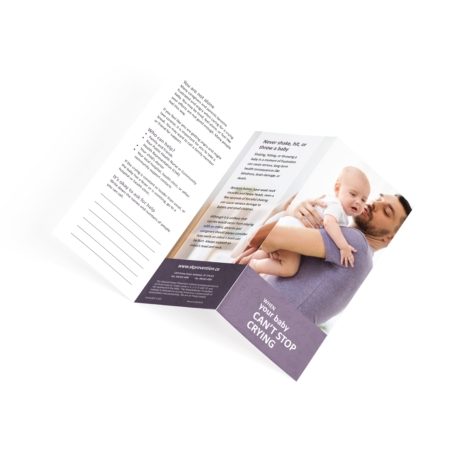
    Although infant crying is normal, it can be very frustrating for parents and caregivers. This brochure identifies strategies for dealing with a crying infant, as well as strategies for handling caregivers’ frustration.

    For information aimed at health professionals and service providers, see Abusive Head Trauma (Shaken Baby Syndrome) (resource 4-900).

    or
    SKU: 4-902
  • 4-500: Drowning Prevention

    Drowning Prevention

    Fact Sheet, Revised 2025


    The fact sheet outlines water safety tips and drowning prevention strategies for children along with guidelines for lifejacket and personal floatation device (PFD) use. It outlines information for caregivers supervising children at home, in the yard, in a watercraft, and at the pool, lake, or beach.


    SKU: 4-500
  • 3-200: Youth Social Media Use and Mental Health and Well-Being: An Evidence Summary

    Youth Social Media Use and Mental Health and Well-Being: An Evidence Summary

    Report, 2025


    Social media use in youth has increased over the last decade, with most youth using social media regularly. There is a belief that the increase in social media use is responsible for the increase in mental health challenges in youth. However, the research suggests that the associations between social media use and mental health remain unclear, with mixed findings suggesting that the relationships are complex and interrelated. The purpose of this evidence summary is to summarize the evidence regarding potential impacts of social media use on youth mental health and well-being, and recommendations for protecting youth from potential related harms.


    SKU: 3-200

Our Funders and Partners in Prevention

Our Funders and Partners in Prevention

Scroll to top