
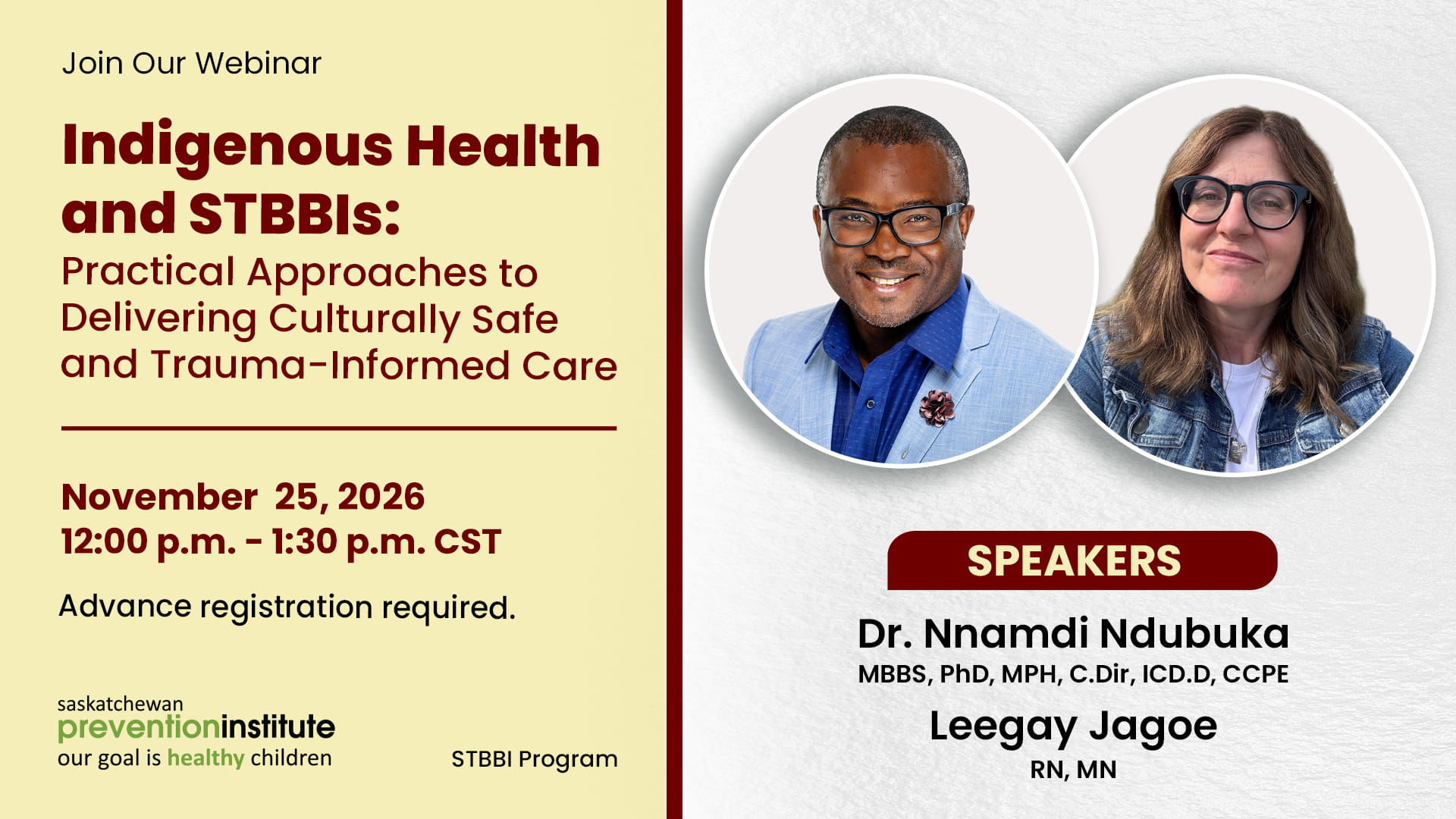
Effective STBBI prevention and care for Indigenous communities goes beyond clinical knowledge. It requires an understanding of factors that influence Indigenous health, as well as approaches that build trust and foster meaningful relationships with the individuals and communities we serve. Developing cultural safety and trauma-informed practices can help healthcare providers create more welcoming and responsive care experiences while improving access to services and health outcomes. Designed for healthcare providers, public health professionals, community workers, and others involved in STBBI prevention and care, this session will provide practical knowledge and tools that can be applied in frontline and community-based settings.
Participants will leave with a deeper understanding of:
- Current and emerging STBBI trends affecting Indigenous communities, and the factors that contribute to health inequities.
- Indigenous-led and community-driven approaches that support STBBI prevention, testing, treatment, and linkage to care.
- Practical strategies for delivering culturally safe, trauma-informed, and client-centred care that build trust, strengthen engagement, and support positive care experiences.
- Opportunities to reduce barriers and improve equitable access to STBBI services across urban, rural, remote, and northern communities.
- How culturally safe care can enhance client engagement, support equitable access to services, and contribute to improved health outcomes.