National HIV Testing Day in Saskatchewan – June 27, 2026
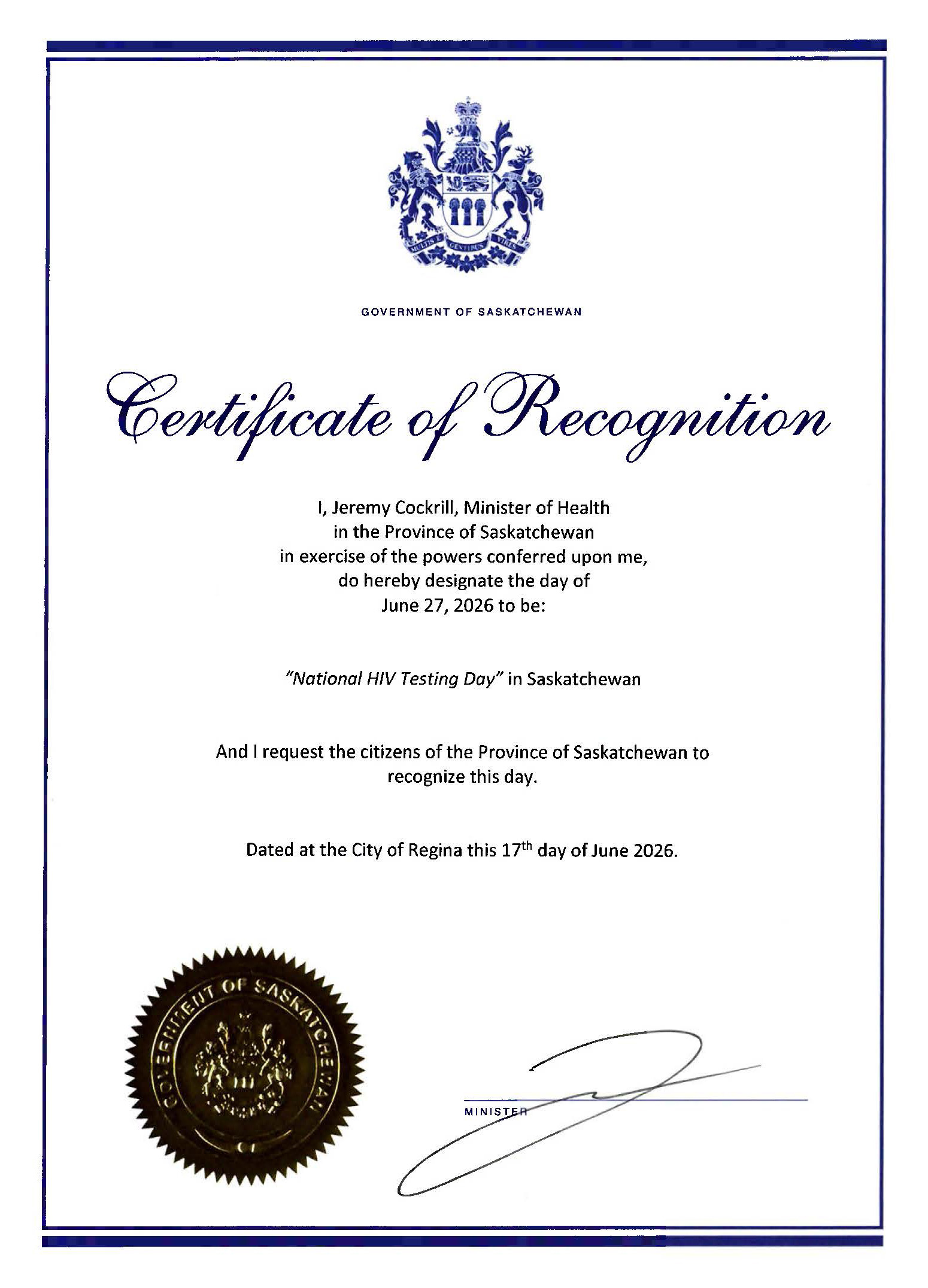
June 27 is recognized across Canada as National HIV Testing Day and has been officially proclaimed in Saskatchewan by the Minister of Health. The day serves as an important opportunity to raise awareness of HIV testing, encourage individuals to know their HIV status, and connect people with prevention, treatment, care, and support services.
The Significance of HIV Testing Day in Saskatchewan
Recent surveillance data from the Public Health Agency of Canada underscores the continued importance of HIV testing and awareness in Saskatchewan. Key findings from 2024 include the following.
- Saskatchewan recorded the second-highest rate of new HIV diagnoses in Canada. For every 100,000 people living in Saskatchewan, approximately 19 people were newly diagnosed with HIV in 2024.
- While the national rate was 5.5 cases per 100,000 population, Saskatchewan’s rate remained more than three times higher than the Canadian average, indicating a disproportionately greater burden of HIV in the province.
- Across Canada, 258 infants were born to individuals living with HIV.
HIV Testing Day highlights the importance of accessible testing, early diagnosis, and timely linkage to care across Saskatchewan.
What You Should Know About HIV Testing
Knowing your HIV status is an essential part of maintaining your health and making informed decisions about prevention and care. Saskatchewan offers several testing options, including self-testing, standard testing, point-of-care testing, and dried blood spot testing. Care and support services are available at locations across the province.
- The Window Period: HIV cannot be detected immediately following exposure. The time between exposure and when a test can accurately detect HIV is known as the window period. Depending on the type of test used, this period can range from approximately 10 to 90 days. Individuals who may have had a recent exposure are encouraged to seek screening as soon as possible and undergo repeat testing three months later, as these follow-up tests should be 99% accurate. Anyone who believes they have been exposed to HIV within the past 72 hours should seek immediate medical attention to discuss post-exposure prophylaxis (PEP). This medication can significantly reduce the risk of infection.
- Negative Results: A negative test result generally indicates that HIV was not detected at the time of testing. However, because HIV may take time to become detectable, a negative result does not always rule out a recent infection. Follow-up testing may be recommended depending on the timing of exposure. A negative result may also prompt discussions about prevention strategies, including pre-exposure prophylaxis (PrEP), which can help reduce the risk of acquiring HIV.
- Positive Results: A positive HIV test result indicates that HIV may be present and must be confirmed through additional laboratory testing. Individuals who receive a positive result should connect with a healthcare provider to discuss next steps and available supports. When HIV is confirmed, starting antiretroviral therapy (ART) as early as possible can help individuals live long and healthy lives. Effective treatment can reduce the amount of virus in the body to an undetectable level, meaning HIV cannot be sexually transmitted, a concept known as Undetectable = Untransmittable (U=U).
Each year, community-based organizations across Saskatchewan organize events to mark National HIV Testing Day and promote HIV awareness, education, and access to services. During eight events held throughout the province in 2025, 182 individuals attended, 97 HIV tests were conducted, and 24 HIV self-test kits were distributed. These activities demonstrate the value of community partnerships in increasing access to testing and fostering conversations about HIV prevention and care.
This year, communities across Saskatchewan will once again mark National HIV Testing Day through local events aimed at increasing awareness, expanding access to testing, and connecting people to care and support services. To learn more or find an event in your area, visit the HIV Testing Day page on the Saskatchewan HIV Collaborative website.
