

Child Injury Prevention Demonstration Activities
Attributes to meet: PDF: Download File, Guides and Manuals
Download File: condition met
Guide, 2020
This activity guide was developed for community leaders, educators, and other professionals to use in their work with families to help prevent child injury. The ten hands-on activities included in this guide demonstrate the risk to children and youth from common causes of injury. The causes of injury addressed in the guide include burns, choking, poisoning, scalds, traumatic brain injury, cycling-related injury, drowning, and motor-vehicle injury. Each activity includes a list of the materials, the process, discussion points, and safety tips. Additional materials such as fact sheets, images, and videos are also listed for each activity.
Related products
-
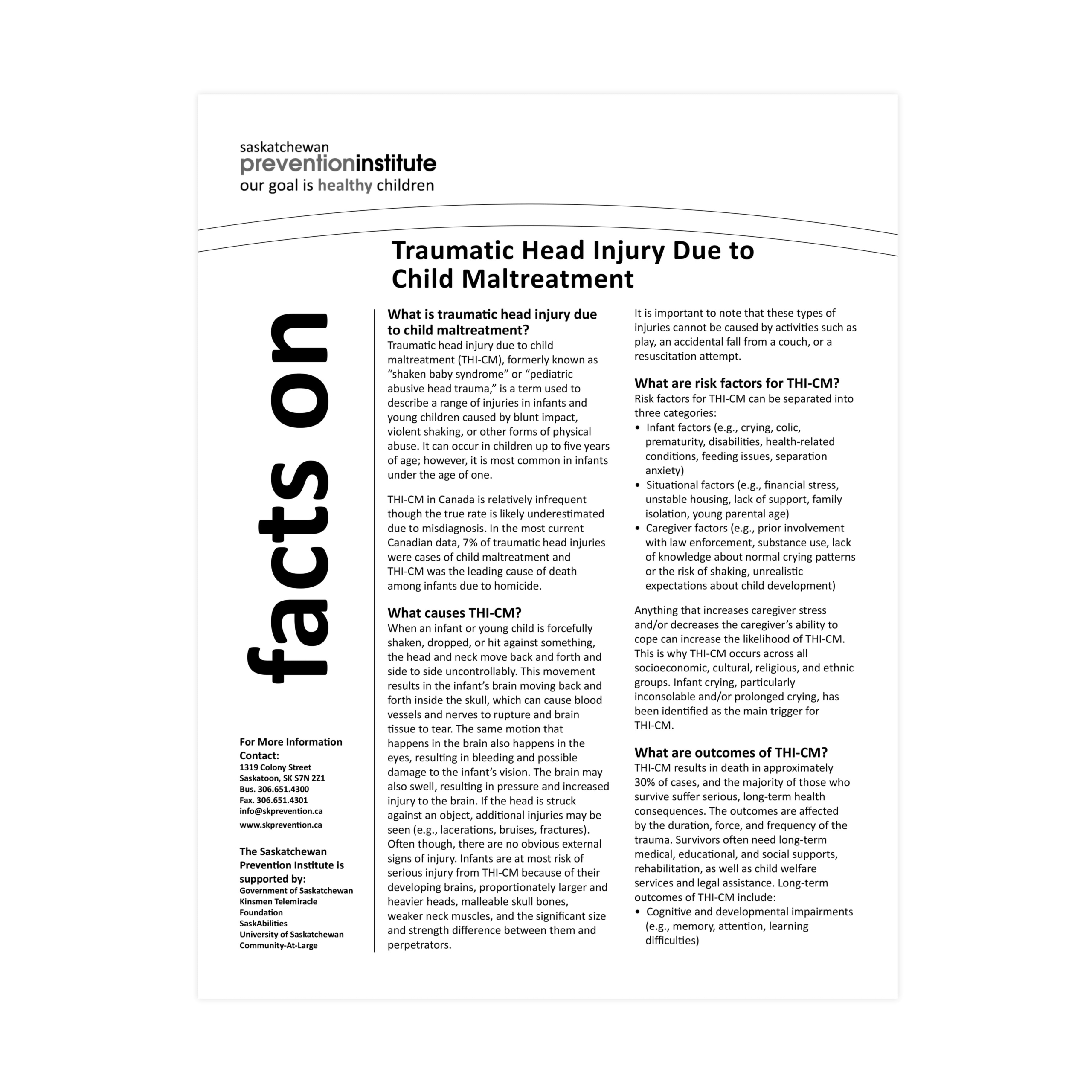
Traumatic Head Injury Due to Child Maltreatment
Fact Sheet, Updated 2026
Explains what traumatic head injury due to child maltreatment is, including how and why it happens, the long-term effects, and how it can be prevented. Aimed at health professionals and service providers who work with families. For information aimed at caregivers, see When Your Baby Can’t Stop Crying (resource 4-902).
SKU: 4-900 -

Vaping Products and Risks to Children
Fact Sheet, Revised 2024
This fact sheet defines what vaping products are and how they can be harmful to the health of children and youth. This resource outlines tips for parents to avoid injury or accidental poisoning from vaping products and devices. Vaping devices are also sometimes referred to as vape pens, vapes, electronic cigarettes, or e-cigarettes.
SKU: 4-301 -
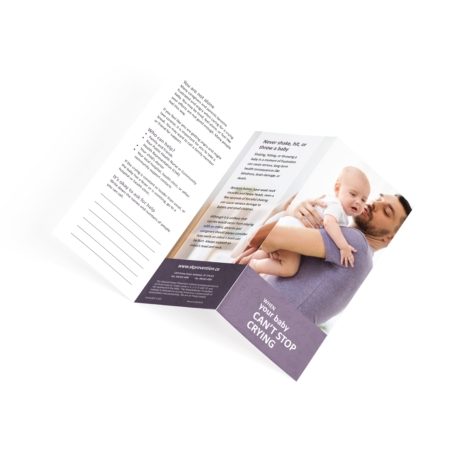
When Your Baby Can’t Stop Crying
Brochure, Revised 2025
Although infant crying is normal, it can be very frustrating for parents and caregivers. This brochure identifies strategies for dealing with a crying infant, as well as strategies for handling caregivers’ frustration.
For information aimed at health professionals and service providers, see Traumatic Head Injury Due to Child Maltreatment (resource 4-900).
SKU: 4-902 -

How to Prevent Poisoning
Fact Sheet, Revised 2024
This fact sheet contains information on how to prevent childhood poisoning and a checklist for caregivers to keep their home safe by identifying potential poisons.
SKU: 4-400