
Common Postpartum Complications
Attributes to meet: PDF: Download File, Fact Sheets
Download File: condition met
Fact Sheet, 2025
The postpartum period, or “fourth trimester”, is a critical time for new parents to recover and adjust after childbirth. This fact sheet highlights common postpartum complications that can affect both physical and mental health. It outlines symptoms to watch for, provides helpful tips for managing discomfort, and emphasizes the importance of seeking medical attention for severe or persistent issues. Resources and support options are also included to help ensure a healthy transition into parenthood.
Related products
-

We Need to Be Safe
Information Card, Revised 2023
This information card for the general public provides information on the impacts of intimate partner violence during pregnancy and available resources and supports.
SKU: 2-434 -
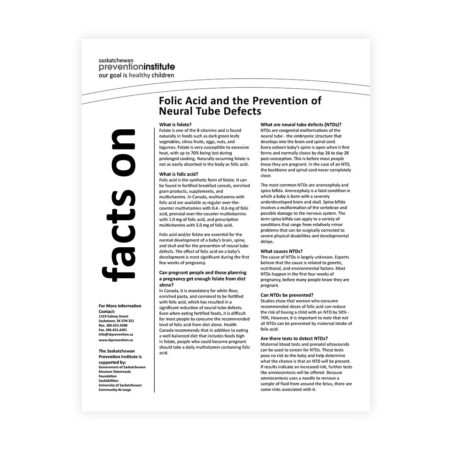
Folic Acid and the Prevention of Neural Tube Defects
Fact Sheet, Updated 2026
This fact sheet provides information on neural tube defects (NTDs) and folic acid. It includes information about what NTDs are, the importance of taking folic acid before and during pregnancy, classification of risk level, and appropriate folic acid dosage.
SKU: 2-301 -
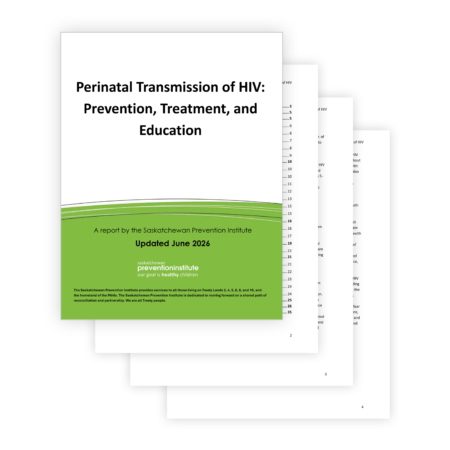
Perinatal Transmission of HIV: Prevention, Treatment, and Education
Report, Updated 2026
Saskatchewan continues to see high rates of new cases of human immunodeficiency virus (HIV) infection in comparison to the rest of Canada. A large number of these new cases are being identified in women of childbearing age.
Recognizing the importance of understanding HIV in the context of pregnancy, the Saskatchewan Prevention Institute conducted a review of the literature in this area. The review includes findings and recommendations on perinatal transmission, transmission prevention, barriers to prevention, and health promotion around these topics.
SKU: 7-501 -

Sexually Transmitted and Blood-Borne Infections (STBBIs): What You Need to Know
Brochure, Revised 2026
Designed for youth, this brochure provides evidence-based information on sexually transmitted and blood-borne infections (STBBIs). It covers what STBBIs are, how they are spread, chances of getting an STBBI, ways to reduce risk, when to get tested, and stigma related to STBBIs.
SKU: 7-002