
What healthy habits support healthy relationships?
Attributes to meet: PDF: Download File, Information Cards
Download File: condition met
Information Card, 2022
This postcard gives examples of how to build connections with children to nurture a healthy relationship. The provided activity asks parents and caregivers to list ways they want to respond to their children when they are experiencing certain feelings.
Related products
-
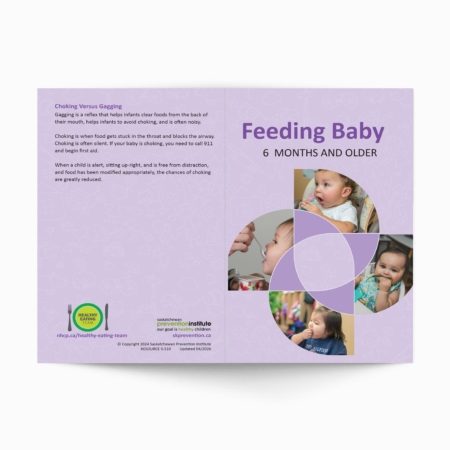
Feeding Baby: 6 Months and Older
Brochure, Updated 2026
This brochure provides details about feeding methods for babies 6 months and older. Information about how to prevent choking and modify foods to reduce choking risks for children 6 months to 2 years of age is provided.
This resource was created in partnership with the Northern Healthy Communities Partnership Healthy Eating Team. For more information, visit www.nhcp.ca/healthy-eating-team.
SKU: 5-510 -
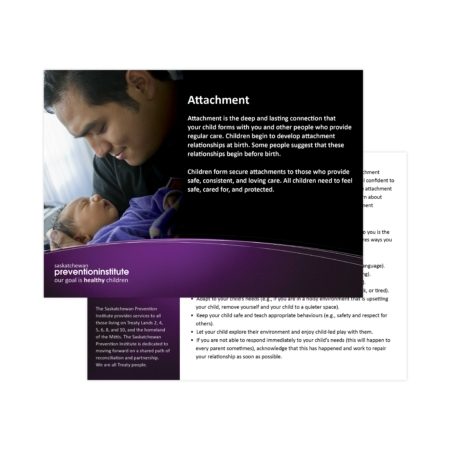
Attachment
Information Card, Updated 2026
Written in plain language, this information card provides basic information about attachment … the connection that a baby forms with his caregivers that helps him to feel loved, secure, and safe.
SKU: 8-801 -

Healthy Minds Begin at Home: From Infant to Individual
Guide and Manual, Reviewed 2024
This guide was developed for use with the “Healthy Minds Begin at Home: from Infant to Individual” toolkit. It is designed to help service providers begin or continue to work in the area of early childhood mental health. Included in the guide is information on early childhood mental health topics, suggested activities that professionals or caregivers can do with children, tip sheets for caregivers, and a list of resources. The “Healthy Minds Begin at Home: from Infant to Individual” toolkit was developed for Community Action Program for Children projects.
SKU: 5-812 -

Building a Healthy Relationship with Food: 6 Months and Older
Brochure, 2024
This brochure shares information about how to help children build a healthy relationship with food, starting when they are babies, and provides details about the division of responsibility. The division of responsibility states that the parent or caregiver decides what, when, and where to offer food for children to eat; the child decides if and how much food they eat.
This resource was created in partnership with the Northern Healthy Communities Partnership Healthy Eating Team. For more information, visit www.nhcp.ca/healthy-eating-team.
SKU: 5-509