
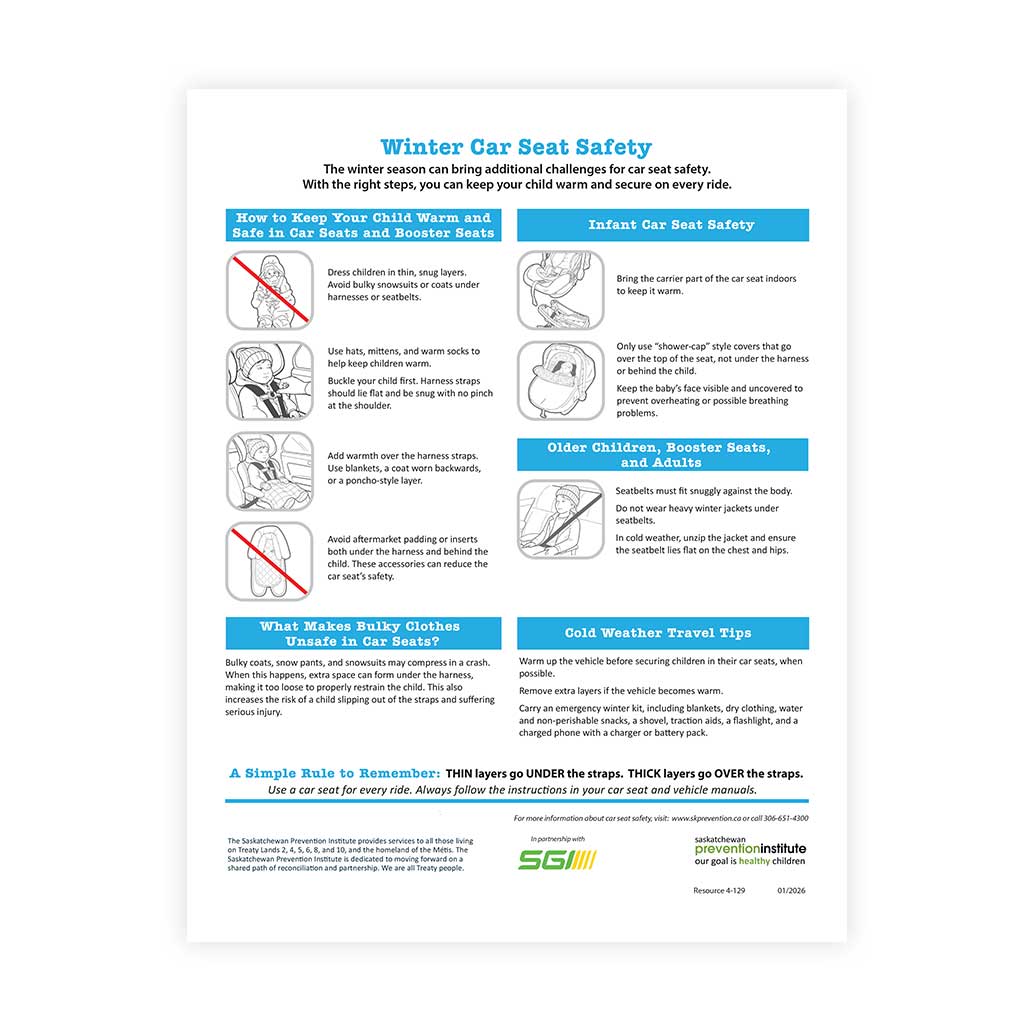
Winter Car Seat Safety
Attributes to meet: PDF: Fact Sheets, Order
Download File & Order: condition met
Fact Sheet, 2026
This fact sheet shares key winter car seat safety tips, including how to keep children warm without affecting proper harness fit. It provides guidance for infant car seats, along with important reminders for booster seats and older children. It also explains the risks of bulky clothing and offers practical tips for cold-weather travel.
Related products
-
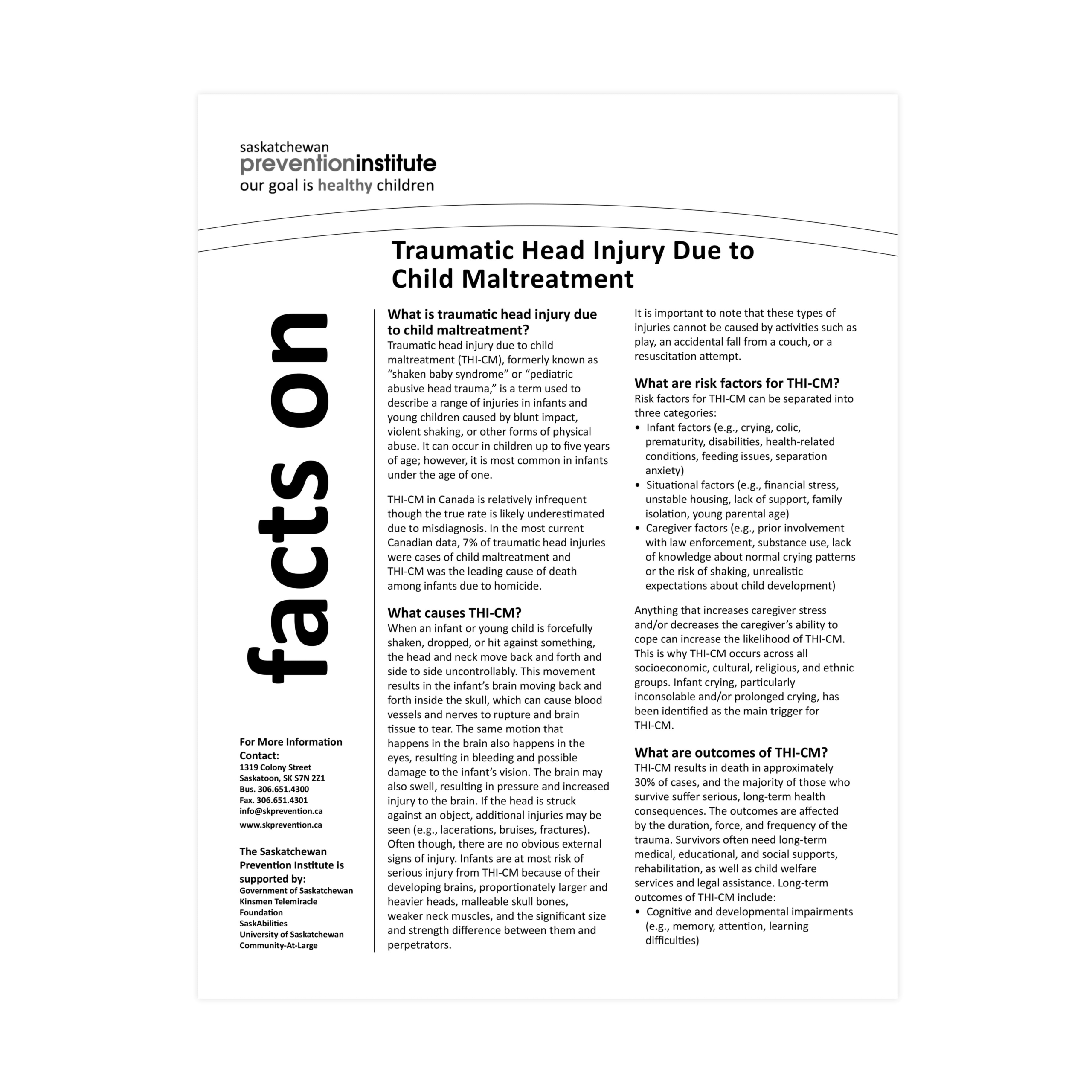
Traumatic Head Injury Due to Child Maltreatment
Fact Sheet, Updated 2026
Explains what traumatic head injury due to child maltreatment is, including how and why it happens, the long-term effects, and how it can be prevented. Aimed at health professionals and service providers who work with families. For information aimed at caregivers, see When Your Baby Can’t Stop Crying (resource 4-902).
SKU: 4-900 -

Rear-Facing Car Seats
Fact Sheet, Revised 2022
This fact sheet explains the different types of rear-facing car seats and how to properly buckle and tighten a child into one.
Please note: This resource is a pad of 50 fact sheets. An order quantity of 1 equals 50 fact sheets.SKU: 4-000 -

Aftermarket Car Accessories
Fact Sheet, 2022
This fact sheet explains the safety risks associated with aftermarket accessories for your child’s car seat and your vehicle and why they should not be used.
Please note: This resource is a pad of 50 fact sheets. An order quantity of 1 equals 50 fact sheets.SKU: 4-128 -

Farm Safety for Children
Fact Sheet, Reviewed 2026
This fact sheet was developed to assist families in making the farm a safer place for children to live, grow, and play. It outlines tips for creating safer environments, the importance of supervision, and strategies to help prevent injuries in children.
SKU: 4-600