
ABCs for Safe Sleep
Attributes to meet: PDF: Information Cards, Order
Download File & Order: condition met
Informational Door Hanger, 2020
This resource outlines safe sleeping tips for babies to help reduce the risk of Sudden Infant Death Syndrome (SIDS). It is intended to be used as a door hanger within a baby’s sleep environment.
Related products
-

Infant Mortality in Saskatchewan: Evidence to Inform Public Health Practice
Report, 2009
This document was prepared to describe the relationship between modifiable risk factors and infant mortality. It is meant to provide guidance, strategies, and support to help expand or develop programs that may contribute to the reduction of infant mortality in Saskatchewan. It includes a review of the literature regarding prevalent risk factors associated with infant mortality, as well as identifying promising practices related to those modifiable risk factors.
SKU: 2-457 -

Promising Practices in the Mitigation of the Impacts of Adverse Childhood Experiences (ACES) in Children Ages 0 to 6
Report, 2022
Adverse childhood experiences (ACEs) are childhood events that cause harm or distress and, as a result, disrupt the child’s health and development. The purpose of this report is to define ACEs and their impact on development, health, and well-being; describe how ACEs are identified in children ages 0 to 6; and investigate evidence-based practices being used with children ages 0 to 6 and parent/caregiver-child dyads to mitigate (make less severe or harmful) the impacts of ACEs in childhood and beyond.
“In November 2022 an Executive Summary was added to the report”.
SKU: 9-000 -
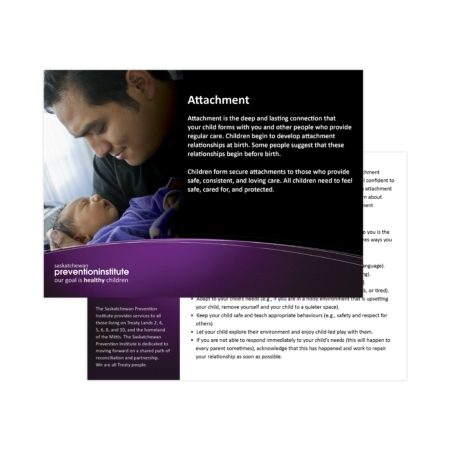
Attachment
Information Card, Updated 2026
Written in plain language, this information card provides basic information about attachment … the connection that a baby forms with his caregivers that helps him to feel loved, secure, and safe.
SKU: 8-801 -
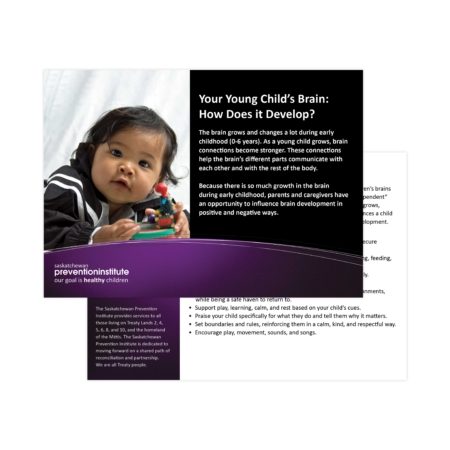
Your Young Child’s Brain: How Does It Develop?
Information Card, Updated 2026
Written in plain language, this information card provides basic information about the importance of brain development during the early years. Practical tips to increase opportunities for children’s healthy development are included.
SKU: 8-701