
Building Healthy Online Relationships
Attributes to meet: PDF: Booklets, Order
Download File & Order: condition met
Booklet, 2022
Teaching young people how to build healthy relationships provides them with valuable skills that can promote their overall health. With the increasing use of online technology, teaching youth to build healthy relationships online is becoming increasingly important. This booklet provides information about how to build healthy online relationships, including information on online safety and communication, as well as tips to help navigate cyberbullying, grooming, sextortion, and more. It is designed for use with youth.
For more information on healthy relationships in general, view the booklet Building Healthy Relationships: Yes, that includes dating relationships!
Related products
-
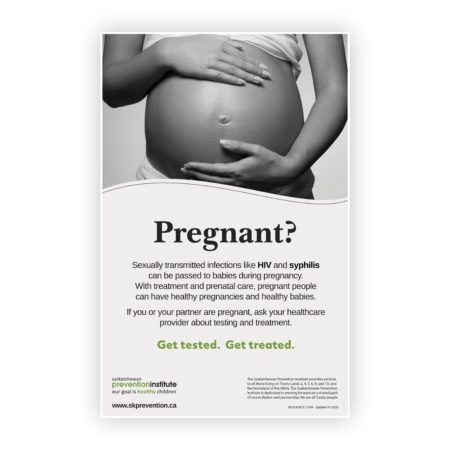
Pregnant? Get tested for HIV and Syphilis
Poster, 2026
HIV and syphilis can be passed from a pregnant person to their growing baby during pregnancy. This poster brings awareness to the importance of testing, treatment, and prenatal care for the health of pregnant people and their babies.
SKU: 7-004 -

HIV and Pregnancy – A Guide to Care
Guide and Manual, Revised 2020
This guide covers such topics such as HIV/AIDS in Saskatchewan, modes of transmission of HIV, HIV testing during pregnancy, prenatal algorithm, HIV treatment and drug management, after-care for babies of HIV positive women, barriers to HIV transmission prevention and prenatal care, and motivational approaches.
For updated information about HIV/AIDS for health professionals, visit: https://www.canada.ca/en/public-health/services/diseases/hiv-aids/health-professionals.html.
For updated HIV order sets for Saskatchewan, including maternal and infant order sets, clinical forms, and discharge checklists, visit: https://www.saskhealthauthority.ca/intranet/health-provider-resources/clinical-resources/z-list-clinical-resources/maternalchildrens-health-resources/hiv-maternal-and-newborn-clinical-resources.
For updated information about infant feeding recommendations in Canada, including criteria for people living with HIV who want to breastfeed, visit: https://pubmed.ncbi.nlm.nih.gov/37008587/.
SKU: 7-008 -

Hope for the Future: Having a Healthy Pregnancy While Living with HIV
Video, 2013
This DVD shares information about HIV, pregnancy, and parenting, with the goal of showing that healthy pregnancies and healthy babies are possible for pregnant women living with HIV in Saskatchewan. The knowledge and experiences of people living with HIV and those who work in this area are shared. The DVD was created as a resource for health and allied health professionals and for people living with HIV in Saskatchewan.
SKU: 7-000 -

Learning about My Body: Two to Five Years of Age
Booklet, Revised 2024
Parents are the most important influence in a child’s life. Children learn about culture, spiritual beliefs, moral values, and social skills from their parents. Parents also play a crucial role in the physical, mental, emotional as well as sexual health development of their children.
This book has been developed to support parents as their children’s sexual health educators. In particular, this book is meant to help parents share important messages with their children on growth and development.
This book is available for loan through all Saskatchewan Public Libraries.SKU: 7-210