

Infant Mortality in Saskatchewan: Evidence to Inform Public Health Practice
Attributes to meet: PDF: Download File, Reports
Download File: condition met
Report, 2009
This document was prepared to describe the relationship between modifiable risk factors and infant mortality. It is meant to provide guidance, strategies, and support to help expand or develop programs that may contribute to the reduction of infant mortality in Saskatchewan. It includes a review of the literature regarding prevalent risk factors associated with infant mortality, as well as identifying promising practices related to those modifiable risk factors.
Related products
-
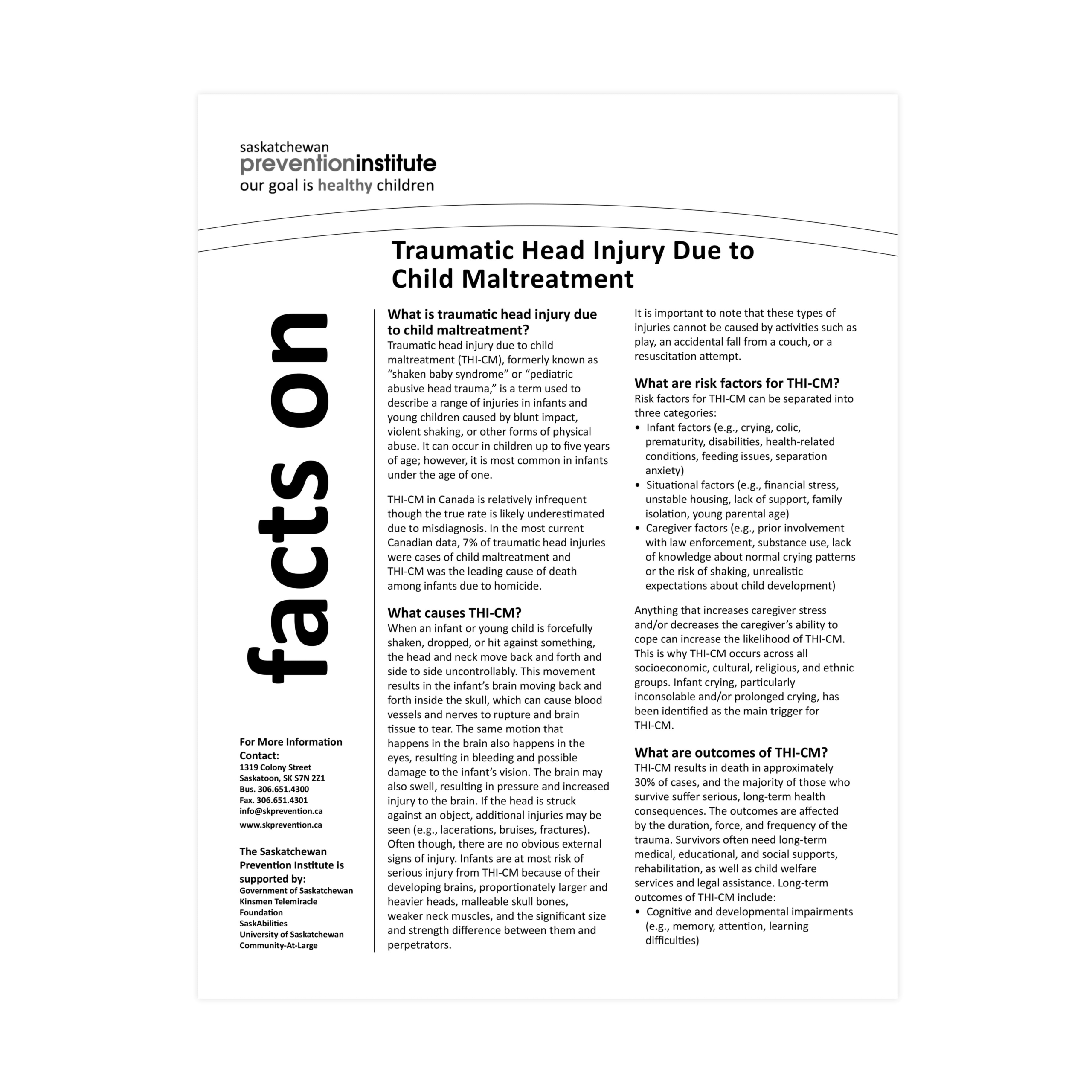
Traumatic Head Injury Due to Child Maltreatment
Fact Sheet, Updated 2026
Explains what traumatic head injury due to child maltreatment is, including how and why it happens, the long-term effects, and how it can be prevented. Aimed at health professionals and service providers who work with families. For information aimed at caregivers, see When Your Baby Can’t Stop Crying (resource 4-902).
SKU: 4-900 -

HIV: Healthy Pregnancies and Healthy Babies
Booklet, 2018
This booklet is designed for people living with HIV who are planning a pregnancy or are already pregnant. Topics include basic HIV and HIV treatment information, how to stay healthy before and during pregnancy, unique issues that may face women living with HIV, and where to go for more information and support. The booklet is an update to the previous HIV and pregnancy-related pamphlets provided by the Saskatchewan Prevention Institute.
SKU: 7-005 -

My Curious Brain
Booklet, 2019
My Curious Brain is a fun, interactive, and educational book for parents and caregivers to teach their kids about how the brain works. When parents and caregivers have a greater understanding of how the brain works, they will better understand how to support their child and promote healthy brain development. With a greater awareness of how the brain works and with supportive caregivers, children can develop self-regulation skills and strategies to help them effectively deal with stress.
SKU: 5-505 -

Childhood Exposure to Intimate Partner Violence: A Literature Review
Report, 2024
Childhood exposure to intimate partner violence (IPV) can have both short- and long-term negative impacts on the health and well-being of children that can persist across generations. This literature review details prevalence, child perspectives, effects of exposure, and intergenerational transmission of violence. Information about protective factors and intervention strategies is also provided.
For a related literature review focused on intimate partner violence during pregnancy, please visit www.skprevention.ca/resource-catalogue/pregnancy/intimate-partner-violence-ipv-during-pregnancy-a-literature-review/.
SKU: 8-900