

Child and Youth Injury in Saskatchewan 1995-1999
Attributes to meet: PDF: Download File, Reports
Download File: condition met
Report, 2002
This report focuses on the most significant causes of injury-related hospitalizations and deaths for Saskatchewan children and youth. The most significant causes discussed in this report are falls, motor vehicle traffic, self-injury, drowning and choking, fire and flame, poison, motor vehicle pedestrian, sports, and assaults.
Related products
-
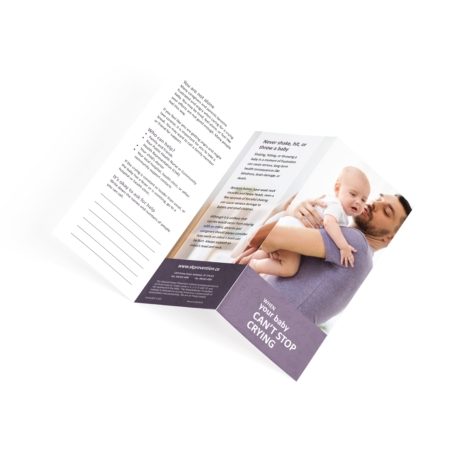
When Your Baby Can’t Stop Crying
Brochure, Revised 2025
Although infant crying is normal, it can be very frustrating for parents and caregivers. This brochure identifies strategies for dealing with a crying infant, as well as strategies for handling caregivers’ frustration.
For information aimed at health professionals and service providers, see Abusive Head Trauma (Shaken Baby Syndrome) (resource 4-900).
SKU: 4-902 -

I’m Growing up Safely – Growth Chart
Poster, Revised 2011
This resource provides home safety information for parents and caregivers in the form of a children’s growth chart. The growth chart reaches a maximum height of 90 cm (36 inches or 3 feet) and is intended for children between birth and 2 years of age.
SKU: 4-012 -

Home Safety Tips: 1 to 4 Years
Booklet, Revised 2025
All children depend on the adults around them to provide safe, healthy environments to learn, grow, and develop new skills. This booklet will support caregivers in preparing for each stage of child development, to better predict and prevent injuries to children from 1 to 4 years of age.
Safety tips are organized by activity, and address the following topics: safe sleep, drowning, burns, scalds, choking, poisoning, bike and wheel safety, car seats, and pedestrian safety.
Also available: Home Safety Tips: Birth to 1 Year, and Home Safety Tips: 5 to 9 YearsSKU: 4-024 -

Abusive Head Trauma (Shaken Baby Syndrome)
Fact Sheet, Revised 2019
Explains what abusive head trauma is, including how and why it happens, the long-term effects, and how it can be prevented. Aimed at health professionals and service providers who work with families. For information aimed at caregivers, see When Your Baby Can’t Stop Crying (resource 4-902).
SKU: 4-900