

Maternal Mental Health
Attributes to meet: PDF: Download File, Fact Sheets
Download File: condition met
Fact Sheet, 2013
These fact sheets are intended as an information resource for healthcare providers or other individuals who would like further information on maternal depression. It is more detailed than the Information Card. On the back of the fact sheet is the Edinburgh Postpartum Depression Scale (EPDS), a depression screen that can be done with a woman or can be provided to a woman to complete on her own. The fact sheet can be referred to when discussing maternal depression with women and their families, or used to share information with your colleagues.
Related products
-
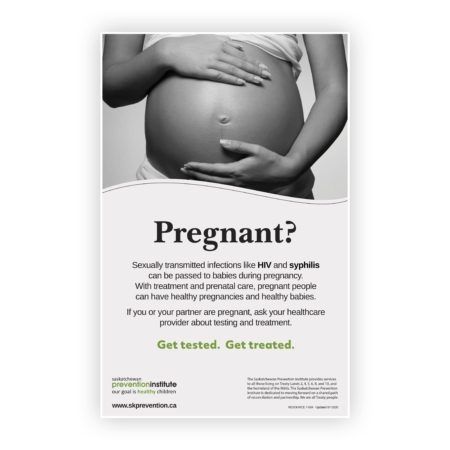
Pregnant? Get tested for HIV and Syphilis
Poster, 2026
HIV and syphilis can be passed from a pregnant person to their growing baby during pregnancy. This poster brings awareness to the importance of testing, treatment, and prenatal care for the health of pregnant people and their babies.
SKU: 7-004 -

Helping Young Children Develop Resiliency and Cope with Stress
Information Card, Revised 2025
Stress is inevitable. Every child and adult will experience stress at some time in their lives. Written in plain language, this information card provides practical information for caregivers to help their young children develop resiliency – coping skills to handle stressful events.
SKU: 8-601 -

Sexually Transmitted Infections (STIs) Executive Summary
Report, 2011
This executive summary is for the report “Sexually Transmitted Infections and Their Effects on Fertility, Pregnancy, and the Newborn: An Environmental Scan of Available Resources and a Preliminary Needs Assessment for Saskatchewan Health Care Providers”.
Download the Sexually Transmitted Infections (STIs) – ReportSKU: 7-503 -

Group Prenatal Care Lit Review
Report, 2016
Group prenatal care is a model of group where eight to twelve women of similar gestational age meet as a group with their healthcare provider for 90-120 minutes of regularly scheduled appointments, starting in their second trimester and continuing throughout their pregnancy. During these appointments, each woman has a brief individual physical assessment with the healthcare provider and then participates in a group discussion led by a healthcare provider. All prenatal care is provided in this group setting, combining the usual physical assessment with peer support and increased time for education about healthy pregnancy. This report examines current research on group prenatal care to assess if it is a good model of care for Saskatchewan and if there is an improvement in birth outcomes and breastfeeding rates associated with using this model of care compared to individual prenatal care. Birth outcomes examined in this report are gestational age at birth, preterm birth, and low birth weight.
SKU: 2-903