

My Curious Brain
Attributes to meet: PDF: Booklets
Order Only for PDF: condition met
Booklet, 2019
My Curious Brain is a fun, interactive, and educational book for parents and caregivers to teach their kids about how the brain works. When parents and caregivers have a greater understanding of how the brain works, they will better understand how to support their child and promote healthy brain development. With a greater awareness of how the brain works and with supportive caregivers, children can develop self-regulation skills and strategies to help them effectively deal with stress.
Related products
-

Cherish Me for I am a Child
Poster, 2011
This brightly coloured wall hanging with the poem “Cherish Me for I am a Child” talks about the importance of a child growing up feeling safe, secure, and happy and in order for a child to do this he needs to be protected, cared for, and loved by the adults in his life. This can be used as a wall hanging for anyone to have in their home or office.
SKU: 5-504 -

Abusive Head Trauma (Shaken Baby Syndrome)
Fact Sheet, Revised 2019
Explains what abusive head trauma is, including how and why it happens, the long-term effects, and how it can be prevented. Aimed at health professionals and service providers who work with families. For information aimed at caregivers, see When Your Baby Can’t Stop Crying (resource 4-902).
SKU: 4-900 -

Childhood Exposure to Intimate Partner Violence: A Literature Review
Report, 2024
Childhood exposure to intimate partner violence (IPV) can have both short- and long-term negative impacts on the health and well-being of children that can persist across generations. This literature review details prevalence, child perspectives, effects of exposure, and intergenerational transmission of violence. Information about protective factors and intervention strategies is also provided.
For a related literature review focused on intimate partner violence during pregnancy, please visit www.skprevention.ca/resource-catalogue/pregnancy/intimate-partner-violence-ipv-during-pregnancy-a-literature-review/.
SKU: 8-900 -
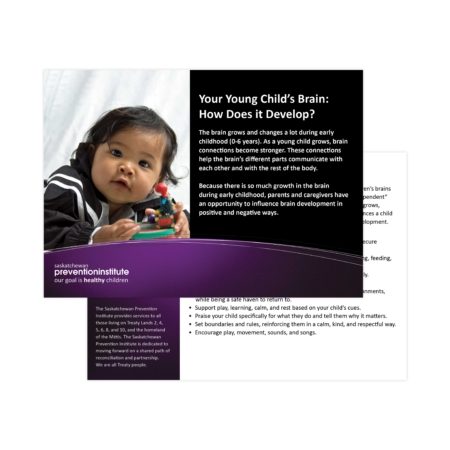
Your Young Child’s Brain: How Does It Develop?
Information Card, Updated 2026
Written in plain language, this information card provides basic information about the importance of brain development during the early years. Practical tips to increase opportunities for children’s healthy development are included.
SKU: 8-701