

ABCs for Safe Sleep
Attributes to meet: PDF: Information Cards, Order
Download File & Order: condition met
Informational Door Hanger, 2020
This resource outlines safe sleeping tips for babies to help reduce the risk of Sudden Infant Death Syndrome (SIDS). It is intended to be used as a door hanger within a baby’s sleep environment.
Related products
-
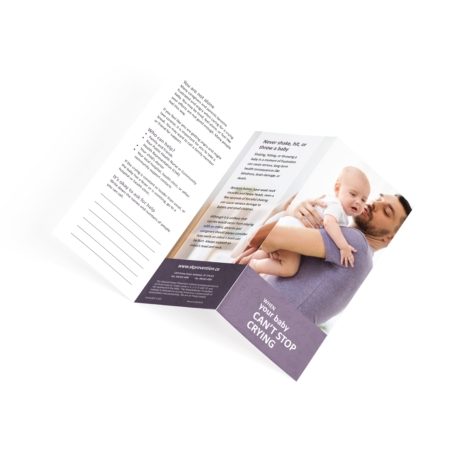
When Your Baby Can’t Stop Crying
Brochure, Revised 2025
Although infant crying is normal, it can be very frustrating for parents and caregivers. This brochure identifies strategies for dealing with a crying infant, as well as strategies for handling caregivers’ frustration.
For information aimed at health professionals and service providers, see Abusive Head Trauma (Shaken Baby Syndrome) (resource 4-900).
SKU: 4-902 -

Infant Mortality in Saskatchewan: Evidence to Inform Public Health Practice
Report, 2009
This document was prepared to describe the relationship between modifiable risk factors and infant mortality. It is meant to provide guidance, strategies, and support to help expand or develop programs that may contribute to the reduction of infant mortality in Saskatchewan. It includes a review of the literature regarding prevalent risk factors associated with infant mortality, as well as identifying promising practices related to those modifiable risk factors.
SKU: 2-457 -

Late Preterm Infant (Near-Term)
Fact Sheet, 2023
A late preterm infant is a baby that is born between 34-36 (almost 37) weeks of pregnancy. This fact sheet provides information about some health problems that might affect a late preterm infant, things that caregivers and parents should watch for, and some questions to be discussed before leaving the hospital.
SKU: 2-201 -

Cherish Me for I am a Child
Poster, 2011
This brightly coloured wall hanging with the poem “Cherish Me for I am a Child” talks about the importance of a child growing up feeling safe, secure, and happy and in order for a child to do this he needs to be protected, cared for, and loved by the adults in his life. This can be used as a wall hanging for anyone to have in their home or office.
SKU: 5-504