To help all children thrive through primary prevention
and the promotion of well-being.
To help all children thrive through primary prevention and the promotion of well-being.
To help all children thrive through primary prevention
and the promotion of well-being.
To help all children thrive through primary prevention and the promotion of well-being.

The Saskatchewan Prevention Institute is a non-profit organization, founded in 1980. Our focus is to reduce the occurrence of disabling conditions in children using primary prevention methods. We raise awareness by providing training, information, and resources based on current best evidence.
The Saskatchewan Prevention Institute believes that children of all abilities have the right to the best physical, social, and emotional health possible.
LEARN MORE
LEARN MORE
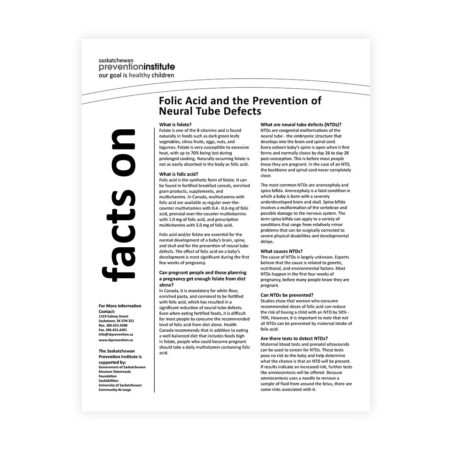
Fact Sheet, Updated 2026
This fact sheet provides information on neural tube defects (NTDs) and folic acid. It includes information about what NTDs are, the importance of taking folic acid before and during pregnancy, classification of risk level, and appropriate folic acid dosage.

Poster, 2026
HIV and syphilis can be passed from a pregnant person to their growing baby during pregnancy. This poster brings awareness to the importance of testing, treatment, and prenatal care for the health of pregnant people and their babies.
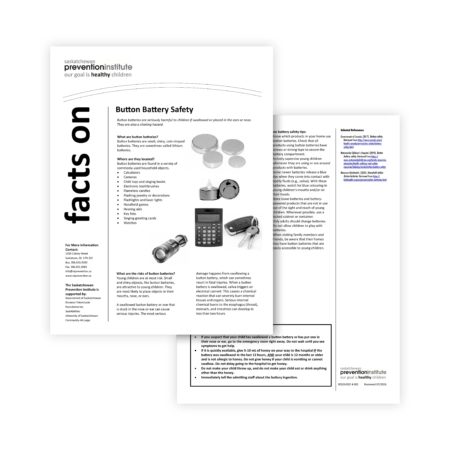
Fact Sheet, Revised 2026
This fact sheet provides information about what button batteries are, how they can be harmful to the health of children, safety tips, and what to do if a child swallows a button battery.

Fact Sheet, Reviewed 2026
This fact sheet was developed to assist families in making the farm a safer place for children to live, grow, and play. It outlines tips for creating safer environments, the importance of supervision, and strategies to help prevent injuries in children.
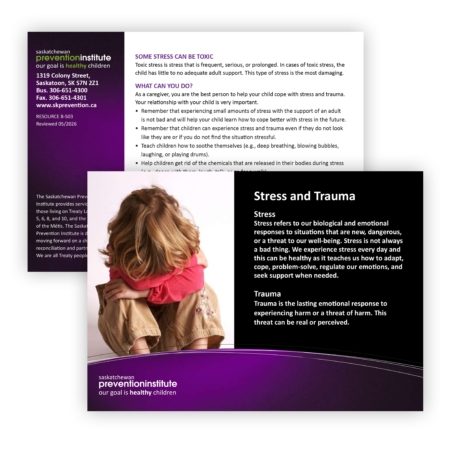
Information Card, Updated 2026
This information card provides basic information about the impact of stress and trauma on a young person’s body, particularly the development of his brain.
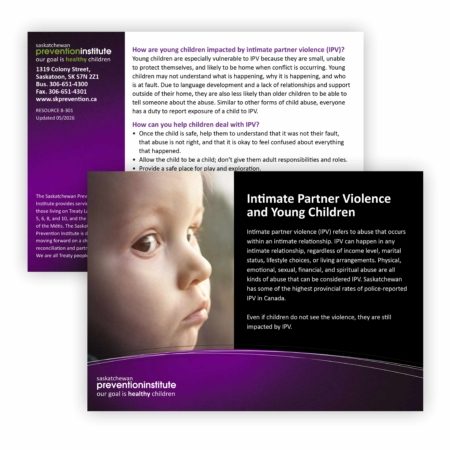
Information Card, Updated 2026
Written in plain language, this information card provides basic information about the impact of witnessing intimate partner violence during early childhood. Caregivers are given practical tips for helping children who have had this experience.
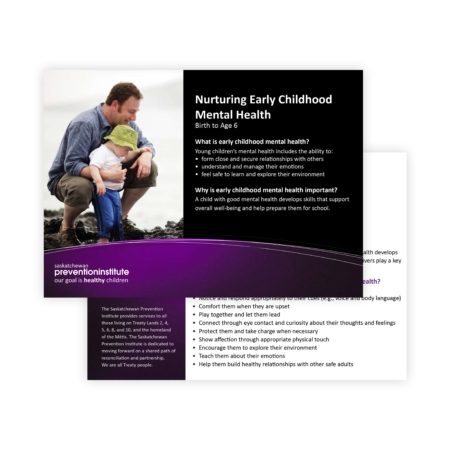
Information Card, Updated 2026
Written in plain language, this information card provides general information about early childhood mental health and opportunities that parents have to increase their child’s overall health in the early years.
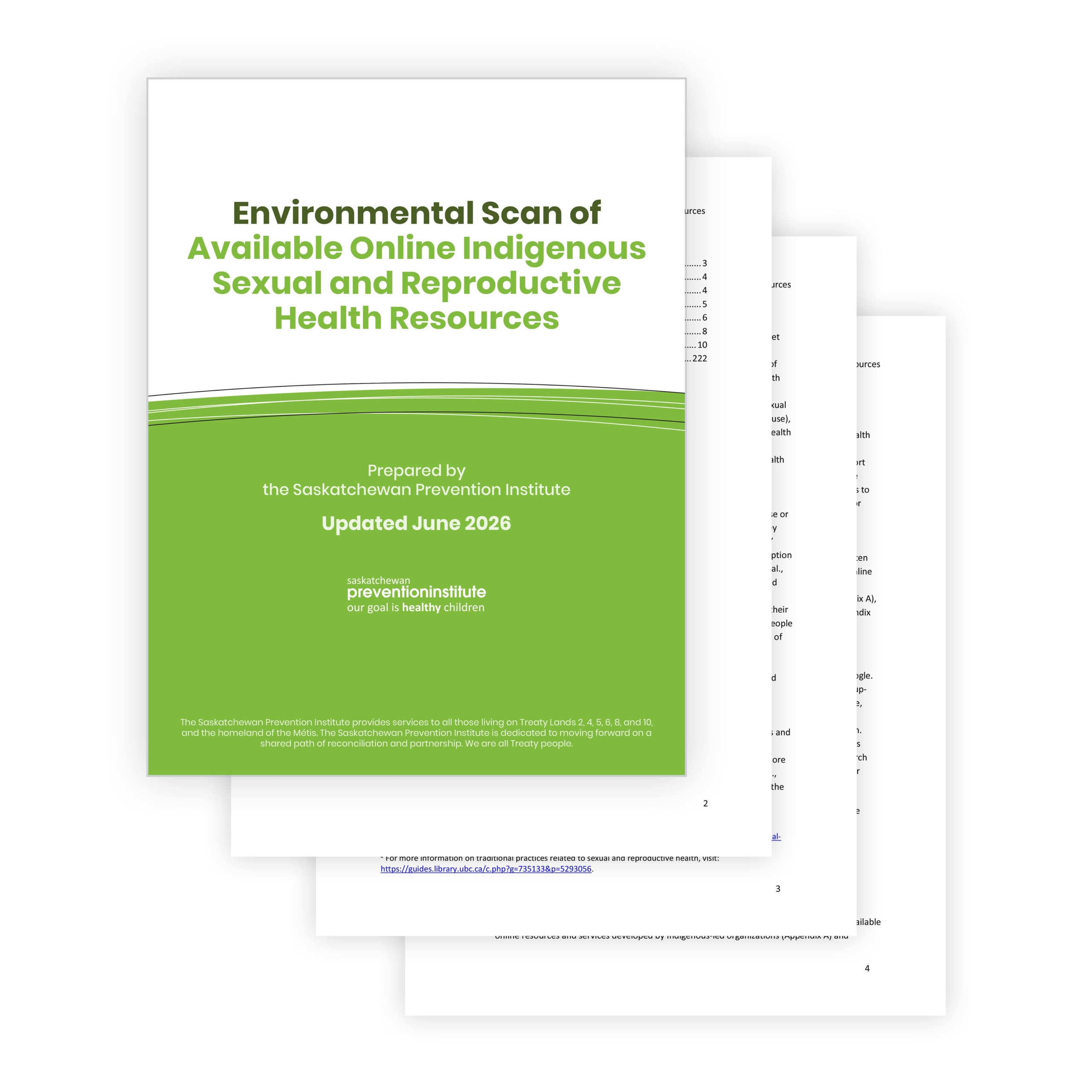
Report, Updated 2026
Sexual and reproductive health are important for overall health and well-being. Indigenous communities in Canada continue to experience sexual and reproductive health disparities due to limited health care access, poor quality of care, discrimination within the healthcare system, and ongoing impacts of colonization. In an effort to reduce these disparities and improve sexual and reproductive health outcomes, communities and organizations are creating resources, services, and programs that better meet the needs of Indigenous people. This report highlights available sexual and reproductive health resources and services in Canada created by or in partnership with Indigenous people.
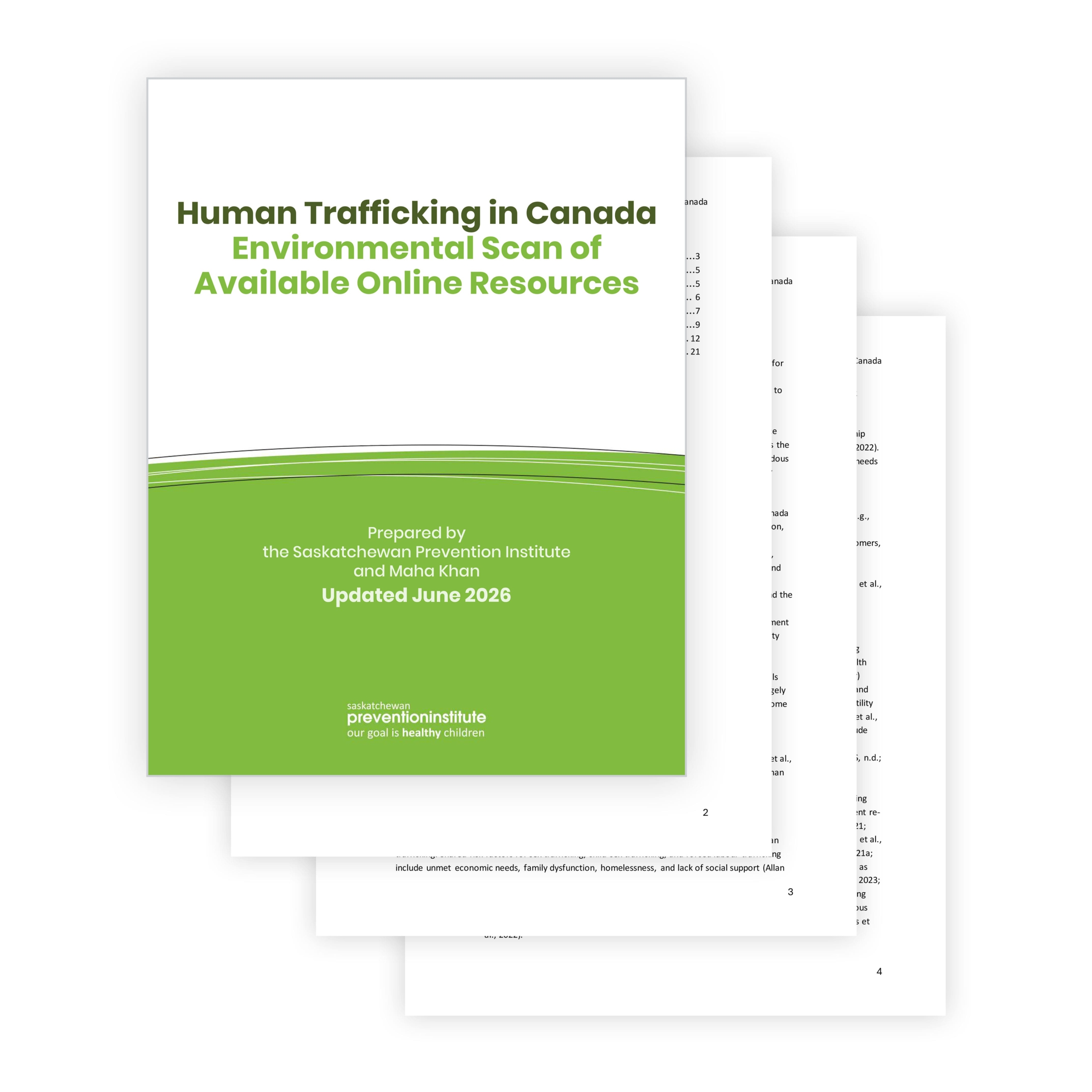
Report, Updated 2026
Human trafficking occurs across Canada with typically severe and long-lasting consequences for victims. This report shares information on current, evidence-based national and Saskatchewan-specific human trafficking resources (e.g., educational materials, trainings, prevention and intervention programs) and support services for victims and survivors.
For more information about human trafficking in Canada, please see the completed literature review titled “Human Trafficking in Canada – A Literature Review”.
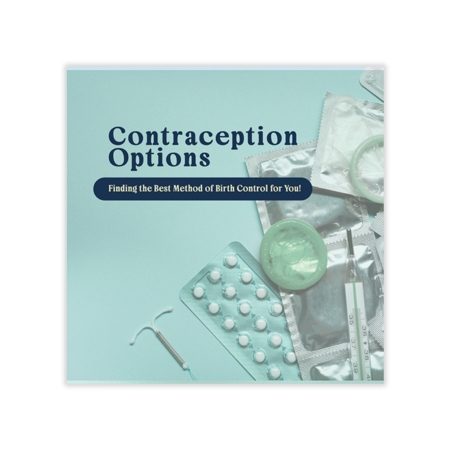
Booklet, Updated 2026
This booklet provides information about the different types of contraception available, including the effectiveness, use, and how to access each type. This booklet is designed for use by youth and those who work with youth.
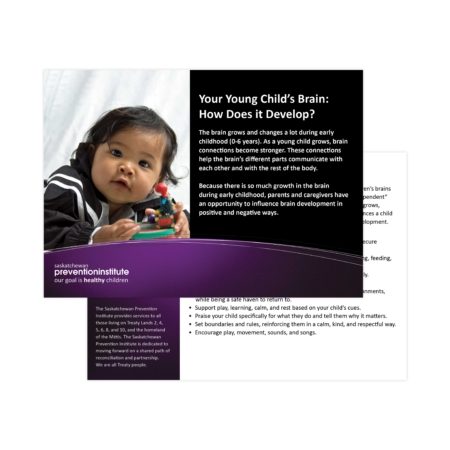
Information Card, Updated 2026
Written in plain language, this information card provides basic information about the importance of brain development during the early years. Practical tips to increase opportunities for children’s healthy development are included.
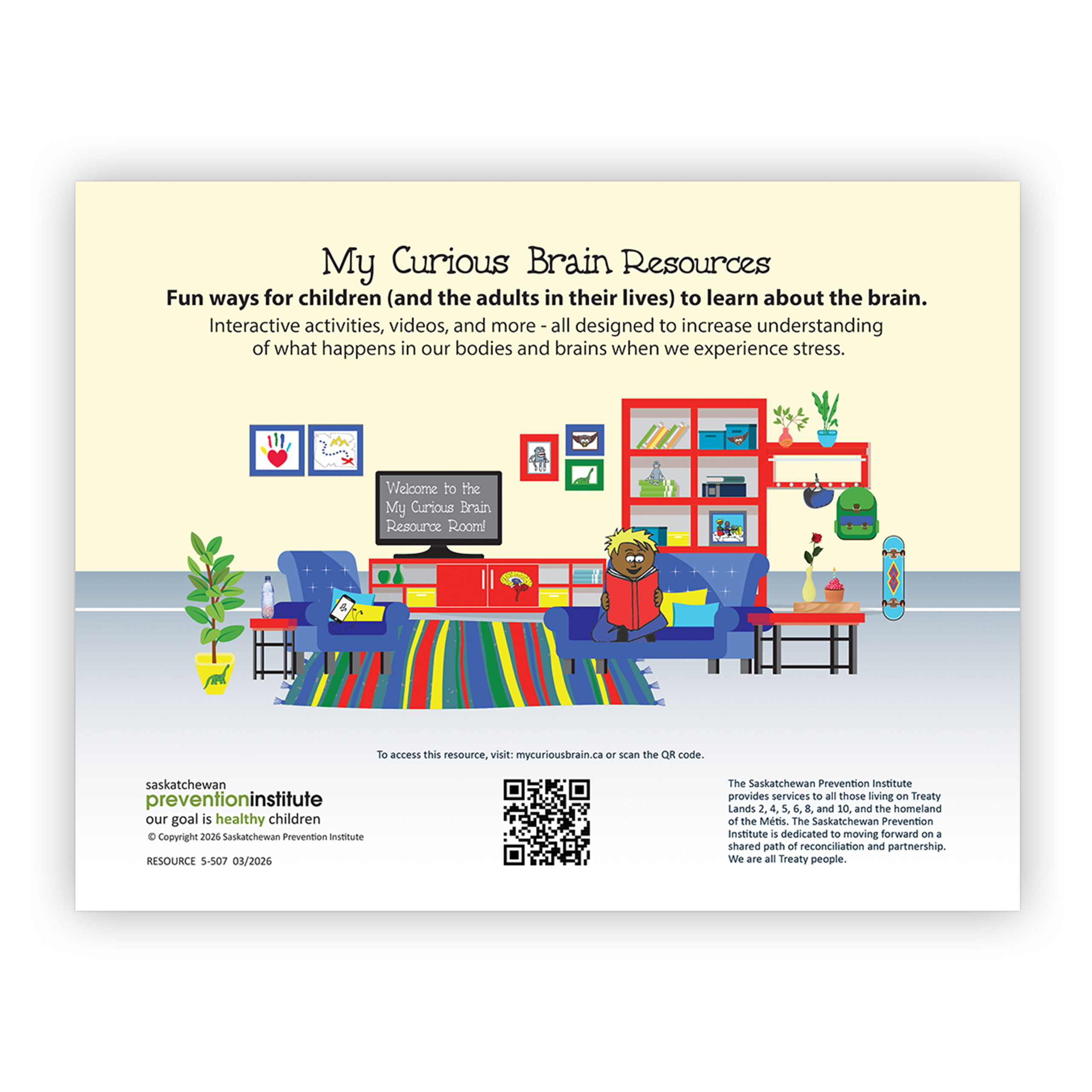
Poster, Updated 2026
The My Curious Brain Resource Room is an interactive virtual tool to help children and adults learn what happens in the brain and body when stress is experienced. This poster provides the QR code and link to access the resource.
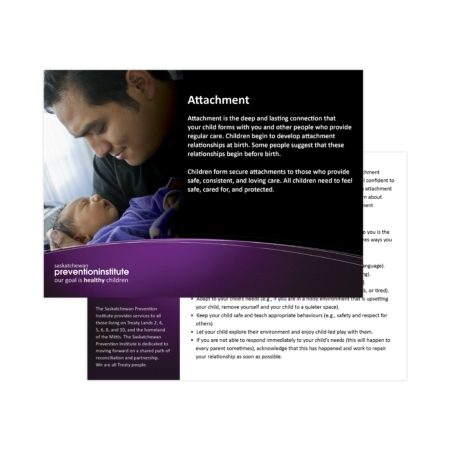
Information Card, Updated 2026
Written in plain language, this information card provides basic information about attachment … the connection that a baby forms with his caregivers that helps him to feel loved, secure, and safe.
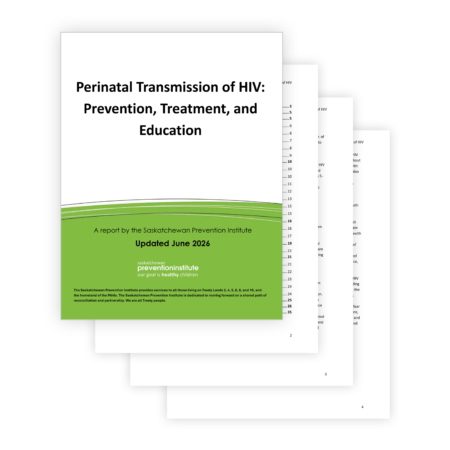
Report, Updated 2026
Saskatchewan continues to see high rates of new cases of human immunodeficiency virus (HIV) infection in comparison to the rest of Canada. A large number of these new cases are being identified in women of childbearing age.
Recognizing the importance of understanding HIV in the context of pregnancy, the Saskatchewan Prevention Institute conducted a review of the literature in this area. The review includes findings and recommendations on perinatal transmission, transmission prevention, barriers to prevention, and health promotion around these topics.
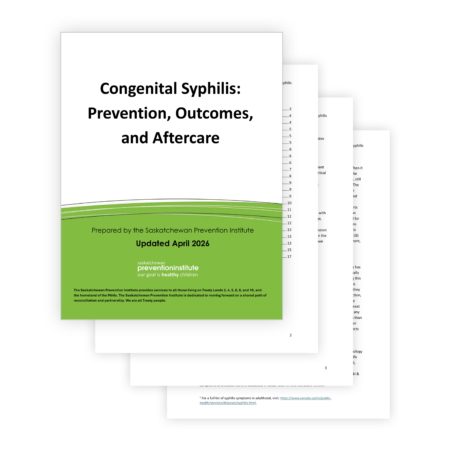
Report, Updated 2026
Recognizing the importance of understanding syphilis in the context of pregnancy, the Saskatchewan Prevention Institute conducted a review of the literature in this area. The review covers findings and recommendations on congenital syphilis transmission, prevention, treatment, and aftercare, as well as information about short- and long-term outcomes of congenital syphilis.
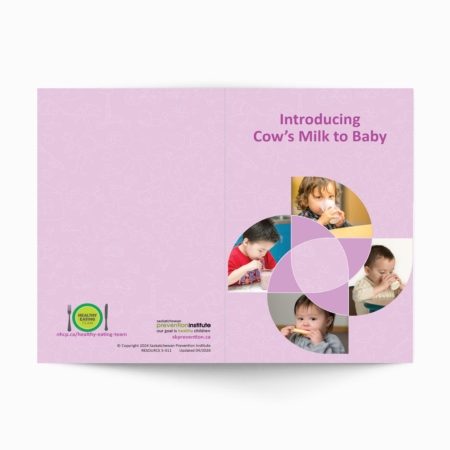
Brochure, Updated 2026
This brochure outlines when to introduce cow’s milk to babies and provides details about iron-deficiency anemia. Examples of iron-rich foods are provided.
This resource was created in partnership with the Northern Healthy Communities Partnership Healthy Eating Team. For more information, visit www.nhcp.ca/healthy-eating-team.
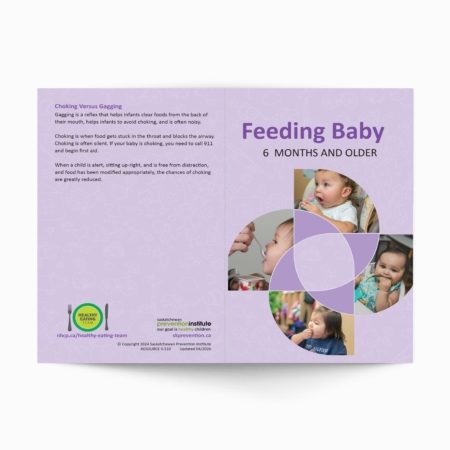
Brochure, Updated 2026
This brochure provides details about feeding methods for babies 6 months and older. Information about how to prevent choking and modify foods to reduce choking risks for children 6 months to 2 years of age is provided.
This resource was created in partnership with the Northern Healthy Communities Partnership Healthy Eating Team. For more information, visit www.nhcp.ca/healthy-eating-team.

Fact Sheet, 2026
This fact sheet shares key winter car seat safety tips, including how to keep children warm without affecting proper harness fit. It provides guidance for infant car seats, along with important reminders for booster seats and older children. It also explains the risks of bulky clothing and offers practical tips for cold-weather travel.

Booklet, 2026
Effectively supporting pregnant patients who drink alcohol can be challenging for healthcare providers (HCPs). This resource offers evidence-based guidance on screening for and discussing alcohol use during pregnancy.
For additional information on Fetal Alcohol Spectrum Disorder, refer to: www.skprevention.ca/resource-catalogue/understanding-fetal-alcohol-spectrum-disorder-fasd-a-resource-for-service-providers/

Brochure, Revised 2026
Designed for youth, this brochure provides evidence-based information on sexually transmitted and blood-borne infections (STBBIs). It covers what STBBIs are, how they are spread, chances of getting an STBBI, ways to reduce risk, when to get tested, and stigma related to STBBIs.

Booklet, Revised 2026
Saskatchewan has high rates of sexually transmitted and blood-borne infections (STBBIs). If left untreated, STBBIs can cause serious health issues for individuals and unborn babies. This youth-focused booklet provides evidence-based information on what STBBIs are, how they are spread, what testing looks like, and which infections can be treated or cured. It also includes information on symptoms, prevention, and impacts on fertility and pregnancy to support informed sexual health decisions.

Report, 2026
This report provides health professionals and service providers with current, evidence-based information on Traumatic Head Injury due to Child Maltreatment (THI-CM). It covers multiple aspects of THI-CM, including mechanisms of injury, risk factors, diagnosis, long-term outcomes, and strategies for prevention.

Booklet, 2025
The Hand You Hold Is the Legacy You Leave highlights an important message – the first years of life lay the foundation for lifelong health, relationships, and learning. For babies to thrive, they need the following from consistent caregivers: love, safety and security, and acceptance. The Hand You Hold is built around these needs, while also emphasizing the vital role of parent support. This resource offers practical actions for parents to meet each of these needs, paired with research insights that explain why these actions matter.
This booklet is strengths-based, parent-friendly, and adaptable across many settings. For example, it can be shared with parents and caregivers during home visits, in parenting or prenatal groups, and as discussion prompts in community settings. It is meant to spark meaningful conversations by inviting parents to reflect on “What is my baby telling me?”
Click here for a sample lesson plan to share this resource with parents and caregivers.

Information Card, 2025
This information card provides a QR code link to the Supporting Parents Webinar Series, a collection of recorded webinars developed to support parents and caregivers in creating environments where children can thrive. It can be distributed to families as a convenient means of accessing learning materials that promote positive parenting practices and child well-being.
Fact Sheet, Updated 2026
This fact sheet provides information on neural tube defects (NTDs) and folic acid. It includes information about what NTDs are, the importance of taking folic acid before and during pregnancy, classification of risk level, and appropriate folic acid dosage.
Poster, 2026
HIV and syphilis can be passed from a pregnant person to their growing baby during pregnancy. This poster brings awareness to the importance of testing, treatment, and prenatal care for the health of pregnant people and their babies.
Fact Sheet, Revised 2026
This fact sheet provides information about what button batteries are, how they can be harmful to the health of children, safety tips, and what to do if a child swallows a button battery.
Fact Sheet, Reviewed 2026
This fact sheet was developed to assist families in making the farm a safer place for children to live, grow, and play. It outlines tips for creating safer environments, the importance of supervision, and strategies to help prevent injuries in children.
Information Card, Updated 2026
This information card provides basic information about the impact of stress and trauma on a young person’s body, particularly the development of his brain.
Information Card, Updated 2026
Written in plain language, this information card provides basic information about the impact of witnessing intimate partner violence during early childhood. Caregivers are given practical tips for helping children who have had this experience.
Information Card, Updated 2026
Written in plain language, this information card provides general information about early childhood mental health and opportunities that parents have to increase their child’s overall health in the early years.
Report, Updated 2026
Sexual and reproductive health are important for overall health and well-being. Indigenous communities in Canada continue to experience sexual and reproductive health disparities due to limited health care access, poor quality of care, discrimination within the healthcare system, and ongoing impacts of colonization. In an effort to reduce these disparities and improve sexual and reproductive health outcomes, communities and organizations are creating resources, services, and programs that better meet the needs of Indigenous people. This report highlights available sexual and reproductive health resources and services in Canada created by or in partnership with Indigenous people.
Report, Updated 2026
Human trafficking occurs across Canada with typically severe and long-lasting consequences for victims. This report shares information on current, evidence-based national and Saskatchewan-specific human trafficking resources (e.g., educational materials, trainings, prevention and intervention programs) and support services for victims and survivors.
For more information about human trafficking in Canada, please see the completed literature review titled “Human Trafficking in Canada – A Literature Review”.
Booklet, Updated 2026
This booklet provides information about the different types of contraception available, including the effectiveness, use, and how to access each type. This booklet is designed for use by youth and those who work with youth.
Information Card, Updated 2026
Written in plain language, this information card provides basic information about the importance of brain development during the early years. Practical tips to increase opportunities for children’s healthy development are included.
Poster, Updated 2026
The My Curious Brain Resource Room is an interactive virtual tool to help children and adults learn what happens in the brain and body when stress is experienced. This poster provides the QR code and link to access the resource.
Information Card, Updated 2026
Written in plain language, this information card provides basic information about attachment … the connection that a baby forms with his caregivers that helps him to feel loved, secure, and safe.
Report, Updated 2026
Saskatchewan continues to see high rates of new cases of human immunodeficiency virus (HIV) infection in comparison to the rest of Canada. A large number of these new cases are being identified in women of childbearing age.
Recognizing the importance of understanding HIV in the context of pregnancy, the Saskatchewan Prevention Institute conducted a review of the literature in this area. The review includes findings and recommendations on perinatal transmission, transmission prevention, barriers to prevention, and health promotion around these topics.
Report, Updated 2026
Recognizing the importance of understanding syphilis in the context of pregnancy, the Saskatchewan Prevention Institute conducted a review of the literature in this area. The review covers findings and recommendations on congenital syphilis transmission, prevention, treatment, and aftercare, as well as information about short- and long-term outcomes of congenital syphilis.
Brochure, Updated 2026
This brochure outlines when to introduce cow’s milk to babies and provides details about iron-deficiency anemia. Examples of iron-rich foods are provided.
This resource was created in partnership with the Northern Healthy Communities Partnership Healthy Eating Team. For more information, visit www.nhcp.ca/healthy-eating-team.
Brochure, Updated 2026
This brochure provides details about feeding methods for babies 6 months and older. Information about how to prevent choking and modify foods to reduce choking risks for children 6 months to 2 years of age is provided.
This resource was created in partnership with the Northern Healthy Communities Partnership Healthy Eating Team. For more information, visit www.nhcp.ca/healthy-eating-team.
Fact Sheet, 2026
This fact sheet shares key winter car seat safety tips, including how to keep children warm without affecting proper harness fit. It provides guidance for infant car seats, along with important reminders for booster seats and older children. It also explains the risks of bulky clothing and offers practical tips for cold-weather travel.
Booklet, 2026
Effectively supporting pregnant patients who drink alcohol can be challenging for healthcare providers (HCPs). This resource offers evidence-based guidance on screening for and discussing alcohol use during pregnancy.
For additional information on Fetal Alcohol Spectrum Disorder, refer to: www.skprevention.ca/resource-catalogue/understanding-fetal-alcohol-spectrum-disorder-fasd-a-resource-for-service-providers/
Brochure, Revised 2026
Designed for youth, this brochure provides evidence-based information on sexually transmitted and blood-borne infections (STBBIs). It covers what STBBIs are, how they are spread, chances of getting an STBBI, ways to reduce risk, when to get tested, and stigma related to STBBIs.
Booklet, Revised 2026
Saskatchewan has high rates of sexually transmitted and blood-borne infections (STBBIs). If left untreated, STBBIs can cause serious health issues for individuals and unborn babies. This youth-focused booklet provides evidence-based information on what STBBIs are, how they are spread, what testing looks like, and which infections can be treated or cured. It also includes information on symptoms, prevention, and impacts on fertility and pregnancy to support informed sexual health decisions.
Report, 2026
This report provides health professionals and service providers with current, evidence-based information on Traumatic Head Injury due to Child Maltreatment (THI-CM). It covers multiple aspects of THI-CM, including mechanisms of injury, risk factors, diagnosis, long-term outcomes, and strategies for prevention.
Booklet, 2025
The Hand You Hold Is the Legacy You Leave highlights an important message – the first years of life lay the foundation for lifelong health, relationships, and learning. For babies to thrive, they need the following from consistent caregivers: love, safety and security, and acceptance. The Hand You Hold is built around these needs, while also emphasizing the vital role of parent support. This resource offers practical actions for parents to meet each of these needs, paired with research insights that explain why these actions matter.
This booklet is strengths-based, parent-friendly, and adaptable across many settings. For example, it can be shared with parents and caregivers during home visits, in parenting or prenatal groups, and as discussion prompts in community settings. It is meant to spark meaningful conversations by inviting parents to reflect on “What is my baby telling me?”
Click here for a sample lesson plan to share this resource with parents and caregivers.
Information Card, 2025
This information card provides a QR code link to the Supporting Parents Webinar Series, a collection of recorded webinars developed to support parents and caregivers in creating environments where children can thrive. It can be distributed to families as a convenient means of accessing learning materials that promote positive parenting practices and child well-being.